Guest Management Strategies for Weddings That Work
Guest Management Strategies for Weddings That Work
Wedding guest management is the practice of organizing, tracking, and communicating with every person invited to your wedding, from the first save-the-date to the final seating chart. Done well, it turns a logistical challenge into a smooth, enjoyable experience for everyone in the room. The most effective guest management strategies for weddings combine centralized digital tracking, phased invitation timing, and clear communication at every stage. Couples who build these systems early avoid the last-minute chaos that derails so many otherwise well-planned events.
1. Guest management strategies: build your list with intention
The foundation of every strong wedding guest list is a single master document that both partners contribute to from day one. Start by listing everyone you might invite, without filtering, then sort names into priority tiers. The A-list and B-list method is the industry standard for managing capacity without burning relationships.
- A-list: Immediate family, closest friends, and non-negotiables
- B-list: Extended family, work colleagues, and social acquaintances
- C-list: Nice-to-haves if space and budget allow
Set a firm guest count ceiling based on your venue’s capacity before you finalize either list. Phased invitations with clear RSVP deadlines improve venue fill rate and reduce costs by 15–20%. That number matters because catering minimums and per-head costs are directly tied to your confirmed count.
The A/B-list approach only works when timing is right. B-list invites must go out early enough to feel natural and before venue deadlines, not as an obvious afterthought. A good rule: send B-list invitations within one week of receiving A-list declines.
Pro Tip: Keep your master guest list in one shared document, not split across texts, emails, and notes apps. Every update, RSVP, and meal choice belongs in that single file.
2. How to set up a digital RSVP system before invitations go out
A centralized digital RSVP system is the single biggest time-saver in wedding planning. Digital RSVP tracking saves over 10 hours by eliminating manual data entry and reconciliation. Those hours add up fast when you are managing 100-plus guests across multiple meal choices and dietary needs.

The key is setup timing. Retrofitting a digital system after responses start coming in causes data inconsistencies and extra hours of manual work. Build your RSVP dashboard before a single invitation leaves your hands.
Your digital RSVP system should capture:
- Full name of each guest and any plus-one
- Attendance confirmation (yes, no, or maybe)
- Meal selection per person
- Dietary restrictions and allergies
- Table or seating group assignment
- Contact information for follow-up
Follow-up is where most couples lose momentum. A two-stage follow-up plan improves response rates significantly. Stage one is a friendly reminder sent three to five days before the RSVP deadline. Stage two is a direct, personal message sent to non-responders within 48 hours after the deadline passes.
Pro Tip: For older relatives, skip the email reminder entirely. A phone call or text from a family member they know gets a response far faster than any automated message.
You can learn more about building this kind of system in Thespecialwedding’s guide to wedding RSVP tracking.
3. Managing travel, accommodations, and communication timelines
Guest logistics extend well beyond the invitation. For destination weddings, the communication timeline is its own project. A staged timeline of save-the-dates at 12–15 months out, formal invitations at 8–10 months, and travel reminders at 4 months is the recommended standard for destination events.
For local weddings, the timeline compresses, but the principle stays the same: communicate early, communicate often, and never assume guests will figure things out on their own.
| Communication Stage | Destination Wedding | Local Wedding |
|---|---|---|
| Save-the-date | 12–15 months out | 6–8 months out |
| Formal invitation | 8–10 months out | 6–8 weeks out |
| Travel reminder | 4 months out | 2–3 weeks out |
| Day-of details | 1–2 weeks out | 1 week out |
Accommodation planning requires a buffer. Booking 10–15% more room nights than your initial requests protects against last-minute changes for weddings over 200 guests. That buffer prevents the scramble when three families book late or a room block falls through.
Key logistics to address in your communication plan:
- Passport and travel document requirements for international guests
- Shuttle or transport schedules between hotel and venue
- Parking details and any restrictions
- Welcome bag or check-in information at the hotel
4. Seating plans that reflect emotional intelligence
Seating is not just a logistical task. Effective seating plans consider emotional intelligence by grouping guests for conversation and comfort, with specific attention to special needs and immediate family placements. A table of strangers with nothing in common will feel it. A table of people who share a history will carry the energy of the whole room.
Build your seating chart after your final RSVP count is confirmed. Integrate meal choice data directly into the chart so your catering team has a clear, table-by-table breakdown. This eliminates the mid-service confusion that slows down dinner service.
Practical seating priorities:
- Place elderly guests and those with mobility needs near entrances and restrooms
- Seat immediate family at tables with clear sightlines to the head table
- Keep young children near exits for easy, discreet departures
- Separate guests with known conflicts by at least two tables
- Balance each table between guests who know each other and those who do not
Coordinate your seating chart with the venue’s floor plan. Traffic flow between the bar, dance floor, and dining area affects how comfortable guests feel throughout the night. A table placed directly in a high-traffic path creates friction, even if the seating assignments are perfect.
5. Day-of guest communication that prevents confusion
The best day-of experience starts with information guests already have. A guest one-pager distributed one week before the wedding cuts common questions by 80% by centralizing key details in one place. That reduction means fewer interruptions for you, your planner, and your wedding party.
Your guest one-pager should include:
- Venue address with a direct map link
- Parking instructions and any shuttle schedule
- Dress code with specific guidance (black tie, cocktail attire, garden party)
- Event timeline with ceremony and reception start times
- Contact name and number for day-of questions
On the day itself, assign at least two guest point persons. These are trusted friends or family members who know the venue layout, the seating chart, and the schedule. They handle directions, small issues, and confused guests so you do not have to.
A single source of truth hub accessible to all vendors and coordinators prevents miscommunication on event day. This can be a shared digital document or a platform like Thespecialwedding that keeps every vendor, timeline, and guest detail in one place. Thespecialwedding’s resource on shared wedding timelines explains exactly how this coordination works in practice.
Pro Tip: Add a QR code to your guest one-pager that links to a mobile-friendly page with real-time updates. If the shuttle runs late or the ceremony start shifts by 15 minutes, you can update one page and every guest sees it instantly.
Key takeaways
Effective wedding guest management requires a centralized system, phased communication, and clear day-of information to keep every guest informed and every vendor aligned.
| Point | Details |
|---|---|
| Build one master list | Keep all guest data, RSVPs, and meal choices in a single shared document from day one. |
| Set up digital RSVP early | Launch your RSVP system before invitations go out to avoid data gaps and manual reconciliation. |
| Use phased invitations | Send A-list invites first, then B-list within a week of declines to protect relationships and fill capacity. |
| Plan seating with empathy | Group guests by shared history and comfort needs, not just by table count. |
| Distribute a guest one-pager | A single info sheet sent one week out eliminates the majority of day-of questions. |
What I have learned from watching couples manage guests the hard way
Most couples underestimate how much of wedding planning is actually communication management. The flowers get picked in an afternoon. The guest list takes months.
The biggest mistake I see is treating the RSVP deadline as the finish line. It is not. It is the starting gun for a second round of follow-up, data cleanup, and seating decisions. Couples who build their digital system after invitations go out spend twice as long fixing inconsistencies as couples who set it up first. The technology is not complicated. The timing is everything.
Phased invitations also require more nerve than most couples expect. Sending a B-list invite feels awkward if you overthink it. The guests on that list rarely know they were not in the first wave. What they notice is whether the invitation felt warm and timely, not whether it arrived in week two or week six.
Delegating day-of guest management to two or three trusted people is the single most underused strategy I know. Couples who try to handle guest questions themselves on the wedding day end up distracted at exactly the wrong moments. Assign the role, brief those people the night before, and let them own it completely.
The couples who have the best guest experience are not the ones with the biggest budgets. They are the ones who communicated clearly, planned the logistics early, and trusted the right people to execute on the day.
— JOATLABS
How Thespecialwedding helps you put these strategies into practice
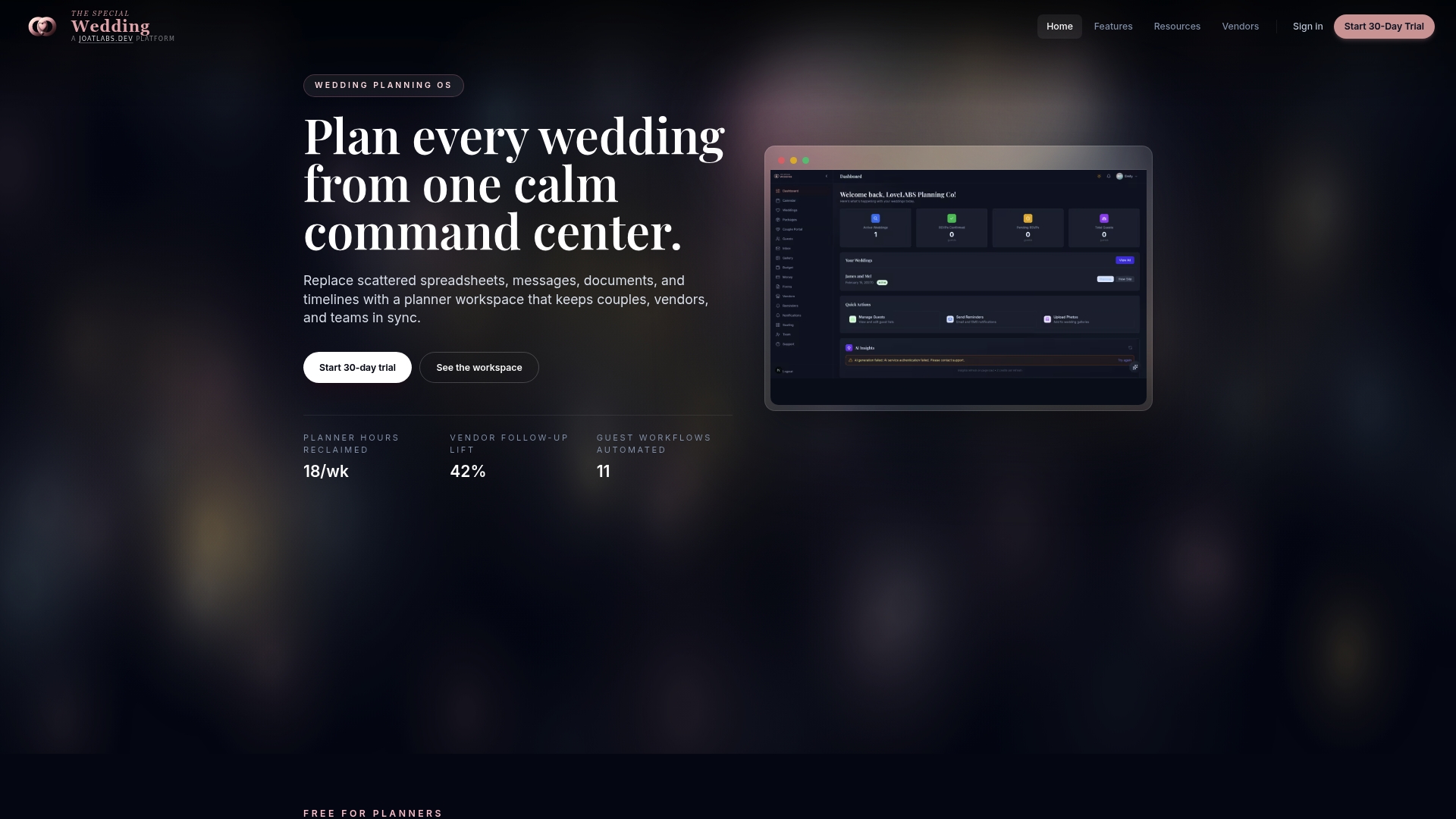
Managing guests across spreadsheets, texts, and email threads creates gaps. Thespecialwedding brings your guest list, RSVP tracking, seating arrangements, and vendor communication into one place, so nothing falls through.
If you are planning a large wedding in Oklahoma City, V2 Events at Vast is a venue built to handle the logistics of a full guest experience, from arrival flow to seating capacity. For catering coordination that integrates with your guest count and meal choices, Capers and Company in Edmond, OK, is a strong option. Browse the full vendor directory on Thespecialwedding to find the right team for every part of your day.
FAQ
What is a wedding guest management system?
A wedding guest management system is a centralized tool for tracking RSVPs, meal choices, seating assignments, and guest communication in one place. It replaces scattered spreadsheets and reduces manual data entry by over 10 hours on average.
When should I send save-the-dates for a destination wedding?
Send save-the-dates 12–15 months before a destination wedding, formal invitations at 8–10 months, and travel reminders at 4 months. This staged timeline gives guests enough lead time to book travel and accommodations.
How do I handle guests who do not respond to my RSVP?
Use a two-stage follow-up: a friendly reminder three to five days before the deadline, then a direct personal message within 48 hours after the deadline passes. For older relatives, a phone call from a family member works better than any digital reminder.
How many extra hotel rooms should I book for a large wedding?
Book 10–15% more room nights than your initial guest requests for weddings over 200 guests. That buffer covers last-minute bookings and room block changes without leaving guests without accommodation.
What goes on a wedding day guest one-pager?
A guest one-pager should include the venue address with a map link, parking and shuttle details, dress code, event timeline, and a day-of contact number. Distributing it one week before the wedding eliminates the majority of common questions on the day itself.
Recommended
- Wedding Event Seating Coordination Tips That Work | The Special Wedding Blog
- Types of Wedding Event Management Systems in 2026 | The Special Wedding Blog
- Wedding Lead Management for Planners: 2026 Guide | The Special Wedding Blog
- Solo Wedding Planner Organization Tips That Work | The Special Wedding Blog
Free wedding planner templates
Skip the blank page — these templates ship with the form fields you actually need.
Browse all 9 free templates →