Team Collaboration in a Wedding Studio: 2026 Guide
Team Collaboration in a Wedding Studio: 2026 Guide
Team collaboration in a wedding studio is the deliberate orchestration of specialists working together to deliver a unified, flawless wedding experience. When photographers, planners, florists, caterers, and videographers operate as a coordinated unit rather than independent contractors, the entire event runs with far less friction. The role of team collaboration in a wedding studio extends beyond logistics. It shapes client satisfaction, vendor reliability, and the quality of every deliverable. 68% of wedding planners identify uncoordinated vendors as the primary cause of operational conflicts on wedding days. That figure alone makes the case for treating teamwork as a core business function, not an afterthought.
How does collaborative teamwork improve the client and vendor experience?
Coordinated teams reduce the time couples spend managing logistics and the stress vendors feel navigating unclear expectations. Vendor teams that communicate well solve problems quickly and create smoother transitions throughout the event. That speed matters most during ceremonies and receptions, where a five-minute delay in one area cascades into the next.

The operational gains are measurable. Uncoordinated vendors cause about 15% more time spent on logistical shuffling compared to unified teams. That extra time comes directly out of the couple’s experience and the vendor’s ability to do quality work.
Collaboration also changes how vendors relate to clients emotionally. When a photographer and videographer already know each other’s working style, they move around the couple with confidence. The couple feels that ease and relaxes. Authentic moments follow naturally from a relaxed environment.
Key benefits of collaborative wedding planning for client experience include:
- Faster problem resolution: Teams with shared context spot issues before they escalate, protecting the event timeline.
- Smoother vendor handoffs: A coordinator who has briefed the DJ, florist, and caterer in advance avoids the scramble of last-minute introductions.
- Reduced couple stress: Clients who interact with a unified team feel they have one point of accountability, not eight separate contacts.
- Better creative output: Vendors who trust each other take creative risks that produce standout results.
- Consistent communication: Shared timelines and group briefings mean no vendor operates on outdated information.
Pro Tip: Schedule a 30-minute pre-event call with all vendors no later than 72 hours before the wedding. Use it to confirm roles, flag potential conflicts, and align on the timeline. This single habit eliminates the majority of day-of surprises.
What teamwork models and communication strategies do successful studios use?
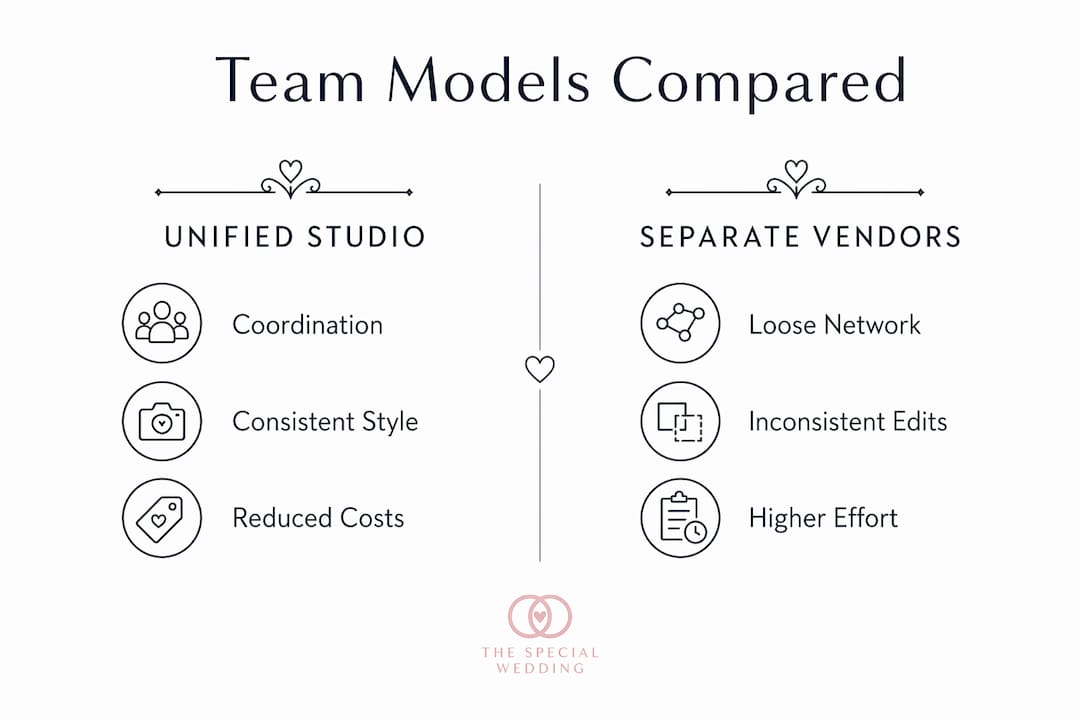
The most effective wedding studios operate on a unified studio model rather than a loose network of separate vendors. In a unified model, the studio takes full accountability for every specialist involved. Booking entire organizations provides consistent output and built-in backup support, which reduces the risk of a single vendor failure derailing the event.
The contrast with a separate vendor model is significant. When a couple books a photographer, videographer, florist, and caterer independently, no single entity owns the coordination. Conflicts arise from overlapping schedules, mismatched aesthetics, and communication gaps that no one is responsible for closing.
Successful studios assign a lead coordinator who functions as the conductor of the entire vendor team. This person does not just manage a checklist. They build relationships with each vendor before the event, align expectations, and protect the couple’s vision from being diluted by competing priorities.
The practical steps that define effective teamwork models include:
- Build a trusted vendor network. Prioritize vendors you have worked with before. Prior working relationships develop shared style and workflow that reduces client disruption.
- Create shared event timelines. Distribute a single master timeline to every vendor. Use shared wedding timelines so all parties work from the same document in real time.
- Hold pre-wedding alignment meetings. Bring vendors together weeks before the event, not the morning of. This is where conflicts get resolved without pressure.
- Use vendor portals for communication. Centralized vendor communication portals eliminate the back-and-forth of email chains and missed messages.
- Define roles and accountability clearly. Every vendor should know their lane and who to contact when something falls outside it.
“Vendor synergy is the hidden ingredient in high-end weddings. It must be orchestrated by studio leadership, not the couple. The Ambiance Method™ demonstrates that intentional leadership creates cohesive timelines, aligned expectations, and a protected design vision long before the wedding day begins.”
That principle applies to studios of every size. The coordinator who builds vendor synergy weeks in advance is the one whose clients leave five-star reviews.
How does team collaboration impact wedding photography and videography quality?
Integrated photo and video teams produce a measurably better product than separately booked companies. 74% of couples prefer matching aesthetics for their photos and videos. When the photographer and videographer come from different studios with different editing styles, delivering that consistency requires significant post-production effort, and it often still falls short.
Unified teams solve this at the source. They agree on color grading, lighting approaches, and shot priorities before the event. The result is a cohesive final product that requires less revision and generates fewer client complaints.
The choreography benefit is equally important. Unified teams reduce the “battle for the aisle” by using practiced positioning during ceremonies. Separate companies often compete for angles, which produces photobombing and forces couples into repeated poses.
| Factor | Unified team | Separate vendors |
|---|---|---|
| Editing consistency | Shared style guide applied across all media | Each company applies its own aesthetic |
| On-site choreography | Practiced positioning, no angle conflicts | Improvised coordination, higher conflict risk |
| Client communication | Single point of contact for all media | Multiple contracts and contacts |
| Backup coverage | Built-in within the studio | Depends on individual vendor policies |
| Cost and admin load | Bundled pricing, one contract | Multiple invoices and negotiations |
Unified wedding media teams also reduce administrative load, saving couples an average of 4.5 hours and 12% in costs compared to booking separate vendors. That efficiency benefit extends to the studio as well, since fewer contracts mean fewer coordination points and less room for error.
Pro Tip: If your studio uses separate photo and video vendors, require a joint creative brief before every event. A one-page document covering color palette, key shot list, and positioning priorities eliminates the majority of aesthetic conflicts before they happen.
What practical steps build a collaborative wedding studio team?
Building a collaborative team culture requires deliberate leadership, not just good intentions. Studios that proactively choreograph vendor actions weeks before the wedding see stronger operational flow and allow vendors to focus on creativity rather than logistics. That shift from reactive to proactive coordination is the single biggest lever studio leaders have.
Start with your vendor network. Prioritize repeat relationships over novelty. A florist who has worked three events with your lead coordinator already understands your pacing, your communication style, and your standards. That shared history shortens every briefing and reduces the chance of misalignment.
Clear role definition is equally critical. Every specialist on your team should know their responsibilities and the boundaries of their authority. Ambiguity breeds conflict, especially under the time pressure of a live event. A wedding coordinator’s role in vendor scheduling is to remove that ambiguity before it becomes a problem on the day.
Practical steps for building and sustaining a collaborative studio team:
- Formalize your vendor onboarding process. New vendors should receive a studio brief covering your standards, communication protocols, and timeline format before their first event.
- Use technology to centralize coordination. Platforms that support shared timelines, vendor portals, and real-time dashboards reduce the communication overhead that drains studio capacity.
- Measure team performance after every event. Collect client feedback and review event flow with your team. Identify where handoffs broke down and fix the process, not the person.
- Invest in pre-event meetings as a standard practice. Treat them as non-negotiable, not optional. The wedding agency team management practices that produce the best outcomes all share this habit.
- Recognize and reward collaborative behavior. Vendors who communicate proactively, flag issues early, and support other team members should be your first call for future events.
Pro Tip: Create a shared vendor contact sheet for every event that includes each person’s role, cell number, and the specific moment in the timeline they are responsible for. Distribute it to the full team 48 hours before the event. This one document eliminates most day-of “who handles this?” moments.
Key Takeaways
Effective team collaboration in a wedding studio is the foundation of consistent client satisfaction, operational efficiency, and high-quality creative output across every event.
| Point | Details |
|---|---|
| Unified models outperform loose networks | Studios that own vendor coordination reduce conflicts, costs, and client stress measurably. |
| Proactive planning drives results | Vendor alignment weeks before the event produces better outcomes than day-of coordination. |
| Shared timelines are non-negotiable | A single master timeline distributed to all vendors eliminates the most common communication failures. |
| Photo and video consistency requires teamwork | Unified editing styles and practiced choreography deliver the cohesive media couples expect. |
| Leadership creates synergy | The coordinator who builds vendor relationships and sets expectations is the studio’s most valuable asset. |
Why I think most studios underestimate the cost of poor coordination
The studios that struggle most with client satisfaction are rarely the ones with bad vendors. They are the ones with good vendors who do not know each other. I have seen this pattern repeatedly. A talented photographer and a skilled videographer, both working independently, produce a wedding that feels disjointed on film because they never agreed on positioning or color grading before the day.
The uncomfortable truth is that reactive coordination is the industry default. Most studios brief their vendors the morning of the event, if at all. That approach works until it does not, and when it fails, the couple pays the price.
The studios that consistently earn referrals treat vendor synergy as a design problem, not a people problem. They build systems: shared timelines, pre-event alignment calls, standardized briefing documents. Those systems make collaboration repeatable, not dependent on any single coordinator’s personality or memory.
Leadership is the variable that separates good studios from great ones. The coordinator who builds relationships with vendors between events, not just during them, creates a team that functions like a unit rather than a collection of individuals. That is the standard worth building toward.
— JOATLABS
How Thespecialwedding supports your studio’s team coordination
Running a wedding studio on scattered spreadsheets and group texts costs you time and client confidence. Thespecialwedding gives professional planners an integrated workspace where vendor onboarding, shared timelines, client portals, and communication workflows live in one place.
Studios using Thespecialwedding replace the back-and-forth of managing multiple tools with a single platform built for the complexity of coordinating weddings at scale. Whether you are managing a solo practice or a full agency, the platform adapts to your team size and workflow. Connect with trusted local professionals like Events By Suad in Oklahoma City or browse the full vendor directory to build the collaborative network your studio needs. See how the platform works at Thespecialwedding.
FAQ
What is the role of team collaboration in a wedding studio?
Team collaboration in a wedding studio is the coordinated effort of photographers, planners, vendors, and coordinators working under shared timelines and clear roles to deliver a consistent client experience. It reduces operational conflicts and improves the quality of every wedding deliverable.
Why does vendor coordination matter more than individual talent?
Experienced vendor teams anticipate problems before they become emergencies, which individual talent alone cannot do. A coordinated team produces smoother transitions and better outcomes than a group of skilled but disconnected specialists.
How do shared timelines improve wedding studio teamwork?
Shared timelines give every vendor a single source of truth for the event schedule, eliminating the miscommunication that causes delays and handoff failures. Distributing a master timeline 48 hours before the event is the most direct way to align a full vendor team.
What is a unified studio model in wedding planning?
A unified studio model means one organization takes accountability for all vendor roles, from photography to florals, rather than the couple booking each specialist separately. This model provides consistent output, built-in backup support, and a single point of contact for the client.
How does collaboration between photo and video teams affect the final product?
Unified photo and video teams apply shared editing styles and practice on-site positioning together, which produces cohesive media that matches the couple’s aesthetic expectations. Separately booked companies frequently deliver mismatched color palettes and compete for angles during ceremonies.
Recommended
- Why Wedding Studios Scale with Software: 2026 Guide | The Special Wedding Blog
- Wedding Agency Team Management: A 2026 Guide | The Special Wedding Blog
- Wedding Agency Staff Role Assignments: 2026 Guide | The Special Wedding Blog
- Solo Wedding Planner Organization Tips That Work | The Special Wedding Blog
Free wedding planner templates
Skip the blank page — these templates ship with the form fields you actually need.
Browse all 9 free templates →