Wedding coordinator's role in vendor scheduling
Wedding coordinator’s role in vendor scheduling

Most couples assume a wedding coordinator shows up the morning of the wedding with a clipboard and a headset. The reality is that the role of wedding coordinator in vendor scheduling begins weeks before anyone sets foot in a venue. Coordinators are the operational backbone of every vendor relationship, from confirming arrival windows to distributing the final run-of-show. Without this layer of management, even the most carefully selected vendors can arrive late, overlap in setup, or miss critical cues. This guide breaks down exactly how coordinators manage vendor scheduling, when each stage happens, and how you can sharpen your own process.
Table of Contents
- Understanding the wedding coordinator’s vendor scheduling role
- Key stages and timeline for vendor scheduling
- Building and managing the master vendor schedule
- Coordinating vendor communication and on-site execution
- Coordination levels and budgeting for vendor scheduling
- A coordinator’s perspective: mastering vendor scheduling beyond the basics
- Streamline vendor scheduling with The Special Wedding software
- Frequently asked questions
Key Takeaways
| Point | Details |
|---|---|
| Vendor scheduling role | Wedding coordinators manage vendor timelines starting 4-8 weeks before the event for smooth execution. |
| Timeline milestones | Confirming vendor details one month prior and distributing run-of-show 1-2 weeks out are critical steps. |
| Master schedule management | Use shared tools with buffers and detailed access info to avoid conflicts and delays. |
| On-site coordination | Coordinators serve as the sole vendor communication point during the wedding day to reduce stress. |
| Coordination levels | Different planning levels handle vendor scheduling variably, influencing budget and responsibilities. |
Understanding the wedding coordinator’s vendor scheduling role
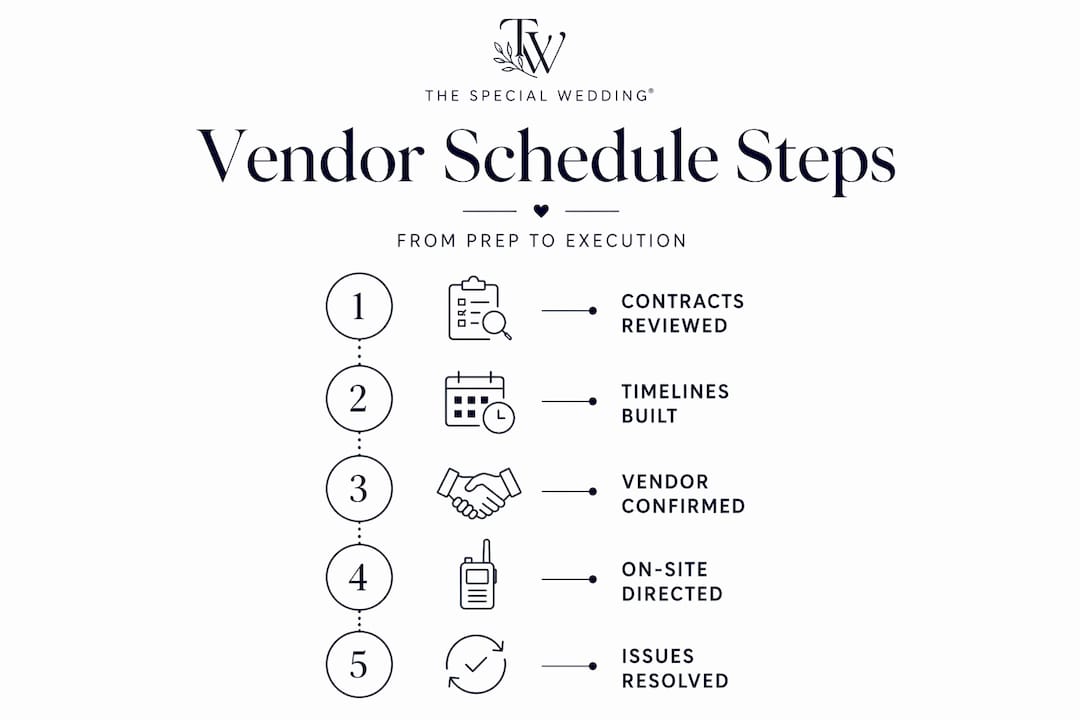
The first thing to clarify is what a coordinator actually owns in the vendor relationship. They do not select or book vendors. That work is done by the couple or a full planner. What coordinators do is take over the logistics of every confirmed vendor and make sure the execution matches the plan on paper.
This distinction matters because it defines the scope of your work. You are not renegotiating contracts or sourcing alternatives at the last minute. You are reviewing what has already been agreed to, identifying gaps, and filling them before they become problems on the wedding day.
According to Indeed’s career guide, coordinators review contracts and confirm logistical details like arrival times starting 4 to 8 weeks before the event. That window is not arbitrary. It gives you enough time to catch conflicts, follow up on missing information, and still have room to course-correct.
Here is what the wedding coordinator vendor liaison role covers in the scheduling context:
- Reviewing all client-signed vendor contracts for timeline accuracy
- Confirming each vendor’s arrival time, setup duration, and load-in requirements
- Identifying vendor dependencies (florist must finish before photographer arrives for detail shots)
- Bridging communication between the couple and vendors so nothing gets lost
- Building and distributing the master timeline that every vendor works from
You can also use a well-organized vendor directory to cross-reference vendor details and keep contact information centralized from the start.
Key stages and timeline for vendor scheduling
Knowing what to do is only half the equation. Knowing when to do it is what separates a smooth wedding from a chaotic one. Vendor scheduling is not a single task you check off. It is a series of checkpoints that build on each other.
Here is the timeline that professional coordinators follow:
- 4 to 8 weeks out: Begin reviewing all vendor contracts. Confirm vendor communication starts here, covering arrival times, load-in sequences, and any special equipment needs.
- One month out: Send formal confirmation requests to every vendor. Ask each one to verify their arrival window, setup duration, and point of contact for the day.
- Two weeks out: Conduct a final venue walkthrough. Final walkthroughs reveal gaps like missing microphone plans, unconfirmed unity candle setups, or unclear load-in access. This is your last real chance to fix structural problems.
- One to two weeks out: Distribute the finalized run-of-show to all vendors. This document should include every vendor’s name, arrival time, setup window, contact number, and their specific cues throughout the event.
- 48 to 72 hours out: Send a brief confirmation reminder to high-stakes vendors: caterer, photographer, band or DJ, and officiant. A quick message prevents day-of surprises.
- Day of: Arrive early, confirm each vendor as they arrive, and manage any real-time adjustments.
Pro Tip: Do not treat the one-month confirmation as a formality. Ask vendors to reply in writing, even by text or email. If a vendor misses their window and claims they never received the timeline, you need documentation.
Building and managing the master vendor schedule
The master vendor schedule is the single most important document you will create. It is not just a list of names and times. It is a sequenced, logic-driven plan that accounts for dependencies, access points, and realistic timing.

Start building it around 6 weeks out, and treat it as a living document. Every vendor confirmation you receive should trigger an update. By the time you distribute it two weeks before the wedding, it should reflect reality, not the original plan from six months ago.
Key elements to include in every master vendor schedule:
- Vendor name, company, and direct cell number for the day-of contact
- Confirmed arrival time and expected setup completion time
- Load-in entrance (back door, freight elevator, side gate) to avoid congestion
- Sequencing notes, for example, “AV team must complete sound check before band arrives”
- Buffer windows between vendor arrivals (minimum 15 to 20 minutes between major setups)
- Breakdown and departure times for each vendor
Here is a comparison of common tools coordinators use to build and share the master schedule:
| Tool | Real-time sharing | Vendor access | Automation | Best for |
|---|---|---|---|---|
| Google Sheets | Yes | Link-based | None | Small teams, simple events |
| Spreadsheet templates | No | Manual send | None | Solo coordinators |
| Dedicated planner software | Yes | Role-based login | Reminders, alerts | Multi-event studios |
| PDF timeline | No | Email only | None | Final distribution only |
Pro Tip: Build in flex timing after photography sessions and dinner service. These two phases almost always run long. If your timeline has no give after the first dance, you will spend the rest of the night playing catch-up.
Using vendor scheduling methods built into dedicated software gives you a real advantage here, especially when you are managing multiple weddings and need to track confirmations across events simultaneously.
Coordinating vendor communication and on-site execution
On the wedding day, your job shifts from planner to director. Every vendor has a question at some point. Your goal is to make sure none of those questions reach the couple.
This is the core of what is wedding coordinator vendor liaison role in practice. You are the single point of contact. Vendors check in with you. You make the calls. The couple stays present in their own wedding.
Here is how effective on-site vendor coordination works:
- Arrive 30 to 60 minutes before the first vendor to confirm access and setup conditions
- Check off each vendor as they arrive against your master schedule
- Walk each vendor to their designated setup area and confirm load-in sequence
- Manage transitions between event phases (ceremony to cocktail hour, dinner to dancing)
- Use a two-way radio or group text chain for real-time communication with your assistant
“When coordinators handle all vendor communication on the day of the wedding, couples experience zero vendor-related interruptions. That is not an exaggeration. Coordinators shield couples from every logistical question, which is exactly what they are paying for.”
Establish one “show caller” before the event, typically you or your lead assistant, who all vendors know to contact. This prevents the situation where the caterer asks the photographer who asks the florist who finally finds you 20 minutes later. Coordinators act as on-site directors who confirm arrivals and placements, because vendors often have no central leader otherwise.
You can also set up a dedicated vendor communication channel in your planning software so all pre-event messages are documented and accessible in one place.
Coordination levels and budgeting for vendor scheduling
Not every coordinator has the same scope of work, and that directly affects how much vendor scheduling responsibility you carry. Understanding these levels helps you set expectations with clients and price your services accurately.
| Coordination level | When vendor work begins | Vendor scheduling scope | Typical budget share |
|---|---|---|---|
| Full planner | 12+ months out | Vendor selection, booking, and full scheduling | 10 to 15% of total budget |
| Partial planner | 3 to 6 months out | Mid-stage coordination, timeline building | 7 to 12% of total budget |
| Day-of coordinator | 4 to 8 weeks out | Timeline execution, confirmations, on-site management | 5 to 10% of total budget |
Day-of coordinators are typically booked 3 to 6 months in advance and focus almost entirely on vendor timeline management after the initial bookings are complete. They take on roughly 5 to 10 percent of the overall wedding budget.
Key points to communicate to clients about each level:
- A full planner manages vendor relationships from day one, including negotiations and contracts
- A partial planner steps in mid-process and takes over scheduling once vendors are booked
- A day-of coordinator is not a “day of” role in practice. They start working weeks before the wedding
Many clients underestimate how much preparation goes into day-of coordination. Setting this expectation early, and pricing accordingly, is part of running a sustainable planning business. Your wedding planner software should make it easy to track which coordination tier each client has purchased and what tasks fall within your scope.
A coordinator’s perspective: mastering vendor scheduling beyond the basics
Here is something most guides will not tell you: the written schedule is not what saves a wedding. What saves a wedding is your ability to read the room and adjust before a delay becomes a crisis.
Every experienced coordinator has a story about a timeline that looked perfect on paper and fell apart within the first hour. The caterer’s truck got stuck in traffic. The florist needed an extra 45 minutes. The officiant arrived at the wrong entrance. None of these are failures of the schedule itself. They are failures of the buffer strategy and the access plan.
Vendor timelines must include buffer times and detailed access instructions to prevent the kind of logistical traffic jams that basic plans miss entirely. Knowing which door the florist uses and which elevator the AV team needs is not a minor detail. It is the difference between a smooth setup and two vendors standing in the same hallway blocking each other.
Final walkthroughs reveal gaps that no amount of email confirmation will catch. Missing microphone plans, unclear unity candle placement, unconfirmed parking for the band’s equipment van. These are the items that cause scrambles on the day. Build a prioritized “must-have” list from your walkthrough findings and keep it separate from your full timeline. When something slips during the event, you know exactly what cannot be cut.
The coordinators who never seem rattled are not lucky. They have simply internalized that insider vendor scheduling tips are really just disciplined preparation habits. They build realistic timelines, they walk the venue, and they stay one step ahead of the vendors rather than reacting to them.
Streamline vendor scheduling with The Special Wedding software
Managing vendor schedules across multiple weddings in spreadsheets and group chats is how details get missed. TheSpecialWedding.io gives you a centralized workspace where you can build, share, and update vendor timelines without jumping between tools.
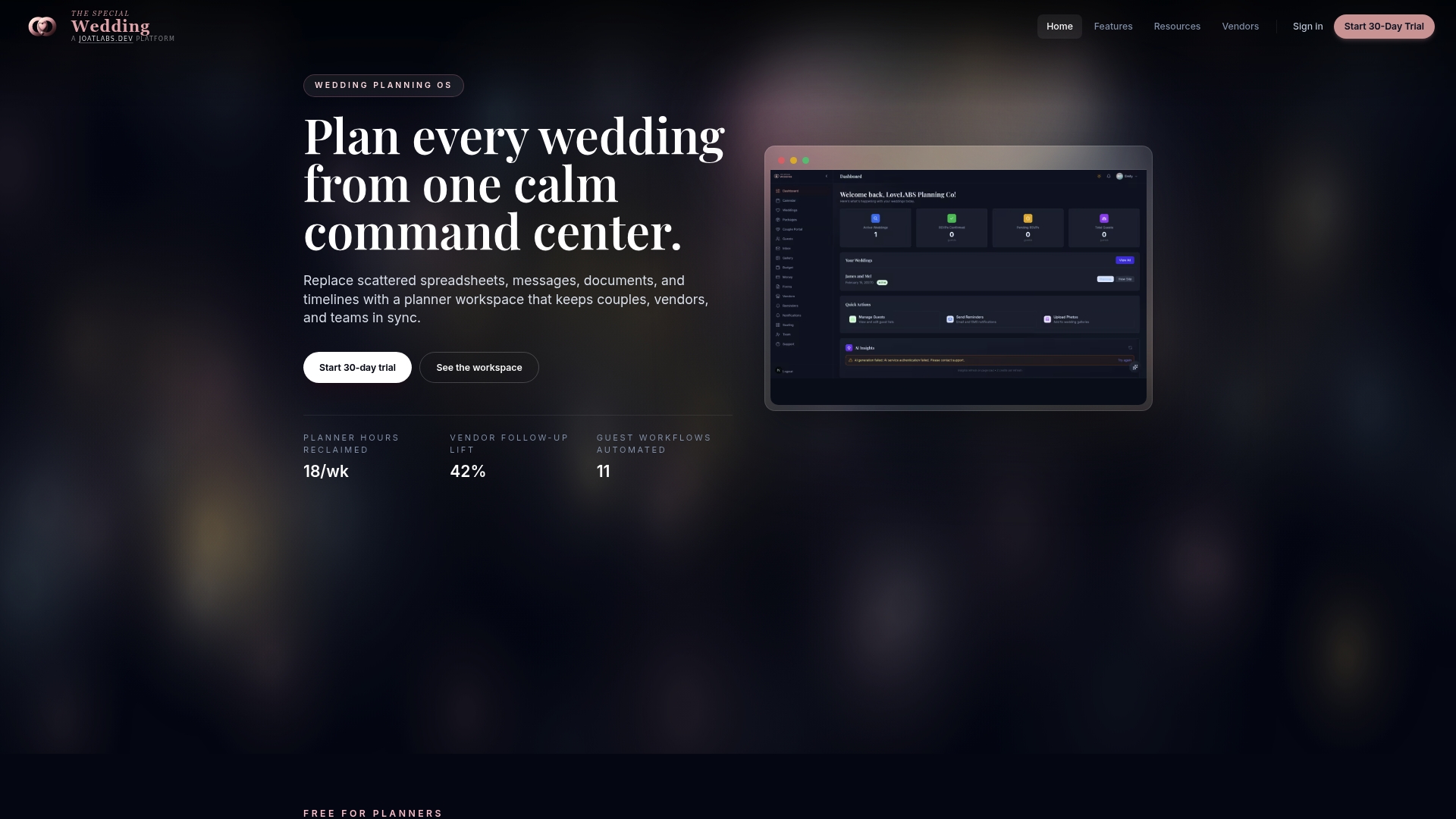
With the wedding planner software and CRM, you can track vendor confirmations, store contracts, and set automated reminders for every scheduling checkpoint from the 6-week build to the 48-hour final check. The vendor directory keeps all contact details and booking status in one place, so you are never hunting through old emails to find a vendor’s arrival window. And with built-in vendor scheduling tools, you can create master timelines that vendors can access directly, reducing back-and-forth and keeping everyone aligned. If you are managing more than two weddings at a time, this is the kind of infrastructure that makes the difference between controlled and chaotic.
Frequently asked questions
When should a wedding coordinator start confirming vendor schedules?
Wedding coordinators typically begin reviewing vendor contracts and confirming logistical details 4 to 8 weeks before the wedding, giving enough time to resolve any gaps before the event.
How does a wedding coordinator help reduce stress for couples regarding vendors?
Coordinators serve as the single point of contact for all vendors on the wedding day, so the couple never has to field logistical questions. Coordinators shield couples from every vendor-related interruption, which is one of the most tangible benefits of hiring one.
What tools do coordinators use to keep vendor schedules organized?
Most coordinators use shared digital tools or dedicated planning software to build and distribute master vendor schedules. Master schedules built around 6 weeks out with shared access allow vendors to view real-time updates without requiring constant coordinator follow-up.
What are common challenges in vendor scheduling and how do coordinators address them?
Overlapping arrivals, missing equipment, and timing overruns are the most frequent issues. Vendor timelines need buffers and detailed access plans, and final walkthroughs help coordinators catch critical gaps before they become day-of problems.
Recommended
Free wedding planner templates
Skip the blank page — these templates ship with the form fields you actually need.
Browse all 9 free templates →