Wedding Guest Dietary Tracking: A Planner's Quick-Start Guide
Wedding Guest Dietary Tracking: A Planner’s Quick-Start Guide

A dedicated, RSVP-linked guest tracker that captures attendance, meal choice, allergies, and plus-one data is the fastest and safest way to produce caterer-ready meal counts. Spreadsheets alone can’t do this at scale without breaking down.
Three moves to make today:
- Add structured dietary fields (checkbox plus free-text) directly to your RSVP form, not a separate follow-up email.
- Set your RSVP deadline to land at least two weeks before your caterer’s final headcount deadline.
- Build a habit of exporting a clean, caterer-ready summary the moment RSVPs close, not the night before the wedding.
This approach cuts manual transcription errors and, more importantly, protects guests with severe allergies from being missed in a spreadsheet cell nobody double-checked.
Key Takeaways
An RSVP-linked guest tracker that captures attendance, meal choice, allergy severity, and plus-one data is the most reliable way to deliver accurate, safe meal counts to your caterer.
| Point | Details |
|---|---|
| Collect dietary data at RSVP | Add checkbox and free-text dietary fields to the form itself, not a follow-up email. |
| Separate severity from preference | Use a dedicated severity flag so severe allergies never blend into general dietary notes. |
| Time your exports to caterer deadlines | Send preliminary counts 2–3 weeks out and a final export 48–72 hours before service. |
| Build reusable filter presets | Save filters like “severe allergy list” and “Event A attendees with meals” for repeat use. |
| Use a planner-first tracker | TheSpecialWedding.io links RSVPs to guest profiles and exports caterer-ready CSVs in one click. |
Table of Contents
- Why Spreadsheets Break Down for Wedding Guest Dietary Tracking
- What Guest Data Fields Do You Actually Need to Track?
- How Should You Word RSVP Questions to Get Better Dietary Data?
- What Meal Count Reports Does Your Caterer Actually Need?
- How Do You Manage Severe Allergies Differently From Preferences?
- How Do You Track Plus-Ones, Families, and Multiple Events?
- How Do You Sync Dietary Data With Seating and Vendor Tools?
- How Fast Can You Set Up a Dietary Tracker?
- How Do You Follow Up With Guests Who Haven’t Responded?
- What’s the Recommended Workflow and Must-Have Tool Features?
- Try a Ready-Made Wedding Guest Dietary Tracker
- Frequently Asked Questions
- Sources
Why Spreadsheets Break Down for Wedding Guest Dietary Tracking
Spreadsheets work fine for 20 guests. At 150, they start lying to you. Someone edits the wrong tab. A dietary note gets typed into the wrong row after a seating shuffle. Two people update the same file at once and one version silently overwrites the other.
The real cost isn’t the errors themselves. It’s the hours you spend chasing missing fields three days before the wedding, cross-checking three versions of a guest list, and hoping the allergy note you saw last Tuesday made it into the final file.
A live tracker solves this differently. RSVPs feed guest profiles directly, so meal selections, allergies, and plus-one names update in real time instead of waiting for someone to manually re-enter them. That structure is what makes a guest list tracker useful: filters by attendance, meal type, and allergy flag, plus one-click export, replace hours of copy-paste with a few clicks.
Spreadsheet vs. tracker, in practice:
- Spreadsheet: one editable file, no audit trail, manual meal tallies, error-prone plus-one tracking.
- Tracker: live RSVP sync, automatic meal counts, allergy flags surfaced automatically, exportable in seconds.
Caterers typically want organized meal and dietary data at least two to three weeks before the wedding. A spreadsheet workflow makes that deadline harder to hit than it needs to be.
What Guest Data Fields Do You Actually Need to Track?
The fields below form a minimum viable data model. Skip any of these and you’ll be reconstructing missing information by phone call later.
- Full name — free-text, matched to invitation record.
- Invite group ID — links related guests (families, plus-ones) so changes propagate correctly.
- Attendance status — dropdown: attending, declined, pending.
- Plus-one name — free-text, tied to the primary guest’s profile.
- Event attendance flags — checkboxes for each event (ceremony, reception, welcome dinner).
- Meal selection — dropdown with a fixed set of options (chicken, fish, vegetarian, vegan).
- Dietary restrictions/allergies — checkbox list plus a free-text notes field for anything unusual.
- Severity flag — dropdown or checkbox marking life-threatening allergies separately from preferences.
- Seating/table assignment — free-text or linked field, updated after seating chart finalization.
- Contact info — email and phone, for follow-up on incomplete responses.
- Last-updated timestamp — automatic, critical for spotting stale records before export.
Dropdowns and checkboxes matter here because they eliminate ambiguity. “Chicken” typed three different ways by three different guests creates a counting headache; a dropdown guarantees a clean tally. Free-text stays reserved for edge cases, like a guest who needs a gluten-free and dairy-free meal simultaneously.
Your export needs to look like something a caterer can open and read without a translation key. A minimal CSV should include: guest_name, group_id, attendance_status, plus_one_name, event_flags, meal_selection, dietary_restrictions, severity_flag, table_number. One sample row: Maria Chen, G014, attending, David Chen, ceremony+reception, vegetarian, tree nut allergy, severe, Table 7.
How Should You Word RSVP Questions to Get Better Dietary Data?
The wording on your RSVP form determines whether you get usable data or a pile of vague responses to chase later. Use structured checkboxes for common categories, then leave one free-text field open for anything that doesn’t fit a checkbox.
Sample RSVP wording for a full form:
“Please select any dietary restrictions that apply: Vegetarian / Vegan / Gluten-free / Dairy-free / Nut allergy / Shellfish allergy / Other (please describe below). If you selected ‘Other’ or have a severe allergy, please provide details:”
For a shorter invite format, a one-line version works: “Any dietary restrictions or allergies we should know about? (Please describe below.)”
Checkboxes work best once your guest count passes roughly 50 to 75 people. Below that, free-text alone is manageable. Above it, checkboxes are what keep your meal tally accurate without a manual read-through of every response.
A few etiquette notes worth following:
- Ask plainly, without qualifiers like “if it’s not too much trouble.”
- Never ask guests to justify or explain a restriction. “Vegetarian” doesn’t need a reason attached.
- For anyone marking a severe allergy, add a gentle follow-up: “To keep you safe, could you share the specific allergen and severity?”
- Avoid separating “special” meals from “regular” meals in language. Everyone is just choosing a meal.
What Meal Count Reports Does Your Caterer Actually Need?
Caterers don’t need your entire guest database. They need two things: a count by meal category, and a separate named list of guests with severe allergies.
A working CSV export for a caterer should include columns for guest name, table number, meal selection, and allergy notes, filtered to attending guests only. A short summary paragraph on top of the raw data helps busy kitchen staff scan it fast: “142 attending. 98 chicken, 30 fish, 14 vegetarian. 3 severe allergies flagged, see attached list.”
The distinction between a headcount and an allergy list matters. Counts by category tell the kitchen how much of each protein to prepare. A named allergy list tells them which specific plates need special handling and who’s sitting where. Sending only one or the other leaves a gap.
| What the caterer needs | When to send it |
|---|---|
| Preliminary meal counts by category | 2–3 weeks before the wedding |
| Named severe allergy list with table numbers | Alongside preliminary counts, then reconfirmed |
| Final updated export with any late changes | 48–72 hours before the event |
Late changes happen. Someone develops a shellfish reaction they forgot to mention, or a plus-one gets added last minute. Recording the storing dietary answers as structured tick-boxes with a notes field, as recommended by WedCheese’s guest tracking guide, makes it fast to regenerate an updated export instead of rebuilding the whole file. Send that final version 48 to 72 hours out, never the morning of.
How Do You Manage Severe Allergies Differently From Preferences?
A gluten-free preference and a peanut allergy that risks anaphylaxis are not the same category of problem, and your data model should never treat them the same way. Preferences affect satisfaction. Severe allergies affect safety.

Separate them explicitly. Use a severity flag on every dietary record, not just a shared “restrictions” field, so a filtered export of “severe only” pulls a clean, short list your caterer can act on immediately.
Planner checklist before the wedding:
- Confirm the caterer’s cross-contamination protocol in writing, not verbally.
- Ask whether severe-allergy meals are prepared in a separate space or with dedicated equipment.
- Arrange labeled plates or place markers for guests with flagged allergies.
- Confirm serving staff have been briefed on which tables need special handling.
Confirmed kitchen protocols matter here because a verbal assurance from a catering manager doesn’t guarantee the line cooks on the day know the same thing. Some planners arrange a short direct conversation between the allergic guest and the head chef when the allergy is severe enough to warrant it.
Pro Tip: Hand the head chef a one-page, named allergy-only export separate from your full guest list. A busy kitchen team won’t scroll through 150 rows looking for the three that matter.
For guests with flagged allergies, a short confirmation message helps: “We’ve noted your shellfish allergy and confirmed with our caterer that your meal will be prepared separately. Please find us if you have any questions on the day.”
How Do You Track Plus-Ones, Families, and Multiple Events?
Plus-ones create the most common tracking errors. Link each plus-one’s profile to the primary guest’s invite group, and require the plus-one’s name and meal selection before the RSVP counts as complete. An “attending +1” with no name and no meal choice is an incomplete response, not a confirmed guest.

Families need their own handling. Children often eat from a different menu at a different price point, so add an age or child/adult flag to every guest record, not just a headcount number. This keeps your catering budget accurate and your kids’ meal tally separate from the adult protein counts.
For destination weddings or multi-event schedules (welcome dinner, ceremony, farewell brunch), event-level attendance flags matter more than a single yes/no RSVP. A guest might attend the welcome dinner but skip the ceremony brunch. Track meal selection per event where menus differ, so each event generates its own clean catering list instead of one confusing combined export.
How Do You Sync Dietary Data With Seating and Vendor Tools?
Your guest data is only useful if it maps cleanly into the tools your vendors and seating chart software actually use. Match your CSV column names to standard import formats before you export anything: guest_name, table_number, meal_selection, dietary_restrictions, attendance_status are close to universal across seating platforms.
Build a small set of saved filter presets rather than filtering from scratch every time:
- “Attending + Vegetarian” for a quick vegetarian headcount.
- “Severe allergy list” for the kitchen-facing export.
- “Event A attendees with meals” for a single-event catering list on multi-event weddings.
Two integration patterns cover almost every situation. Direct sync between your tracker and your seating tool works when both platforms support it and saves manual re-entry entirely. Manual CSV import works everywhere else and is the safer fallback when a vendor’s software doesn’t offer a direct connection. Platform help documentation on tracking meal selections and viewing final counts shows how this reporting step typically works once RSVPs close.
How Fast Can You Set Up a Dietary Tracker?
You can have a working system running in under 30 minutes if you follow this order:
- Create the event and import your existing guest list as a starting point.
- Add the dietary and allergy fields to the guest record structure before sending any invitations.
- Enable meal-selection dropdowns and the severity flag field.
- Test the RSVP flow yourself, submitting a sample response end to end.
- Set automatic reminder rules for guests who haven’t responded by your chosen checkpoints.
A minimal starter CSV needs guest name, group ID, and attendance status filled in first. Everything else can populate as RSVPs come in.
Timeline for a typical wedding:
- Open RSVPs 8 to 10 weeks before the wedding.
- Set your RSVP deadline 4 weeks out.
- Send preliminary counts to your caterer 2 to 3 weeks before the event.
- Send the final export 48 to 72 hours before service.
How Do You Follow Up With Guests Who Haven’t Responded?
Build your reminder cadence around the caterer’s deadline, working backward. Send the initial invite with RSVP details, a first reminder at the halfway mark, a targeted chase two to three weeks before your deadline, and a final courtesy check 7 to 10 days out.
For guests who RSVP’d but left dietary fields blank, filter your dashboard for incomplete records and send a targeted message rather than a blanket reminder to everyone.
- Email/SMS template: “Quick note, we’re finalizing meal counts. Could you confirm your meal choice and any dietary needs by [date]?”
- For allergy-specific follow-ups, keep the tone light and direct rather than clinical: “Just confirming details with our caterer, want to make sure your meal is prepared safely.”
What’s the Recommended Workflow and Must-Have Tool Features?
The workflow that works: collect dietary data at the RSVP stage, flag severe allergies with a dedicated severity field, export named allergy lists separately from category counts, then sync the final data to your seating chart.
When evaluating any tracker or platform, require these features at minimum:
- RSVP-linked guest profiles that update live.
- Built-in plus-one handling with linked profiles.
- Export templates matched to common vendor formats.
- Saved filter presets for repeat use.
- Automatic timestamping and audit history on every record.
Thespecialwedding bundles these into a single planner workspace built specifically around this exact workflow, rather than requiring you to stitch it together from separate tools.
First-person planner perspective: common pitfalls we’ve seen
The mistakes that recur are predictable: chasing dietary responses too late, allergy notes buried in a comments column nobody rereads, and seating exports that don’t match the final meal counts. Fix each with one habit: filter for incomplete records weekly, flag severity separately from day one, and re-export after every seating change.
Try a Ready-Made Wedding Guest Dietary Tracker
Building this workflow from scratch in a spreadsheet means rebuilding the same fields, filters, and export formats for every single wedding you plan. TheSpecialWedding.io gives professional planners that entire structure already built, so you’re setting up an event, not engineering a data model.
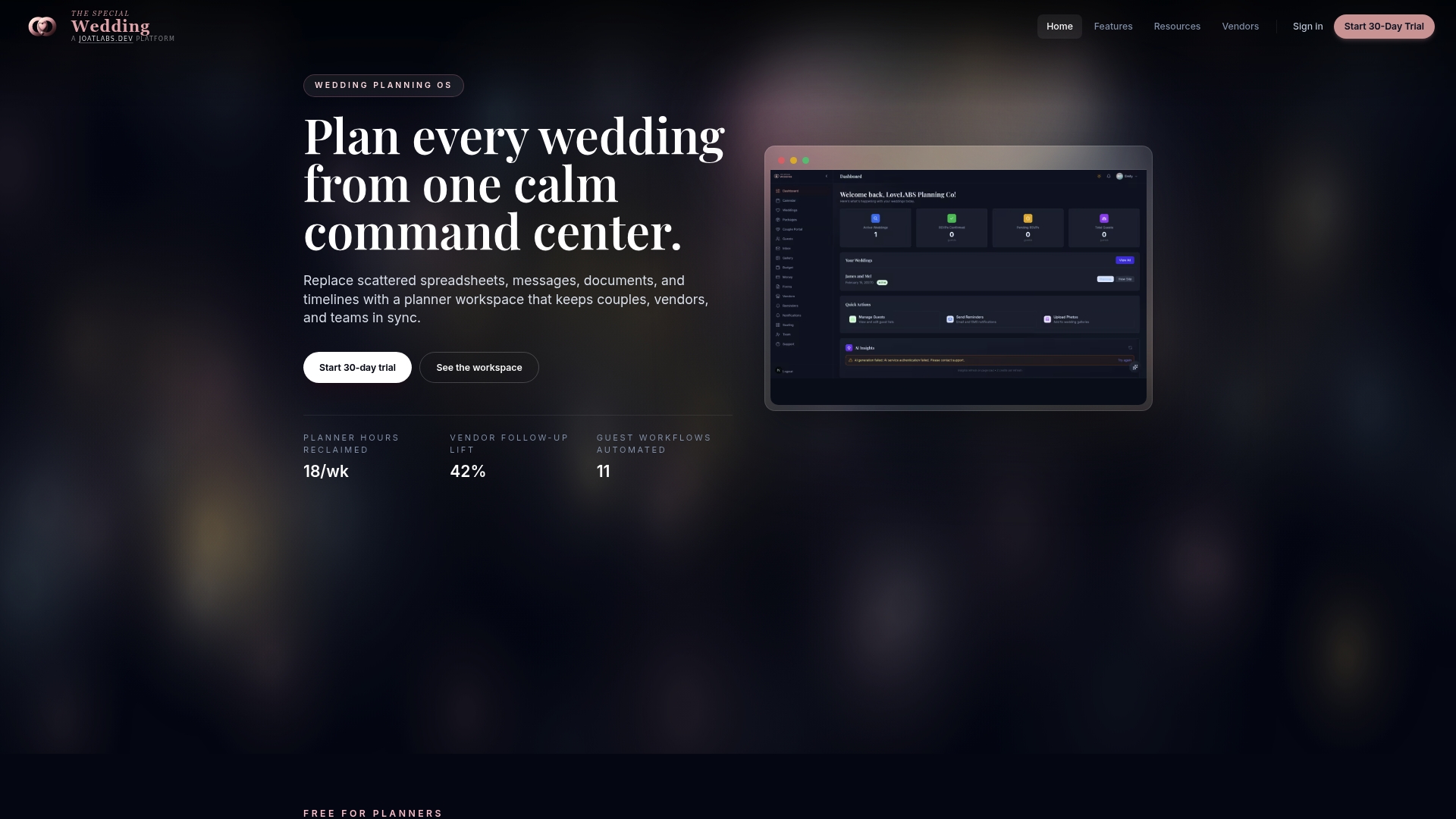
The platform links RSVPs directly to guest profiles, so meal selections, allergy flags, plus-one names, and event attendance update automatically as responses come in. Dietary fields, severity flags, and filter presets come pre-configured rather than assembled by hand, and a one-click export turns your live guest data into a caterer-ready CSV, no manual reformatting between your tracker and your vendor’s inbox. It scales the same way whether you’re running one wedding solo or coordinating a full slate across a growing planning team. For coordinating catering setup with your venue’s equipment needs, tools like Castle Event Rentals can help with meal-marker and place-setting logistics once your allergy list is finalized.
Start a trial and import your next guest list to see the RSVP-to-export flow firsthand.
Frequently Asked Questions
What fields should I include in wedding guest dietary tracking? At minimum, capture attendance status, meal selection, dietary restrictions, a severity flag for severe allergies, plus-one details, and event attendance flags if you’re running multiple events.
How early should I collect dietary information from wedding guests? Include dietary fields directly on your RSVP form so the data arrives with the response itself, with your RSVP deadline set roughly four weeks before the wedding to leave room for caterer deadlines.
What’s the difference between a meal count and an allergy report for caterers? A meal count is a tally by category (30 fish, 98 chicken). An allergy report is a named list of specific guests with severe restrictions, including table numbers, so kitchen staff know exactly which plates need special handling.
Do I need special software for wedding guest dietary tracking, or will a spreadsheet work? Spreadsheets work for small guest lists but tend to break down past roughly 50 to 75 guests due to version conflicts and manual entry errors. A dedicated tracker keeps RSVP data linked to guest profiles automatically.
How close to the wedding should I send the final dietary export to my caterer? Send an updated export 48 to 72 hours before the event to capture any last-minute changes, after sending preliminary counts 2 to 3 weeks out.
This article is general information, not a substitute for advice from a qualified doctor. Consult a qualified healthcare professional about your own circumstances before acting on anything here.
Sources
- How to Track Dietary Requirements for Wedding Guests | WedCheese
Recommended
- Wedding RSVP Tracking System: Your 2026 Planning Guide | The Special Wedding Blog
- Wedding Planning Progress Tracking: A Complete Guide | The Special Wedding Blog
- Manage wedding guest lists without staff | The Special Wedding Blog
- Guest Management Strategies for Weddings That Work | The Special Wedding Blog
Free wedding planner templates
Skip the blank page — these templates ship with the form fields you actually need.
Browse all 9 free templates →