Wedding Planner Referral Network Benefits That Drive Bookings
Wedding Planner Referral Network Benefits That Drive Bookings

A referral network is the single most effective client acquisition channel available to wedding planners. Unlike paid ads or social media posts, referral leads arrive pre-qualified, pre-sold on your credibility, and far more likely to book. The wedding planner referral network benefits go well beyond a steady stream of inquiries. They create a reputation engine where every trusted recommendation compounds your standing in the local market. Planners who build deliberate referral partnerships with photographers, florists, caterers, and venues consistently outperform those who rely on digital advertising alone.
1. How referral networks improve client acquisition for wedding planners
Referral leads convert at a dramatically higher rate than any other channel. Planner referrals convert inquiries to bookings at 54%, compared to just 18% from Instagram. That gap is not a minor difference. It means a referral lead is roughly three times more likely to become a paying client than someone who found you through social media.

The trust transfer is the key mechanism. A past client or vendor vouching for you removes the skepticism that slows down every other sales conversation. A single referral is 8.5 times more likely to convert than a paid ad lead. Couples who arrive through referrals skip the comparison shopping phase and move directly to evaluating fit.
Referral leads also shorten your sales cycle. You spend less time explaining your value and more time discussing logistics. That efficiency compounds across a full booking season, freeing up hours you would otherwise spend on follow-up emails and pitch calls. For planners managing multiple events simultaneously, that time savings is significant.
- Referral inquiries arrive with built-in trust, reducing objections
- Conversion rates from referrals (54%) far exceed social media (18%)
- Sales cycles are shorter, requiring fewer touchpoints to close
- Referred clients tend to have realistic expectations, reducing scope conflicts
2. What role multi-vendor collaboration plays in referral network benefits
Multi-vendor collaboration is the fastest way to multiply your referral output. Bundled vendor packages increase booking rates by 47% compared to vendors pitching individually. When you co-present with a photographer and a florist, couples experience a coordinated team rather than a collection of strangers.
The data on couple behavior reinforces this. 80% of couples rely on vendor recommendations when assembling their wedding team. That means your referral to a caterer or DJ carries real weight. Couples are 4 times more likely to book a vendor when a trusted professional recommends them. You are not just filling a vendor slot. You are reducing the couple’s perceived risk.
Collaboration also deepens vendor relationships over time. When a florist sees that your referrals always arrive well-briefed and organized, they reciprocate with confidence. That cycle of mutual reliability is what turns a loose vendor acquaintance into a dependable referral partner.
Pro Tip: Build a small “preferred vendor” list of three to five vendors per category. Depth beats breadth. A florist who has worked two weddings with you will refer you far more readily than ten florists who have met you once.
- Bundled packages convert up to 2.8 times better than separate services
- Couples value convenience and coordinated vendor teams
- Collaboration creates repeated referral loops between trusted partners
- Shared client experiences give vendors firsthand evidence of your professionalism
3. Which vendor relationships planners should prioritize in their network
Not all vendor relationships produce equal referral volume. Planners average 8.4 videographer referrals annually, outperforming photographers at 5.2 and venues at 3.1. Videographers are high-value referral partners because they work closely with planners throughout the event and see your organizational skills in real time.
The referral relationship is also asymmetric. Videographers refer planners back only 1.4 times per year on average. That imbalance means you give more than you receive from most vendor categories. Selectivity becomes your most important tool. Every referral you make is an extension of your reputation.
Planners monitor post-wedding delivery 71% of the time before providing future referrals. That practice protects your credibility. A vendor who delivers disorganized files or misses deadlines reflects poorly on you, even if the wedding day itself went smoothly.
- Videographers generate the highest referral volume and work closely enough with planners to observe your workflow directly.
- Photographers are the second most productive referral category and often have strong client relationships that carry referral weight.
- Florists and decorators collaborate on design vision and frequently interact with clients during planning, creating natural referral opportunities.
- Caterers handle a high-stress service area where a planner’s recommendation carries significant trust value for couples.
- Venues refer less frequently but carry high authority when they do recommend a planner to an inquiring couple.
Pro Tip: After each event, send a brief follow-up to your key vendor partners noting what went well. That habit keeps you top of mind and signals that you value the working relationship beyond the transaction.
4. How to build and maintain strong vendor referral partnerships
Referral relationships do not form overnight. Meaningful referrals develop over 6–12 months of consistent, intentional networking. Showing up once at an industry mixer and exchanging cards does not build trust. Repeated, professional contact does.
Styled shoots are one of the most effective tools for accelerating that trust. Styled shoots establish vendor compatibility faster than casual networking events because they produce real evidence of how you work under pressure. A photographer who shoots a styled event with you sees your timeline management, your communication style, and your attention to detail firsthand.
“Referral networks flourish when vendors act as partners who make each other’s workflows easier, rather than seeking purely transactional benefits. Sustained presence in vendor circles turns recognition into trust and referrals.” — Why Wedding Networking Works
Consistency is the non-negotiable ingredient. Attend the same local industry events each season. Follow up after every shared event. Share vendor content on your social channels. These small, repeated actions signal reliability. Reliability is what converts a vendor contact into a referral partner.
- Commit to 6–12 months of regular contact before expecting referral volume
- Use styled shoots to demonstrate your workflow to potential partners
- Follow up after every shared event with a personal note
- Track vendor delivery quality to protect your reputation on every referral
- Position yourself as the planner who makes other vendors’ jobs easier, not harder
Key Takeaways
A referral network is the highest-converting client acquisition channel for wedding planners, outperforming paid ads and social media by a measurable margin across every key metric.
| Point | Details |
|---|---|
| Referrals convert at 54% | Referral leads book at nearly three times the rate of Instagram inquiries. |
| Multi-vendor packages outperform solo pitches | Bundled collaborations increase booking rates by 47% over individual vendor pitches. |
| Videographers are top referral partners | Planners average 8.4 videographer referrals per year, the highest of any vendor category. |
| Networks take 6–12 months to mature | Consistent, repeated contact is required before referral relationships produce reliable volume. |
| Selectivity protects your reputation | Every referral you make reflects on your credibility, so monitor vendor delivery quality closely. |
Why referral networks are the foundation of a sustainable planning business
The conventional advice on referral networks focuses on volume: attend more events, collect more contacts, send more emails. That approach misses the point entirely. The planners I have seen build the most durable businesses treat their referral network as a reputation portfolio, not a lead list.
Every vendor you refer is a statement about your standards. If a florist you recommend delivers wilted arrangements or a photographer misses the first dance, couples connect that failure to your judgment. Reputational risk is real, and it travels faster than positive word of mouth.
The more useful frame is this: relationship marketing creates resilience. When a slow booking season hits, planners with deep vendor networks have a built-in safety net. Their partners refer them proactively because the relationship has been maintained through consistent, professional interaction, not just when business is good.
My honest view is that most planners underinvest in the follow-up phase. They attend the styled shoot, they work the event, and then they move on. The referral relationship actually deepens in the weeks after the event, when a thoughtful message or a shared social post reminds a vendor that you noticed their work. That habit, practiced consistently, is what separates planners with full calendars from those chasing leads.
— JOATLABS
Thespecialwedding’s vendor directory supports your referral network
Building a referral network requires knowing which vendors in your market are worth partnering with. Thespecialwedding gives you direct access to a curated vendor directory where you can identify trusted local partners across every wedding category, from lighting and rentals to catering and entertainment.
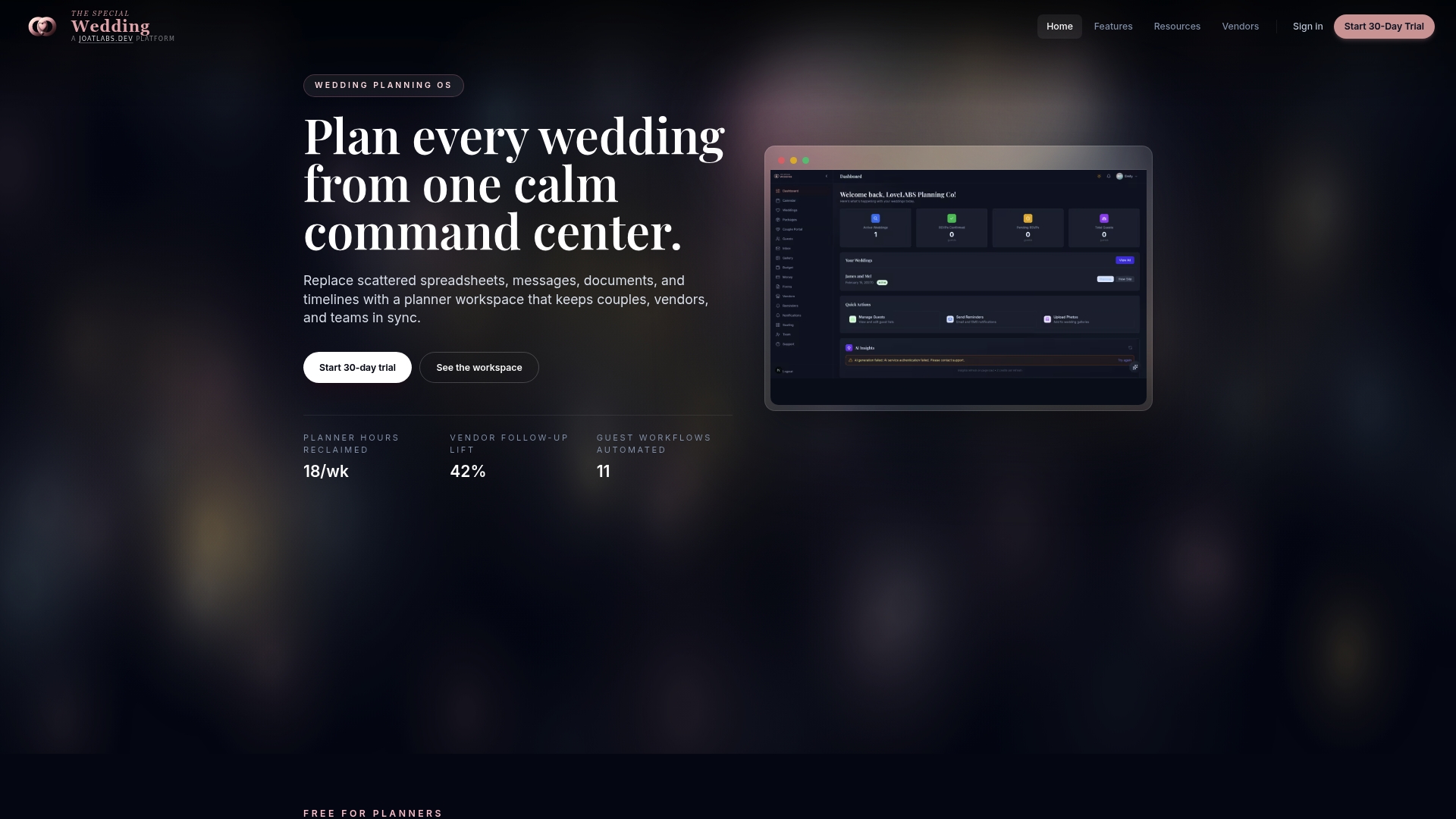
The platform also centralizes your vendor communications, event timelines, and client workflows in one workspace. That organization signals professionalism to every vendor you work with, which accelerates the trust-building that referral partnerships depend on. Whether you are a solo planner or managing a full agency, Thespecialwedding gives you the operational foundation to turn vendor relationships into a reliable referral engine. Explore the wedding planner tools built to support every stage of your business growth.
FAQ
What are the main wedding planner referral network benefits?
Referral networks generate higher-converting leads, shorter sales cycles, and stronger vendor relationships. Planner referrals convert at 54%, compared to 18% from Instagram.
How long does it take to build a reliable referral network?
Referral relationships typically take 6–12 months of consistent networking to produce meaningful booking volume. Repeated professional contact and shared events accelerate that timeline.
Which vendors should planners prioritize for referral partnerships?
Videographers produce the highest referral volume at 8.4 per year, followed by photographers at 5.2. Prioritize vendors whose work you can monitor and whose quality you trust.
Do multi-vendor collaborations really improve bookings?
Multi-vendor packages increase booking rates by 47% over solo pitches, and bundled services convert up to 2.8 times better than separate offerings.
How do I protect my reputation within a referral network?
Monitor vendor delivery quality after every event before referring them again. A poor vendor experience reflects on your judgment, so selectivity is the most important habit you can build.
Recommended
- Wedding planner workspace explained: boost multi-event ops | The Special Wedding Blog
- Wedding Planning Dashboard Benefits for Pros in 2026 | The Special Wedding Blog
- Wedding Agency Capacity Planning: A 2026 Guide | The Special Wedding Blog
- Solo Wedding Planner Organization Tips That Work | The Special Wedding Blog
Free wedding planner templates
Skip the blank page — these templates ship with the form fields you actually need.
Browse all 9 free templates →