Wedding Planning Transparency: What Couples Need to Know
Wedding Planning Transparency: What Couples Need to Know
Wedding planning transparency is defined as the full, upfront disclosure of pricing, vendor relationships, contract scope, and deliverables so couples can make informed decisions at every stage of planning. Without it, couples risk budget surprises, conflicts of interest, and misaligned expectations. The wedding industry has no universal training standard or certification body, which means transparency practices vary widely from one planner or vendor to the next. Understanding what transparency looks like, where it breaks down, and how to demand it protects both your budget and your peace of mind.
What is wedding planning transparency, and why does it matter?
Wedding planning transparency is the practice of open, honest communication between couples, planners, and vendors about every financial and logistical detail that affects the wedding. It covers line-item pricing, staffing arrangements, referral commissions, and the exact scope of what each vendor will deliver. Transparency is not a courtesy. It is the foundation of a fair vendor-client relationship.
The wedding industry lacks standardization in pricing and process, which creates a structural transparency problem. Planners vary widely in what they disclose, and no universal system requires them to reveal commissions or advocate fully for clients. That gap puts couples at a disadvantage unless they know what questions to ask.
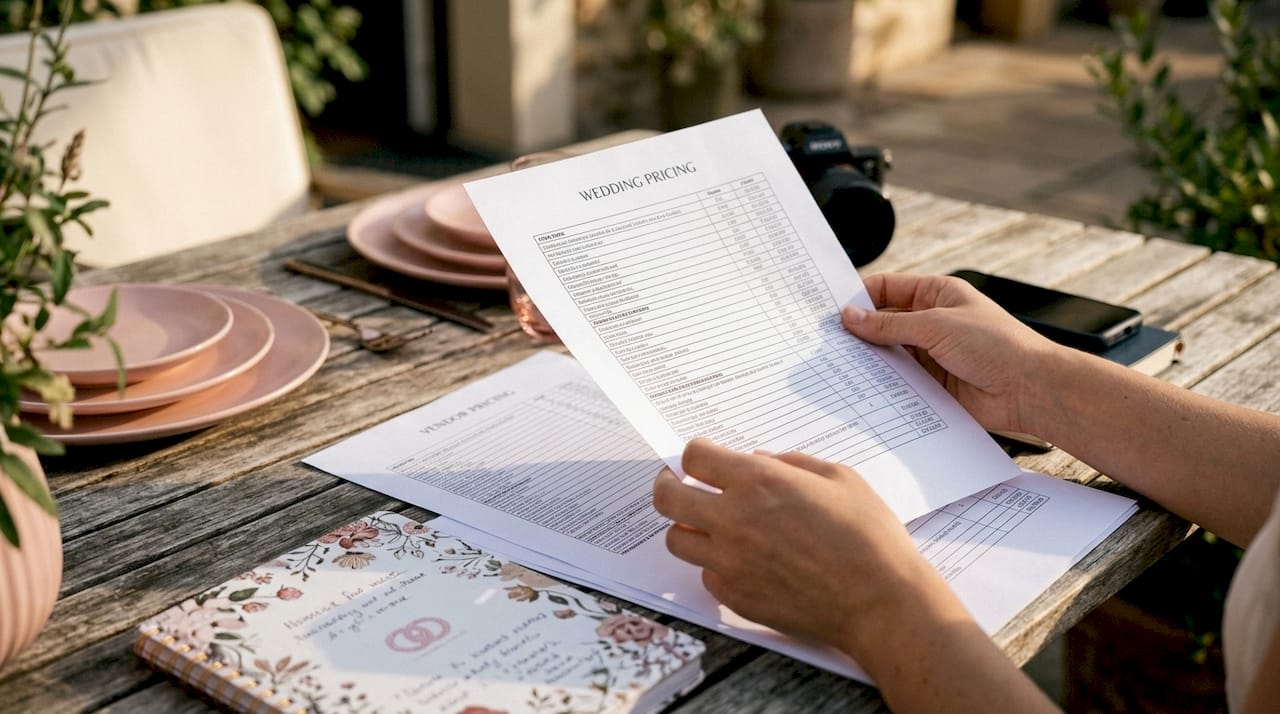
Transparency also connects directly to wedding planning ethics. Ethical planning means spending intentionally, understanding who benefits from each recommendation, and choosing vendors based on merit rather than financial arrangements. When a planner or venue is open about how their preferred vendor list was built, couples can evaluate recommendations with full context.
What are the common barriers to transparency in wedding planning?
Several structural and cultural factors make transparency difficult to achieve in the wedding industry.
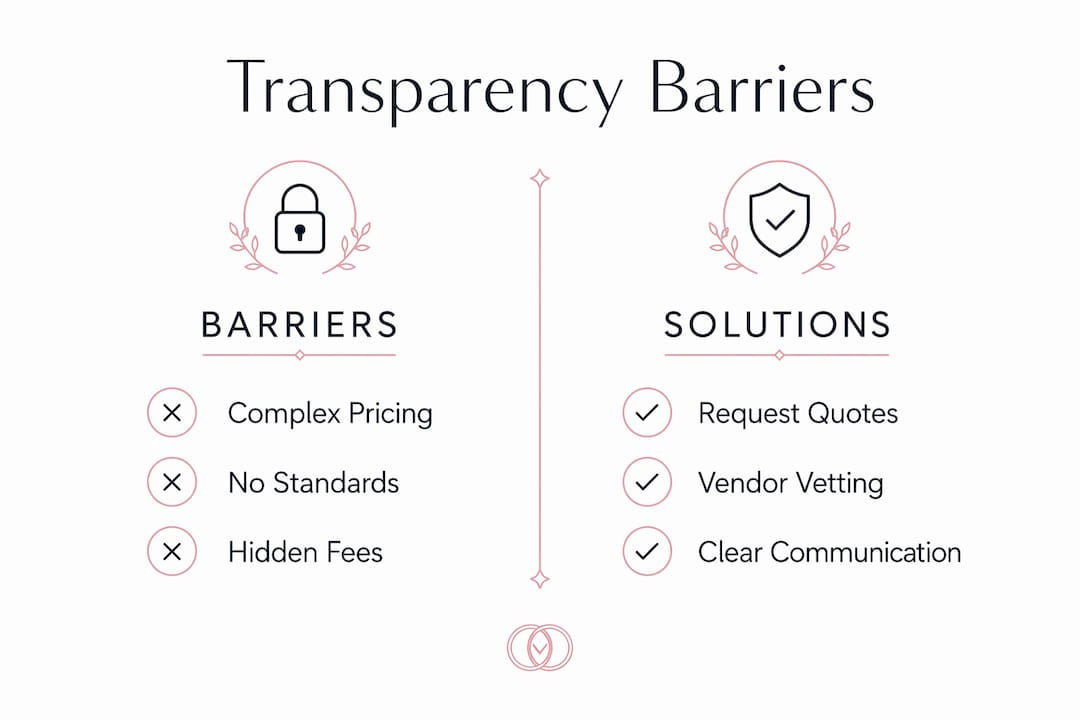
- No pricing standards exist. Vendor pricing fluctuates with experience and overhead, making published rates from even a year ago unreliable. Couples who rely on online pricing guides often arrive at consultations with outdated expectations.
- Preferred vendor lists can hide conflicts of interest. Venues sometimes charge vendors for placement on their preferred lists, meaning recommendations reflect paid inclusion rather than quality. Couples rarely know this unless they ask directly.
- Vague contract language is common. Contracts that describe services in broad terms, such as “day-of coordination” without specifying hours, staffing, or deliverables, leave room for misinterpretation and unmet expectations.
- Flat-rate quotes obscure real costs. A single lump-sum estimate does not show how money is allocated across vendors, labor, and overhead. Couples cannot identify where costs are inflated or where savings are possible.
- Styled photography creates unrealistic benchmarks. Wedding imagery online often reflects budgets far above average. Couples who use those images as planning references frequently underestimate real costs.
Pro Tip: Ask every vendor for a line-item quote before signing anything. If a vendor refuses to break down their pricing, treat that as a signal worth investigating.
The absence of a universal training standard for wedding planners compounds all of these issues. One planner may proactively disclose every commission they earn. Another may never mention it. Couples have no reliable way to know which type of planner they are working with unless they ask specific, direct questions from the start.
How does transparency affect the ethics and finances of wedding planning?
Transparent wedding planning connects directly to both ethical responsibility and budget accuracy. These two areas reinforce each other.
“Ethical wedding planning involves aligning spending with values, such as supporting sustainable and inclusive businesses, rather than just following industry norms or social media trends. Intentional choices replace consumerism with personal values in wedding spending.”
That principle matters financially, too. When couples understand exactly where their money goes, they can redirect spending toward vendors and causes that reflect their priorities. A couple who values sustainability can choose vendors based on verified practices rather than marketing language. A couple supporting local businesses can confirm that their planner’s recommendations are merit-based, not commission-driven.
The financial case for transparency is equally clear:
- Line-item quotes prevent budget drift. Detailed proposals show exactly what is included and what costs extra. Couples who receive only flat-rate estimates often discover additional charges after signing.
- Scope clarity prevents disputes. Transparent proposals define staffing and deliverables explicitly. Knowing who will be on-site and what they will do removes the most common source of post-wedding complaints.
- Disclosed commissions protect client advocacy. When a planner earns a referral fee from a vendor, that financial relationship can influence their recommendation. Vendor referral lists may reflect hidden financial arrangements, and couples benefit from asking about those ties directly.
Ethical transparency also extends to inclusivity. Planners who openly share the criteria behind their vendor recommendations make it easier for couples to find vendors who reflect their values, whether that means LGBTQ+ affirming businesses, minority-owned vendors, or environmentally responsible suppliers.
What practical steps can couples take to ensure vendor transparency?
Couples who ask the right questions and use the right tools get far more transparency than those who accept whatever vendors offer by default.
Transparency signs vs. red flags in vendors and planners
| Category | Transparency sign | Red flag |
|---|---|---|
| Pricing | Detailed line-item quote provided upfront | Flat-rate estimate with no breakdown |
| Contracts | Scope, staffing, and deliverables defined clearly | Vague language like “full-service coordination” |
| Vendor referrals | Planner discloses any commissions earned | Refuses to discuss financial ties to vendors |
| Communication | Regular updates through a shared portal or timeline | Information shared only when couples ask |
| Revisions | Change orders documented in writing | Verbal agreements with no paper trail |
Start every vendor relationship by requesting a detailed written proposal. Line-itemized vendor quotes give you a real picture of costs and make it easier to compare vendors fairly. A photographer who charges $4,500 and includes two shooters, an engagement session, and a digital gallery is offering something very different from one who charges the same amount for a single shooter and four hours of coverage.
Ask your planner directly whether they earn commissions or referral fees from any vendor they recommend. This is not an accusation. It is a standard question that any ethical planner should answer without hesitation. True transparency means understanding financial ties behind every recommendation you receive.
Use shared tools to increase visibility. Shared wedding timelines give every vendor the same information at the same time, reducing the risk of miscommunication. Vendor portals create a documented record of every exchange, so nothing gets lost in a text thread.
Pro Tip: Before your first vendor meeting, write down three questions: What is included in this quote? Who will be on-site on the day? Do you have any financial relationship with vendors you recommend to me? Those three questions surface most transparency issues before they become problems.
How does transparency improve the overall wedding planning experience?
Transparency does more than protect your budget. It changes the entire quality of the planning experience.
- Stress drops when expectations are clear. Couples who know exactly what each vendor will deliver spend less time worrying about what might go wrong. Documented contracts and shared timelines replace anxiety with confidence.
- Vendor coordination improves. When all vendors receive the same detailed timeline and logistics information, they can prepare properly. Wedding photographers, for example, require detailed planning meetings 3–4 weeks before the event to finalize family arrangements and logistics. That level of preparation is only possible when couples share complete, accurate information upfront.
- Decisions align with values. Couples who understand the full picture, including who benefits financially from each recommendation, can choose vendors that reflect what they actually care about. That alignment makes the wedding feel more personal and intentional.
- Problems get caught earlier. Open communication between couples and planners surfaces scheduling conflicts, budget gaps, and vendor availability issues weeks before they become crises. A planner who shares a real-time planning dashboard gives couples visibility into the process rather than a finished product they had no hand in shaping.
The couples who report the most satisfying planning experiences are not necessarily the ones with the largest budgets. They are the ones who understood what they were paying for, trusted the people they hired, and felt included in every major decision.
Key Takeaways
Wedding planning transparency is the single most effective tool couples have for protecting their budget, building vendor trust, and making value-aligned decisions throughout the planning process.
| Point | Details |
|---|---|
| Transparency requires full disclosure | Pricing, staffing, deliverables, and vendor commissions must all be disclosed upfront. |
| Industry lacks universal standards | No certification body governs planners, so couples must ask direct questions to verify transparency. |
| Line-item quotes are non-negotiable | Flat-rate estimates hide cost allocation; detailed quotes reveal what you are actually paying for. |
| Vendor referrals may carry conflicts | Ask every planner whether they earn commissions from vendors they recommend. |
| Shared tools increase visibility | Portals and timelines give couples documented access to planning details in real time. |
Transparency is becoming the industry’s most important differentiator
I have watched the wedding industry slowly reckon with its transparency problem over the past several years, and the progress is real but uneven. The planners who openly share their commission structures, explain every line item, and give clients access to live planning documents are building reputations that no marketing budget can replicate. The ones who still rely on vague contracts and opaque vendor lists are losing clients to planners who simply communicate better.
What I find most interesting is that couples are not asking for perfection. They are asking to be treated as partners. A planner who says, “I earn a 10% referral fee from this florist, and here is why I still recommend them,” builds more trust than one who pretends the financial relationship does not exist. Honesty about imperfect situations is more powerful than the appearance of a conflict-free process.
The couples who advocate for themselves get better outcomes. Ask for the line-item quote. Ask about the commission. Ask who will actually be in the room on your wedding day. These are not aggressive questions. They are the baseline of a professional relationship. Any vendor who treats those questions as an inconvenience is telling you something important about how they will handle problems later.
Transparency is not a trend. It is becoming the standard by which couples evaluate planners and vendors before they ever sign a contract. The industry will catch up. Until it does, the couples who ask direct questions will be the ones who plan with confidence.
— JOATLABS
Thespecialwedding makes transparent vendor selection easier
Finding vendors who communicate clearly and price honestly is one of the hardest parts of wedding planning. Thespecialwedding addresses that directly through a curated vendor directory built around detailed profiles, clear service descriptions, and verified vendor information.
Vendors like Events By Suad in Oklahoma City offer transparent planning services with clear client communication built into their process. Whether you need a planner, a decorator, or a venue, Thespecialwedding gives you the context to evaluate vendors on merit rather than guesswork. Browse profiles, compare service details, and connect with vendors who put their terms on the table from day one.
FAQ
What is wedding planning transparency?
Wedding planning transparency is the full disclosure of pricing, vendor relationships, contract scope, and deliverables between couples, planners, and vendors. It gives couples the information they need to make informed decisions and avoid unexpected costs.
Why do wedding vendors lack pricing transparency?
The wedding industry has no universal pricing standard or regulatory body, so vendors set their own rates and disclosure practices. Published online pricing is often outdated because vendor rates change frequently with experience and overhead.
How do I know if a vendor’s referral recommendation is unbiased?
Ask your planner directly whether they earn a commission or referral fee from any vendor they recommend. Ethical planners disclose these financial relationships without hesitation, and any refusal to answer is a clear red flag.
What should a transparent wedding contract include?
A transparent contract defines the exact scope of work, including which staff members will be on-site, what deliverables are included, the payment schedule, and how changes to scope are handled. Vague language like “full-service coordination” without specifics is a common warning sign.
How can shared tools improve transparency during planning?
Shared timelines and vendor portals give couples real-time visibility into planning details and create a documented record of every communication. These tools reduce miscommunication and ensure all vendors work from the same accurate information.
Recommended
- Wedding Planning Progress Tracking: A Complete Guide | The Special Wedding Blog
- Solo Wedding Planner Organization Tips That Work | The Special Wedding Blog
- Wedding Planner Client Communication: A 2026 Guide | The Special Wedding Blog
- Wedding Planning Dashboard Benefits for Pros in 2026 | The Special Wedding Blog
Free wedding planner templates
Skip the blank page — these templates ship with the form fields you actually need.
Browse all 9 free templates →