From Wedding Quote to Signed Contract: A Planner's Workflow Guide
From Wedding Quote to Signed Contract: A Planner’s Workflow Guide
A repeatable quote-to-contract workflow turns an accepted estimate into a signed, enforceable contract and an active wedding project in one automated flow. That single shift, from emailing PDFs back and forth to a connected digital process, is what separates studios managing 10 events a year from those confidently running 40 or more.
Here is the short version of how it works:
- Quote accepted → contract auto-generated from template with dynamic variables (client names, dates, package, fees)
- Contract sent → client reviews and signs via e-signature, compliant with ESIGN/UETA standards
- Retainer captured → payment processor confirms funds before booking is marked final
- Project created → milestones, vendor placeholders, and timeline items activate automatically
- Audit trail stored → view timestamps, signature timestamps, and IP verification saved to the client file
Platforms like Thespecialwedding are built specifically for this flow, giving professional planners a single workspace where contract and payment workflows connect directly to project management rather than living in separate tools.
Key Takeaways
Converting a wedding quote to a signed, stored contract requires a connected workflow: template-driven contract generation, e-signature with a full audit trail, retainer capture at signing, and automatic project creation on completion.
| Point | Details |
|---|---|
| Finalize before generating | Lock every line item and exclusion in the quote before auto-populating the contract template. |
| E-sign plus audit trail | Record signer identity, timestamps, IP, and document version to meet ESIGN/UETA standards. |
| Retainer at signature | Require payment to complete the signing flow, not as a separate follow-up step. |
| Automate project creation | Trigger milestones, vendor placeholders, and timeline items the moment the contract is signed and paid. |
| Thespecialwedding | Implements the full quote-to-contract cycle in one workspace, from template generation to executed PDF storage. |
Table of Contents
- How do you convert a wedding quote to a contract step by step?
- What must every wedding planning contract include?
- Which software features actually automate the quote-to-contract process?
- Are e-signatures legally enforceable for wedding contracts?
- How do you migrate from spreadsheets to an automated quote-to-contract workflow?
- What goes wrong when converting quotes to contracts, and how do you fix it?
- How does Thespecialwedding implement the quote-to-contract workflow?
- Why integrated workflows become the default for professional planners
- Thespecialwedding: built for the quote-to-contract workflow
- Sources
How do you convert a wedding quote to a contract step by step?
Seven steps cover the full cycle, from a finalized estimate to a stored, executed agreement and an active project record.
- Finalize the quote. Lock in the package, all line items, add-ons, and explicit exclusions before anything moves forward. Ambiguity here becomes a dispute later.
- Auto-generate the contract. Pull the accepted quote into a contract template that uses dynamic variables: client names, event date, venue, total fee, payment schedule, and cancellation terms populate automatically. No copy-pasting between documents.
- Send via a client portal. Deliver the contract through a secure, client-facing portal rather than email attachments. Track whether the client has opened it, and set an automatic reminder if they have not signed within 48 hours.
- Capture the retainer at signature. Integrate a payment processor (Stripe or PayPal are the most common) so the retainer is collected the moment the client signs. Confirm the payment clears before marking the booking confirmed.
- Create the wedding project automatically. On signature and payment confirmation, trigger project creation: initial milestones, vendor placeholders, and a draft timeline spin up without manual entry. This is where a digital planning workspace pays for itself immediately.
- Record the audit trail. Log view timestamps, signature timestamps, IP or PIN verification, and the exact document version signed. Store the executed PDF in the client file, not just on a local drive.
- Activate post-signature workflows. Turn on invoice reminders for milestone payments, notify relevant vendors, and sync the event date to your calendar. The wedding event runsheet and timeline can now be built against confirmed contract dates.
Pro Tip: Set a 48-hour auto-reminder on unsigned contracts. Planners who follow up within two days of sending a contract report significantly faster time-to-signature than those who wait for clients to act on their own.
Contract management systems that track milestone payments across 40 or more events per year reduce the time spent chasing overdue payments, one of the highest-friction administrative tasks in a busy studio.
What must every wedding planning contract include?
Before you convert a quote into a contract, every required clause must be present. A signed document with gaps is not protection; it is a liability.
- Scope of services: List every deliverable explicitly, then list what is excluded. “Day-of coordination” means different things to different clients; your contract must define it line by line. Avoid phrases like “as needed” without a defined ceiling.
- Payment schedule: State the retainer amount, each milestone payment date and amount, the final balance due date, accepted payment methods, and your refund policy. According to UpCounsel’s guidance on wedding planner contracts, payment schedules, retainers, and cancellation policies are among the most dispute-prone clauses when left vague.
- Cancellation and rescheduling terms: Define the client’s cancellation window, any fees that apply at each stage, and your availability policy for rescheduled dates. Specify what triggers a change-order and what fee applies.
- Vendor coordination responsibilities: State clearly whether you hire vendors directly, recommend vendors for client approval, or manage vendor contracts on the client’s behalf. This single clause prevents the most common scope disputes.
- Liability and insurance: Include a limitation of liability clause, confirm your professional insurance coverage, and add force majeure language that covers circumstances outside either party’s control.
- Dispute resolution: Name your preferred resolution method (mediation before arbitration is common) and the governing state law. Keep this clause brief and plain.
Sample clause language worth building into your template:
The Thespecialwedding contract essentials blog provides additional clause examples and a downloadable template planners can adapt directly.
Which software features actually automate the quote-to-contract process?
Not every platform that claims “contract management” can handle the full quote-to-contract cycle. These are the capabilities that matter:
- Template engine with dynamic variables: Contract fields populate from the accepted quote automatically. A clause library lets you swap in the right cancellation or liability language by package type.
- Client-facing proposal builder and portal: Clients view, accept, and sign from one link. View-tracking tells you exactly when they opened the document.
- Built-in e-signature with timestamped audit trails: Multi-signer support (sequential or simultaneous) and PIN or authentication options cover couples who both need to sign.
- Payment integration: Stripe or PayPal capture the retainer at the moment of signature. Milestone invoices schedule automatically from the payment terms in the contract.
- Version control and amendment tracking: Every edit is logged. When a client requests a change, you issue an amendment, not a new contract, and both parties re-sign only the changed section.
- Project creation automations: Signature triggers milestone creation, vendor placeholders, and an initial wedding day timeline without manual setup.
- Calendar sync and accounting export: Confirmed event dates push to your calendar; payment records export to your accounting tool.
Pro Tip: Before committing to any platform, run a test signing with a real contract. Confirm the audit trail captures the document version hash, not just a timestamp, so you can prove exactly what the client agreed to if a dispute arises.
Centralized templates and automated reminders are the features planners name most often when describing a scalable contract system for multi-event studios.
Are e-signatures legally enforceable for wedding contracts?
Yes, with the right setup. Under the federal ESIGN Act and the Uniform Electronic Transactions Act (UETA), adopted in 49 states, an e-signature carries the same legal weight as a handwritten one, provided the signer’s intent to sign is clear and the record is retained.
What your system must record for each signing:
- Signer identity (name, email, and PIN or authentication method)
- Timestamp of document view and timestamp of signature
- IP address at signing
- Exact document version (a hash or version number, not just a file name)
- The executed PDF stored in a format you can export and produce in a dispute
Retain executed contracts and their audit records for at least seven years, or longer if your state’s statute of limitations for contract disputes requires it. Keep them in a centralized system with export capability, not just a local folder. Solo planners especially benefit from a cloud-based system where records are accessible and backed up automatically.
One practical rule: never let a material scope or price change go unsigned. If a client adds a rehearsal dinner to a day-of coordination package, issue a written amendment and require a new signature before doing the work.
How do you migrate from spreadsheets to an automated quote-to-contract workflow?
A staged rollout keeps your current bookings safe while you build the new system in parallel.
- Week 0, pilot: Select one upcoming event and run the full quote-to-contract flow manually inside the new platform. Identify gaps before they affect a real client.
- Weeks 1–3, template and automation build: Configure your contract templates, dynamic variables, payment schedules, and project creation automations. Have your attorney or a qualified contract reviewer check the clause language before you go live.
- Week 4, staff training: Walk every client-facing team member through the portal, the signing flow, and the payment capture steps. Run at least two practice signings with internal test accounts.
- Month 2, full launch: Move all new quotes into the platform. Keep existing signed PDFs and outstanding quote records in the new client files as read-only attachments so your history is centralized.
Studios that underestimate configuration time are the ones who rush templates and create the ambiguous clauses they were trying to avoid.*
Multi-event studio operations benefit most from a phased rollout because it lets you stress-test the workflow before it touches your highest-value clients.

What goes wrong when converting quotes to contracts, and how do you fix it?
- Ambiguous scope language: “Full planning services” without a deliverable list creates unpaid extra work. Fix it by line-itemizing every service and adding an explicit exclusions list to every contract.
- Missing or weak payment terms: A contract without a retainer-at-signing requirement gives clients a reason to delay. Require payment to complete the signing flow, not after.
- Version confusion during edits: Clients who request changes after receiving the contract often end up signing an outdated version. Fix this with a formal amendment flow and a rule that the prior version is void on re-issue.
- No multi-signer support: Couples who both need to sign cannot complete a single-signer flow. Enable sequential or simultaneous multi-signer routing before your first dual-signature contract goes out.
- Integration breakpoints: Calendar sync and accounting exports sometimes fail silently after a platform update. Run a staged integration test monthly and keep a manual fallback checklist for the first 10 signings after any platform change.
How does Thespecialwedding implement the quote-to-contract workflow?
Thespecialwedding maps the full cycle inside one workspace. Quote fields (package, line items, fees, payment schedule) feed directly into contract templates with dynamic variables, so the contract that reaches the client already reflects exactly what was quoted.
| Workflow Stage | Thespecialwedding Feature |
|---|---|
| Quote finalization | Budget and quote builder with line items and add-ons |
| Contract generation | Template engine with dynamic variables and clause library |
| Client delivery | Client portal with view-tracking and accept-to-sign flow |
| E-signature | Built-in e-sign with timestamped audit trail |
| Retainer capture | Integrated payment processing at signature |
| Project activation | Automated milestone, vendor placeholder, and timeline creation |
| Record storage | Executed PDF stored in client file with full audit log |
Three use cases show how the template and payment logic adapts:
- Day-of coordination: Single flat fee, retainer at signing, balance due 30 days before the event. One milestone invoice, minimal vendor management clauses.
- Full-service planning: Retainer plus three milestone payments tied to planning phases. Vendor coordination clauses active; planner manages vendor contracts within the project.
- Add-on services: Amendment flow adds a line item to the existing contract; client re-signs the amendment only; payment schedule updates automatically.
The Thespecialwedding blog on contract essentials and the planning template library give planners clause examples and template structures they can import directly into the platform.
Why integrated workflows become the default for professional planners
The studios that resist automation longest tend to frame it as a trust issue: they worry that a digital contract feels impersonal. That concern gets the dynamic is exactly backward. A clear, complete, signed contract is what protects the client relationship when something changes, and something always changes in wedding planning.
Studios managing 40 or more events per year cannot afford to treat each quote-to-contract conversion as a custom manual task. The audit trail is not bureaucracy; it is the record that keeps a dispute from becoming a legal problem. And the project automation that fires on signature is not a shortcut; it is the guarantee that no milestone or vendor task falls through the gap between “signed” and “started.”
Automation preserves the planner-client relationship by making obligations explicit from day one. Clients who understand exactly what they paid for, when payments are due, and what happens if plans change are clients who trust their planner. That clarity comes from the contract, not the conversation.
Thespecialwedding: built for the quote-to-contract workflow
Thespecialwedding gives professional planners a single platform where templates, e-sign, payment capture, project creation, and audit trails work together from the first quote to the final stored contract. You do not need a separate e-sign tool, a separate invoicing app, or a spreadsheet to track who has signed and who has not.
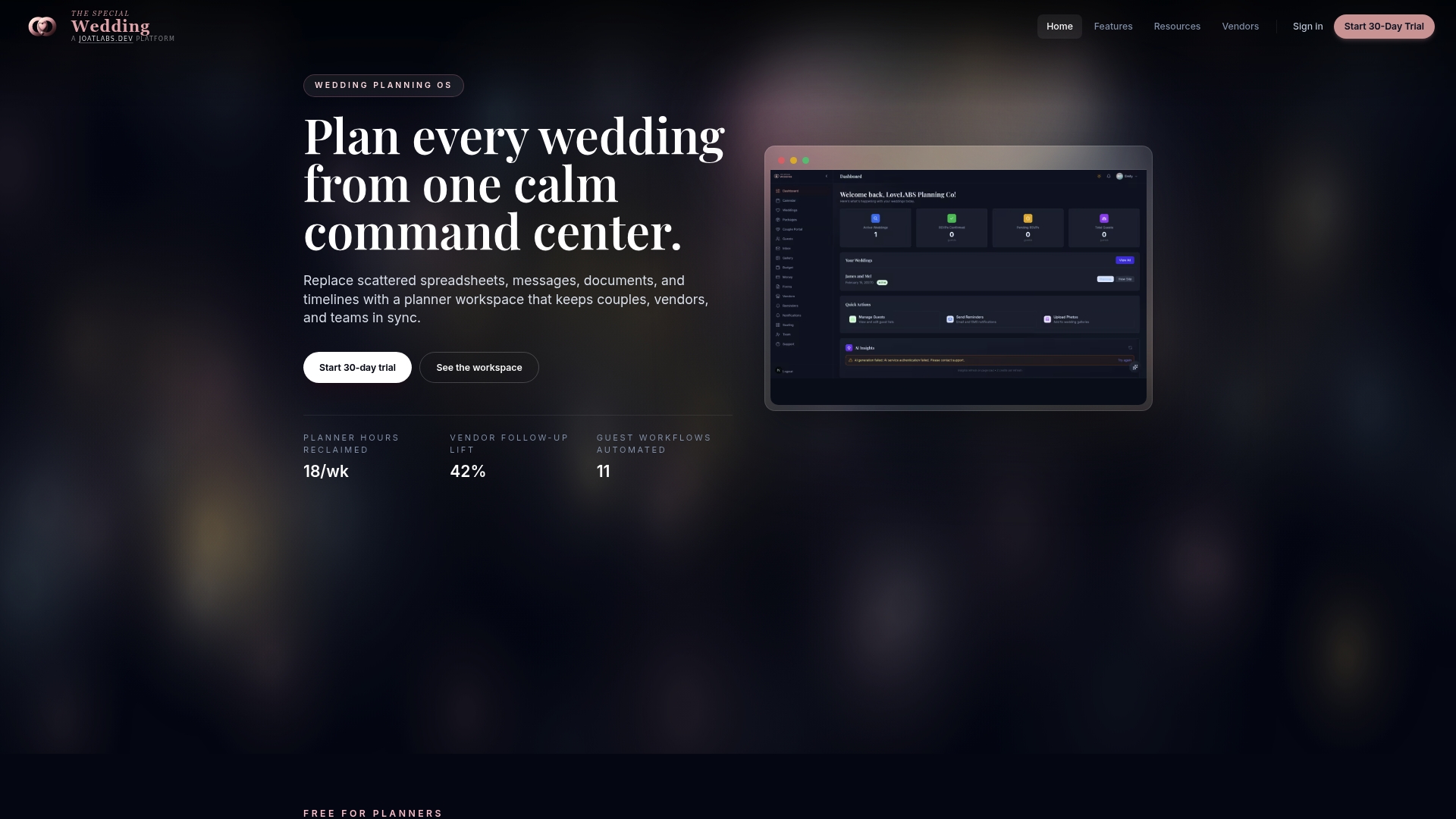
Start a free 30-day trial and run your next quote through the full contract workflow with real client data. You will see the retainer capture, the audit trail, and the project activation before you commit to a paid plan. Explore the vendor directory to see how vendor contacts link directly to your project records once the contract is signed.
Sources
- Contracts for wedding planners | UpCounsel
- The importance of contracts: creating a system for contract management in your wedding planning business | Plan Me Digital
Recommended
Free wedding planner templates
Skip the blank page — these templates ship with the form fields you actually need.
Browse all 9 free templates →