The Role of Wedding Questionnaire Templates for Pros
The Role of Wedding Questionnaire Templates for Pros

Most wedding professionals treat questionnaires as a formality. Something to check off during client onboarding and file away. That is a costly misconception. The role of wedding questionnaire templates goes far deeper than collecting names and venue addresses. Done right, they replace guesswork with facts, prevent expensive miscommunications, and give you a real-time reference document that every vendor on your team can rely on during the event itself. This guide breaks down exactly how to build, customize, and use wedding questionnaires as the strategic planning tool they were always meant to be.
Table of Contents
- Key takeaways
- The role of wedding questionnaire templates
- Key components and customization for professionals
- Practical benefits for professionals and clients
- Best practices for implementation
- My take on questionnaires as a professional differentiator
- How Thespecialwedding supports your questionnaire workflow
- FAQ
Key takeaways
| Point | Details |
|---|---|
| Templates are strategic tools | Wedding questionnaire templates organize logistics, reduce errors, and serve as a single source of truth for all vendors. |
| Timing determines accuracy | Sending questionnaires approximately 6 weeks before the wedding captures finalized details without inviting rushed or outdated responses. |
| Customization prevents scope creep | Tier-specific forms for full-service, partial, and day-of coordination clients reduce disputes and mismatched expectations. |
| Digital forms increase completion rates | Conditional logic and automated reminders significantly cut manual follow-up and improve response quality. |
| Budget questions protect alignment | Per-category budget breakdowns catch vision-versus-budget mismatches before they become conflicts. |
The role of wedding questionnaire templates
A wedding questionnaire template is a structured form that collects essential details about an upcoming event from the couple, often covering logistics, vendor status, personal preferences, and timeline specifics. Think of it as a pre-event briefing document rather than a simple intake form.
Comprehensive wedding questionnaires typically run 5 to 7 pages depending on event complexity, covering everything from ceremony timing and reception flow to dietary restrictions and vendor contact information. That length is intentional. The more specific the questions, the less you have to chase down answers in the weeks leading up to the big day.
Here is what a well-structured wedding planning questionnaire should capture:
- Full contact information for both partners and their emergency contacts
- Ceremony and reception venue details, including access times and restrictions
- Current vendor lineup with contract status for each (booked, pending, or unconfirmed)
- Guest count, including confirmed and estimated numbers
- Budget allocation by category, not just a single total figure
- Vision and style preferences, including inspirational references
- Day-of timeline including hair, makeup, and transportation logistics
- Special requests such as cultural traditions, surprises, or accessibility needs
Pro Tip: Ask couples to attach or paste links to any vendor contracts or mood boards directly in the questionnaire. This turns the form into a live resource rather than just a snapshot.
The importance of wedding questionnaires is not simply organizational. They are a communication protocol. When a photographer, a DJ, or a florist can pull up a single document with confirmed timings, must-have shots, and reception flow details, they stop relying on verbal confirmations that are easy to forget or misinterpret.
Key components and customization for professionals
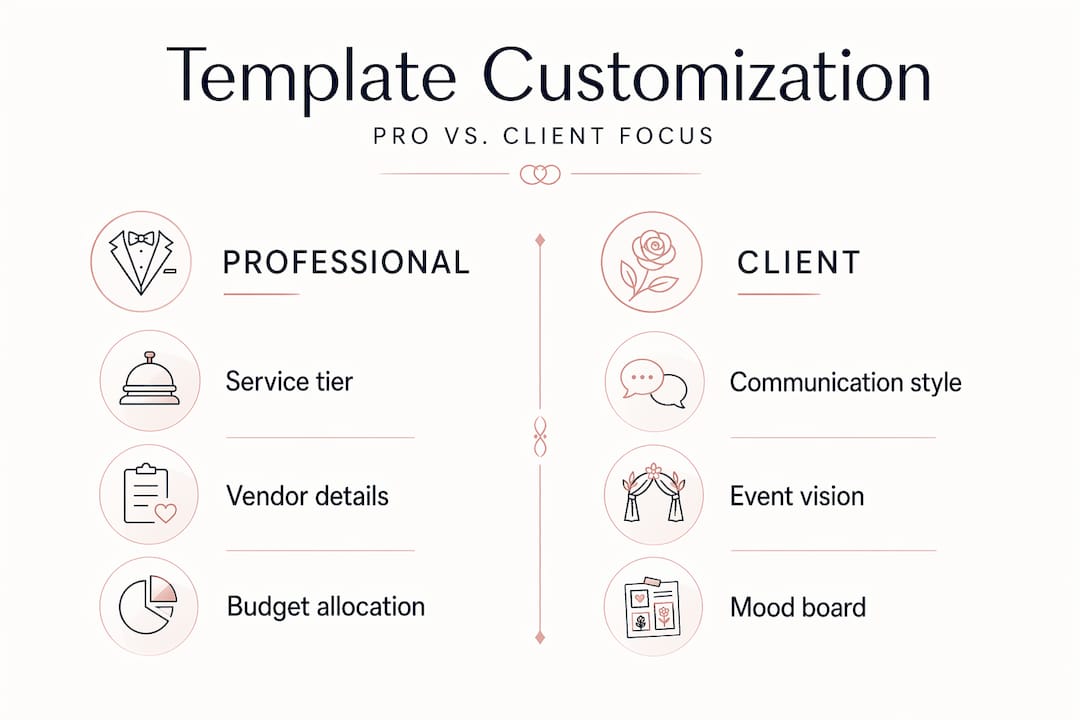
The most common mistake professionals make with wedding questionnaires is using one template for every client. A couple hiring you for full-service planning has radically different needs than a couple bringing you in as a day-of coordinator. Using the same intake form for both signals that you have not thought carefully about what they actually need from you.

Tier-specific questionnaires that differentiate between full-service, partial, and day-of coordination better manage client expectations and define your scope from the start. A full-service client’s questionnaire should explore vendor preferences, budget flexibility, family dynamics, and long-range vision. A day-of coordination questionnaire, by contrast, should focus heavily on confirmed vendor information, run-of-show details, and logistical handoffs.
Here is a comparison of what each tier should prioritize:
| Service tier | Primary questionnaire focus |
|---|---|
| Full-service planning | Vision, budget allocation, vendor sourcing needs, family structure |
| Partial planning | Existing vendor status, gaps in vendor coverage, budget remaining |
| Day-of coordination | Confirmed timeline, vendor contacts, ceremony and reception logistics |
Beyond service tiers, per-category budget allocation is one of the most underused elements in intake forms. When clients list a single budget figure without breaking it down, you have no way of knowing whether their $20,000 is mostly spoken for by the venue or evenly distributed. Asking for category-level estimates, including venue and catering at roughly 40 to 50% of total spend as a general benchmark, catches mismatches before they become conflicts.
The questionnaire also needs to account for what is already locked in. Failing to incorporate existing vendor information and service tier distinctions causes contract conflicts and client dissatisfaction later in the planning cycle. If a couple already has a florist booked but you do not ask about it, you might end up sourcing floral quotes unnecessarily or worse, sending redundant communication that erodes client trust.
Pro Tip: Build a field that asks for each vendor’s contract status, not just whether they are booked. “Signed contract,” “verbal agreement,” and “considering” require entirely different follow-up strategies from you.
Customizable wedding templates also allow you to adapt tone and question depth based on client communication style. Couples who have done detailed planning research respond well to specific, layered questions. First-time planners benefit from more explanatory language and simpler choices. Your template structure can stay consistent while the language and depth shift based on what the intake process has already told you about the client.
Practical benefits for professionals and clients
The wedding questionnaire benefits extend well beyond pre-event preparation. On a logistical level, a completed questionnaire becomes the single searchable record that replaces scattered text threads, email chains, and handwritten notes. Digital questionnaire intake centralizes vendor contacts, accommodation logistics, and multi-day event timelines, which makes it especially critical for destination weddings involving coordination across time zones.
For your clients, there is a perception benefit that professionals often overlook. Using a detailed questionnaire is not just logistical. It signals to couples that their event is being handled with care and precision, which reduces anxiety and builds confidence in your services. Couples who feel organized and heard are far more likely to trust your decisions on the day itself.
From a financial risk standpoint, the stakes are rising. Failing to secure RSVP data in time creates substantial logistical and financial issues, particularly for smaller, high-cost-per-head events where every unconfirmed seat carries real dollar consequences. A wedding planning questionnaire that bakes in firm RSVP deadlines and asks couples to confirm their finalized guest count gives you the data to hold vendors to accurate numbers.
Consider what a well-structured questionnaire does specifically for vendor coordination on the day:
- Photographers reference the questionnaire for must-have shot lists and family groupings
- DJs use it for song preferences, do-not-play lists, and ceremony music cues
- Caterers cross-check dietary restrictions and final guest count confirmations
- You, as the planner, use it to manage the run-of-show without relying on memory
Embedding detailed logistical questions allows real-time reference for every vendor on your team, which reduces errors under pressure and minimizes the need for last-minute phone calls during the ceremony or reception.
Best practices for implementation
Knowing what to include in your wedding questionnaire is only half the equation. Knowing how to use wedding questionnaires within your actual workflow determines whether they deliver their full value.
- Send at the right time. Sending questionnaires approximately 6 weeks before the wedding gives couples enough time to gather accurate details without submitting information that will change significantly before the event. Too early and you get placeholders. Too late and you are working with rushed answers.
- Use digital forms with conditional logic. Digital forms with conditional logic and automated notifications increase completion rates and reduce manual follow-up. If a client answers “no” to having a live band, the band-related questions collapse automatically, making the form feel faster and more relevant.
- Integrate questionnaire data into your timeline tool. Once responses are in, pull key timing details directly into your automated event timeline so vendors receive a single, unified document rather than separate briefings.
- Build questionnaire check-ins into monthly client touchpoints. Do not treat the questionnaire as a one-time event. A brief review during monthly check-ins catches updates to vendor status, guest count changes, or timeline shifts before they create day-of surprises.
- Communicate firm deadlines clearly. When sending the questionnaire, specify the exact deadline for responses and explain why it matters. Couples respond better to “we need this by April 10 to finalize your catering order” than to a vague request.
- Archive completed questionnaires in one place. Whether you use a dedicated platform or a centralized folder system, every completed questionnaire should be accessible to your entire team within seconds. For solo planners managing multiple events, this is especially critical for avoiding cross-event confusion.
Pro Tip: Send a brief one-paragraph explanation with every questionnaire that tells clients exactly how you will use their answers. Couples who understand the purpose behind the questions complete forms faster and with more detail.
Common pitfalls and how to avoid them
Even experienced professionals fall into predictable traps with questionnaires. Knowing them in advance lets you sidestep the ones that cause the most damage.
- Relying on a single generic template. A template that does not reflect the client’s service tier, booked vendors, or event complexity produces vague answers that require follow-up. Build at least three core versions of your questionnaire aligned to your service offerings.
- Skipping budget breakdown questions. Asking only for a total budget number leaves critical gaps. Without category-level allocations, you cannot assess whether expectations and finances actually align, and that misalignment tends to surface at the worst possible moments.
- Ignoring already booked vendors in intake forms. If a couple has confirmed a caterer and a photographer before hiring you, your questionnaire must acknowledge that. Couples wedding questionnaire designs that ignore existing contracts create redundant outreach and create confusion about who is managing what.
- Sending the questionnaire too late. Rushing a couple through a 6-page form two weeks before the event produces incomplete answers. Timing is a design decision, not an afterthought.
- Never updating the template. After every event cycle, review your questionnaire for gaps. What questions did you wish you had asked? What answers did you never actually use? Refine accordingly.
Pro Tip: After each wedding, spend 10 minutes noting one question that was missing and one that generated no useful data. Over six months, this habit produces a noticeably sharper template.
My take on questionnaires as a professional differentiator
I have seen planners at every level struggle with day-of chaos that was entirely predictable. In most cases, the root cause was not a vendor failure or a venue problem. It was a communication gap that a well-built questionnaire would have closed weeks earlier.
What I have learned is that the planners who consistently deliver stress-free events are almost always the ones who treat their questionnaire as a living document, not a one-time form. They revise it after each event. They customize it by tier. They send it at the right moment and follow up with purpose.
A generic template is better than nothing. But a tailored, tier-specific wedding survey questions set built from real client experience is what separates planners who get referrals from planners who get complaints. The questionnaire is often the first professional document a couple receives from you. It either signals that you have thought carefully about their event, or it signals that you are running a template mill.
I genuinely believe questionnaire design is an underrated professional skill in this industry. Invest in it the way you invest in your contracts or your vendor relationships. The return is measurable in fewer day-of calls, fewer scope disputes, and clients who feel taken care of from the very first form they fill out.
— JOATLABS
How Thespecialwedding supports your questionnaire workflow
Managing client intake, questionnaire responses, and vendor coordination across multiple events gets complicated fast when those pieces live in different tools. Thespecialwedding brings them into one place.
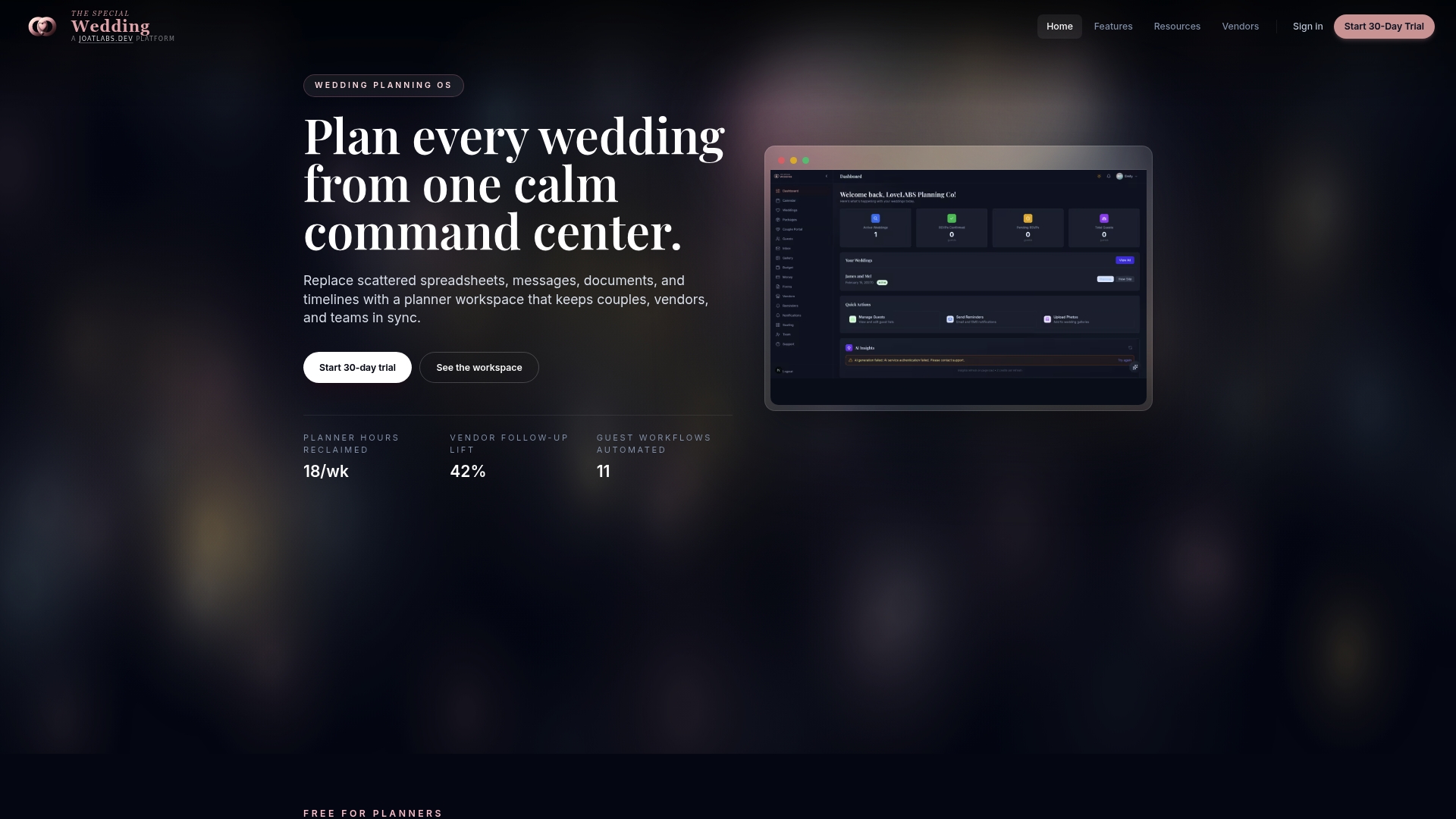
The platform offers wedding planner software built specifically for professionals managing multiple events, with client portals, customizable intake templates, automated workflows, and real-time dashboards that connect your questionnaire data directly to your planning timeline. When a couple submits their responses, that information flows into your project workspace without manual entry. You can also explore the vendor directory to source and confirm vendor lineups, which pairs naturally with the vendor status fields in your intake questionnaire. It is one fewer tool to juggle, and one more reason clients walk away impressed.
FAQ
What is the role of wedding questionnaire templates?
Wedding questionnaire templates give planners a structured way to collect all critical event details from couples before the wedding, replacing scattered communication with a single, reliable reference document.
When should you send a wedding questionnaire?
Sending questionnaires about 6 weeks before the wedding is the optimal window, capturing finalized logistics while leaving enough time to act on the information without rushing the couple.
How do you customize a wedding questionnaire for different service tiers?
Build separate templates for full-service, partial, and day-of coordination clients, with each version asking questions that reflect the scope of your involvement and what decisions still need to be made.
Why are wedding questionnaire benefits significant for vendor coordination?
A completed questionnaire gives vendors like photographers and DJs a real-time reference for timings, song lists, and logistics, reducing errors and eliminating the need for last-minute clarifications during the event.
What is the biggest mistake professionals make with questionnaires?
Using a single generic template for all clients is the most common mistake, as it produces vague answers and misses the tier-specific questions that prevent scope creep and contract conflicts.
Recommended
Free wedding planner templates
Skip the blank page — these templates ship with the form fields you actually need.
Browse all 9 free templates →