Wedding Event Runsheet Best Practices for Planners
Wedding Event Runsheet Best Practices for Planners

A wedding event runsheet is a cue-based, minute-by-minute timeline that coordinates every vendor action, transition, and key moment from setup through the final dance. Unlike a guest-facing schedule, a runsheet functions as an operational document, assigning ownership to each cue and specifying fallback plans when timing slips. The difference between a wedding that flows and one that unravels often comes down to how well this document is built. These wedding event runsheet best practices give you a repeatable system for creating timelines that vendors trust and couples never have to worry about.
1. Build strategic buffer time into every major transition
Buffer time is the single most effective tool for preventing cascading delays on a wedding day. Guides from photographer Tim Larsen recommend adding 10–15 minutes between major transitions, with one dedicated 15-minute “hinge” buffer placed directly before the first look. That placement is deliberate. Hair and makeup consistently run long, and a single hinge buffer absorbs that slippage before it affects photography, ceremony timing, and everything that follows.
“A single well-placed 15-minute buffer can turn a brittle timeline into a flexible day that bends instead of breaking.” — Tim Larsen
When buffers go unused, they become something equally valuable: quiet downtime for the couple. A five-minute pause between portraits and the ceremony entrance gives the couple a moment to breathe, which shows in their energy and in the photos. Wedding timeline buffers are not slack time. They are structural hinges that protect golden-hour photo opportunities and preserve the couple’s experience.
Pro Tip: Place your hinge buffer after hair and makeup, not after the ceremony. That is where most timelines lose time first.
2. Use cue-based formatting instead of plain itineraries
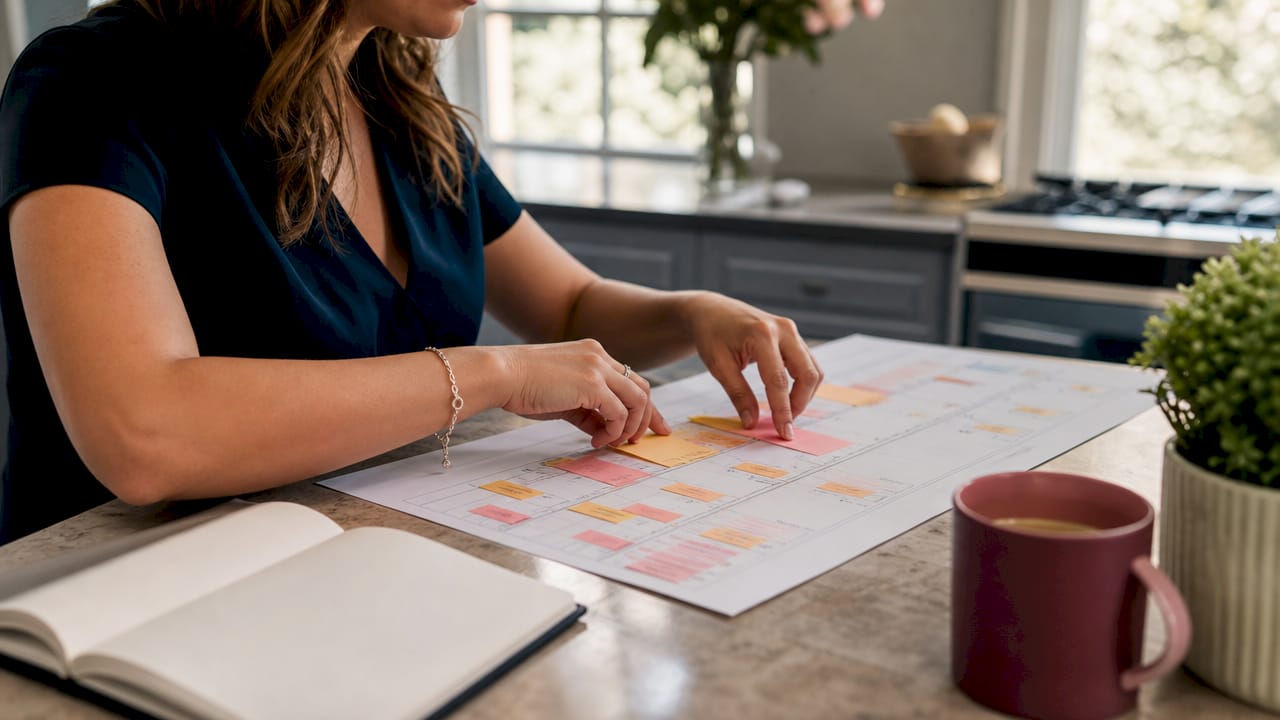
Most wedding run sheets fail because they look like guest programs rather than operational documents. Vendor-grade timelines behave as call sheets, featuring cues, owners, locations, and fallback plans. A plain itinerary tells vendors what happens. A cue-based runsheet tells them what triggers each action, who executes it, and what to do if timing shifts.
Cue types to include in every runsheet:
- Arrival cues: Vendor load-in times with location and access contact
- Announcement cues: DJ or MC triggers for entrances, toasts, and first dances
- Photo moment cues: Coordinator signals for first look, family formals, and golden-hour portraits
- Service milestones: Catering lead cues for entrée drop, cake cutting, and late-night snacks
- Transition cues: Venue contact signals for room flips and guest movement between spaces
Each cue needs three pieces of information: the trigger, the owner, and the backup plan if the trigger is delayed. This structure prevents vendors from deferring decisions to each other or, worse, interrupting the couple.
Pro Tip: Label each cue row with a time, an owner name, and a one-line fallback. That single addition turns a schedule into a working document.
3. Assign clear ownership to every cue
Assigning cue ownership prevents vendors from deferring decisions and reduces schedule drift caused by social crossfire. Social crossfire happens when vendors ask each other for direction instead of following the runsheet. The result is a chain of delays that no one person caused but everyone feels.
Ownership assignments follow a logical pattern. The DJ or MC owns all announcement cues. The catering lead owns food service milestones. The venue contact owns access and room transitions. The lead coordinator owns photo cues and overall timing. When each vendor knows their lane, the day moves without constant check-ins.
Dependencies matter as much as ownership. If the cake cutting cue is owned by the catering lead but depends on the DJ finishing the first dance, that dependency belongs in the runsheet. Write it as: “Cake cutting: Catering lead triggers after DJ signals end of first dance.” That one sentence eliminates a common point of confusion at nearly every reception.
4. Finalize and distribute runsheets as dated, version-labeled PDFs
Version control is a detail most planners skip until it causes a problem. Finalizing the runsheet as a dated PDF and distributing it at least one week before the event reduces vendor confusion and prevents accidental edits. When vendors receive an editable file, someone will change it. A locked PDF with a clear version label removes that risk entirely.
Follow this distribution sequence:
- Complete the final draft and label it with the event date and version number (e.g., “Smith Wedding 06-14-2026 v3”).
- Convert to PDF and send to all vendors simultaneously, so everyone works from the same document.
- Schedule a line-by-line walkthrough with the DJ or MC at least one week before the event.
- Share the runsheet with the photographer and coordinator early enough to refine photo timing and confirm vendor readiness.
- Send a final confirmation email the day before with the PDF attached again, noting no changes have been made.
PDF conversion and version labeling are often overlooked but are critical steps for maintaining clarity and preventing vendor-side editing errors. One extra email the day before has prevented more day-of confusion than any amount of planning software.
5. Create a directional vendor contact map
A phone list is not a communication plan. Directional communication maps specify who to contact for each type of issue, which reduces confusion and delays on wedding days. The difference is specificity. A phone list tells vendors who exists. A contact map tells them who to call when the florist is late, when the caterer needs access to the kitchen, or when the DJ has a sound issue.
Build your contact map around issue types, not vendor names:
- Timing questions: Lead coordinator only
- Venue access and setup: Venue contact or venue manager
- Food and beverage issues: Catering lead
- Sound and announcements: DJ or MC
- Photography and portrait timing: Lead photographer
- Guest management: Coordinator or designated assistant
Having a single designated day-of contact streamlines on-day communications and prevents vendors from calling the couple directly. That single rule protects the couple’s experience more than almost any other practice. Assign one number, communicate it clearly in the runsheet header, and enforce it with every vendor before the event.
6. Structure runsheet content by wedding day phase
A well-structured runsheet mirrors the natural phases of the wedding day. Each phase has its own timing logic, vendor requirements, and common failure points. Breaking the runsheet into ceremony, cocktail hour, and reception sections makes it easier for vendors to locate their cues quickly.
| Phase | Key timing considerations | Common failure point |
|---|---|---|
| Ceremony | Guest seating 20–30 min before start; processional cues for DJ | Late guests disrupting processional timing |
| Cocktail hour | Photographer portraits run parallel; catering service begins | Portraits running long, cutting into reception |
| Reception | Entrances, speeches, dances, dinner service, cake cutting | Speeches running over allocated time |
Speeches are the most common source of reception overruns. Planning for 8–10 minutes per speaker and splitting speeches into two rounds, one before the entrée and one before the main course, keeps guests engaged and prevents prolonged sitting discomfort. Most receptions do not run exactly on schedule, so built-in buffers after key moments like the first dance and speeches create breathing room without rushing the event.
If the ceremony and reception are at separate venues, add travel time plus a 10-minute buffer for guest parking and seating. That gap is where timelines collapse most often when planners treat it as zero-cost time.
7. Review and refine the runsheet collaboratively
A runsheet written in isolation misses critical input from the vendors who execute it. Sharing the runsheet with the photographer and coordinator early enables input that optimizes photo touchpoints like the first look and cocktail hour portraits. Photographers know how long family formals actually take. Caterers know how long a 150-person dinner service runs. That knowledge belongs in your runsheet before the event, not as a surprise on the day.
Schedule a dedicated review call with your DJ or MC at least one week before the event. Walk through every cue line by line. Confirm pronunciations, confirm trigger signals, and confirm fallback plans. This call takes 30 minutes and prevents the most common day-of miscommunications. For wedding day coordination across multiple vendors, a collaborative review is the step that separates planners who manage days from planners who control them.
Key takeaways
A wedding event runsheet built with cue ownership, strategic buffers, and version-controlled distribution is the most reliable tool for preventing day-of delays and vendor confusion.
| Point | Details |
|---|---|
| Buffer time is structural | Place a 15-minute hinge buffer before the first look to absorb hair and makeup delays. |
| Cue-based formatting works | Assign an owner and fallback plan to every cue so vendors never defer to each other. |
| Version control prevents errors | Distribute a dated, version-labeled PDF at least one week before the event. |
| Contact maps beat phone lists | Map each issue type to a specific contact to protect the couple from vendor interruptions. |
| Phase-based structure aids clarity | Break the runsheet into ceremony, cocktail hour, and reception sections for faster vendor reference. |
Why the runsheet is the most underrated document in wedding planning
Most planners spend more time on the seating chart than the runsheet. That is a mistake. The seating chart affects one hour. The runsheet affects the entire day.
The practices covered here are not theoretical. They come from watching what actually breaks on wedding days. Hair and makeup run long. Speeches go over. Vendors call the couple because no one told them who else to call. Every one of those failures is preventable with a well-built runsheet. The cue ownership model, in particular, changes how vendors behave. When a DJ knows they own the announcement cues and the catering lead owns the service milestones, they stop looking to each other for direction. The day moves because the document tells it to.
The planners who get the best results are not the ones with the most experience. They are the ones with the clearest documents. A runsheet that a vendor can read in 90 seconds and execute without asking a single question is worth more than any amount of day-of improvisation. Build it that way from the start, and the wedding day becomes a matter of execution rather than crisis management.
For solo planners managing time across multiple events, a repeatable runsheet template built on these principles is the fastest way to protect your time and your reputation simultaneously.
— JOATLABS
How Thespecialwedding supports your runsheet workflow
Building a great runsheet requires the right vendors in place before you write a single cue. Thespecialwedding connects planners with vetted professionals whose timing requirements fit directly into your event planning checklist.
For MC services that align with your announcement cues, Genesis Master of Events in Oklahoma City brings professional hosting experience to every reception. For lighting coordination that factors into your setup and transition timing, JAM Events and Productions offers full-service production in Oklahoma City. Browse the complete vendor directory on Thespecialwedding to find rental, catering, and entertainment vendors whose workflows fit the runsheet structure you have built.
FAQ
What is a wedding event runsheet?
A wedding event runsheet is a cue-based operational timeline that assigns each action to a specific vendor owner, including trigger signals, locations, and fallback plans for delays.
How far in advance should you distribute a wedding runsheet?
Distribute the finalized, version-labeled PDF at least one week before the event so vendors have time to review, ask questions, and confirm their cues.
How much buffer time should a wedding runsheet include?
Add 10–15 minutes between major transitions and place one dedicated 15-minute hinge buffer before the first look to absorb hair and makeup delays.
What is the difference between a runsheet and a wedding timeline?
A wedding timeline is a guest-facing schedule. A runsheet is a vendor-facing operational document with cue ownership, dependencies, and fallback plans built in.
How do you prevent vendors from calling the couple on the wedding day?
Assign a single designated day-of contact number, list it prominently in the runsheet header, and communicate it to every vendor before the event.
Recommended
- Solo Wedding Planner Organization Tips That Work | The Special Wedding Blog
- Wedding Lead Management for Planners: 2026 Guide | The Special Wedding Blog
- Wedding planner invoice management examples for pros | The Special Wedding Blog
- Wedding planner workspace explained: boost multi-event ops | The Special Wedding Blog
Free wedding planner templates
Skip the blank page — these templates ship with the form fields you actually need.
Browse all 9 free templates →