Wedding Agency Staff Role Assignments: 2026 Guide
Wedding Agency Staff Role Assignments: 2026 Guide

Wedding agency staff role assignments define each team member’s specific responsibilities and are the single most important factor in smooth event execution. Without clear role structures, even experienced teams lose coordination under the pressure of a live wedding day. This guide covers the core staff positions in wedding agencies, how to assign them by event size and phase, which tools keep your team aligned, and the most common mistakes that create service gaps. Whether you manage a boutique bridal team or a multi-event agency, the frameworks here apply directly to your operation.
1. What are the essential staff roles in a wedding agency?
A wedding planner acts as the CEO of the event, managing vendors, budgets, and timelines from the first client meeting through the final vendor payment. This role is distinct from a venue coordinator, who focuses only on venue operations. The lead planner owns the entire event infrastructure and is the primary point of contact for every vendor on the day.
Below the lead planner, the core wedding agency team typically includes:
- Lead wedding planner / event director: Manages vendor communication, timeline enforcement, and client experience from start to finish.
- Onsite supervisor / event captain: Above 100 guests, add an onsite supervisor to coordinate logistics and resolve issues in real time. This role prevents the lead planner from getting pulled into operational firefighting.
- Servers: Responsible for food and beverage service during cocktail hour and the reception. Servers follow a defined sequence tied to the event timeline.
- Bartenders: Manage bar setup, service, and breakdown. Bartenders often work across cocktail hour and reception with different staffing levels for each phase.
- Runners: Move items between kitchen, bar, and service areas. Runners are not servers and should not be pulled into guest-facing service without a role change.
- Floaters: Flexible backup staff who cover gaps across any role. Floaters are not idle; they monitor service flow and step in before a gap becomes visible to guests.
- Check-in personnel: Manage guest arrival, seating assignments, and gift tables. This role is often undervalued but sets the tone for the entire guest experience.
Pro Tip: Document a one-paragraph duty summary for each role and share it with every team member before the event. Role clarity at the briefing stage prevents 90% of on-the-day confusion.
The distinction between designers and planners matters here too. A floral designer focuses on aesthetics. The lead planner focuses on operational infrastructure. Mixing these responsibilities in one role description creates accountability gaps.

2. How to create effective role-based staff assignments by event size
Role mix changes significantly based on guest count and event complexity. A 60-person garden wedding needs a lead planner, two servers, one bartender, and a check-in host. A 200-person ballroom reception needs all of those plus an onsite supervisor, runners, and at least two floaters.
Follow this sequence when building your staffing plan:
- Confirm guest count and venue layout. Guest count determines your base staffing ratio. Venue layout determines how many runners and floaters you need to cover distance between service areas.
- Map the event phases. Every wedding has at least three distinct phases: setup, service, and breakdown. Schedule separate crews for each phase with specific arrival and departure times. Setup crew and service crew are not interchangeable.
- Assign roles to shifts, not bodies. Role-based scheduling matches skills to specific duties and prevents the common mistake of scheduling warm bodies who lack the training for their assigned station.
- Identify your multi-skilled staff. Multi-skilled personnel increase staffing resilience and serve as force multipliers. Track their qualifications so you can reassign them quickly if a team member calls out.
- Add floaters for larger events. Schedule 1–2 floaters for any event exceeding 100 guests. Floaters are your insurance against service disruptions during transitions between cocktail hour and dinner.
- Build in overlap windows. Schedule a 15-minute overlap between setup and service crews. This window catches missed tasks before guests arrive.
- Confirm availability in writing. Verbal confirmations create double-booking risk. Written confirmation tied to a specific role and shift time is the standard.
Pro Tip: For events over 150 guests, assign one floater exclusively to the lead planner. That floater becomes your real-time problem solver, freeing you to stay with the client.
The cost of 1–2 extra floaters is consistently outweighed by the risk of a visible service gap during a 200-person reception. Budget for them as a fixed line item, not an optional add-on.
3. What tools and protocols keep staff assignments on track?
Role assignments only work if every team member receives the right information before they arrive on site. The tool that makes this possible is a detailed staff rota combined with a pre-shift briefing protocol.
A complete staff rota for a wedding event must include:
- Event and client details: Date, venue address, client name, and event timeline.
- Role and station assignment: Each staff member’s specific role, station, and reporting supervisor.
- Call times and departure times: Separate for setup, service, and breakdown crews.
- Dress code and appearance standards: Specified per role, not as a blanket note.
- Briefing notes: Key event details such as dietary restrictions, VIP guests, and timeline changes.
- Compliance verification: Confirmation that each staff member holds required certifications (alcohol service, food handling) before they are scheduled.
Comprehensive rotas prevent confusion and double bookings. A rota without compliance verification is incomplete and creates liability exposure for your agency.
| Protocol | Purpose | Timing |
|---|---|---|
| Written role assignment | Confirms duties and station | 48 hours before event |
| Pre-shift briefing | Aligns team on timeline and client needs | 30 minutes before doors open |
| Compliance check | Verifies certifications and availability | At scheduling, not day-of |
| Mid-event check-in | Supervisor confirms coverage across stations | Every 60 minutes during service |
Grouping staff roles by function rather than by title increases operational efficiency and gives each team member a clear contribution path. Edin Pandur’s research on event staff positions confirms this approach reduces last-minute scheduling challenges across agencies of all sizes.
Role-based scheduling platforms give you a central place to assign duties, track qualifications, and send briefing notes. Thespecialwedding offers team management tools built specifically for wedding agencies managing multiple events and staff pools simultaneously.
4. What common mistakes to avoid in wedding staff role assignments?
The most damaging mistake in wedding agency staffing is treating all staff as interchangeable. A server is not a runner. A bartender is not a floater. When roles blur, service gaps appear, and guests notice.
Watch for these specific pitfalls:
- No floaters on large events. Skipping floaters to cut costs creates a single point of failure. One staff member calling out sick can cascade into visible service disruptions across multiple stations.
- Undocumented role duties. Verbal role descriptions create ambiguity. Every role needs a written duty list that the staff member receives before the event day.
- Ignoring event phases. Scheduling one crew for setup through breakdown without phase-specific assignments leads to exhausted staff and missed tasks during service.
- Overlooking compliance. Scheduling a bartender without verifying their alcohol service certification is a legal and operational risk. Verify before you confirm the booking.
- No feedback loop. After each event, debrief your team on what worked and what did not. Role assignments should improve with every event you execute.
“Planners must manage vendor teams precisely and act as stress protectors for clients through comprehensive contingency planning.” — Danielle Andrews, WPIC
Role overlap is a specific risk in smaller agencies where one person covers multiple duties. When a lead planner also acts as a server or runner, client communication suffers. The wedding coordinator’s role in vendor scheduling is distinct from service staff duties and should stay that way.
5. How to adapt staff assignments for different wedding formats
Not every wedding follows the same format, and your role assignments need to reflect that. A formal seated dinner requires a different staffing model than a cocktail-style reception or a destination wedding with a smaller on-site team.
Adapt your bridal team assignments using these guidelines:
- Formal seated dinners: Increase server-to-guest ratio and assign dedicated runners for each table section. Timing precision is critical; every server needs a clear cue system tied to the kitchen.
- Cocktail-style receptions: Shift from table servers to roaming service staff. Floaters take on a more active role in this format because service flow is less predictable.
- Cultural and thematic weddings: Assign a specialist coordinator who understands the specific cultural protocols or thematic requirements. This person briefs the rest of the team on customs that affect service timing or guest interaction.
- Destination weddings: Staffing pools are smaller and travel logistics add complexity. Prioritize multi-skilled staff who can cover two roles if needed, and build a longer overlap window between phases.
- High-profile or VIP clients: Add a dedicated concierge role for the couple and immediate family. This staff member handles only the client’s needs and does not take on service duties.
Client communication about role expectations matters as much as internal planning. When clients understand which staff member handles which function, they direct questions to the right person. That single change reduces interruptions to the lead planner during service by a measurable margin. The role of the event coordinator in managing client expectations is a skill set worth developing across your entire senior team.
Key Takeaways
Effective wedding agency staff role assignments require skill-based scheduling, phase-specific crew planning, and documented duties for every team member on every event.
| Point | Details |
|---|---|
| Define roles before scheduling | Assign specific duties to each role before filling shifts to match skills to tasks. |
| Scale staffing to guest count | Add an onsite supervisor above 100 guests and 1–2 floaters for events over 100 guests. |
| Schedule by event phase | Use separate crews for setup, service, and breakdown with distinct arrival and departure times. |
| Document every role | Written duty lists and detailed rotas prevent ambiguity and reduce on-day errors. |
| Adapt to event format | Adjust role mix and staffing ratios for formal dinners, cocktail receptions, and destination events. |
Why most staffing plans fail before the event starts
After working across dozens of wedding events, the pattern is consistent. Agencies that struggle with staffing do not fail because they hired the wrong people. They fail because they never defined what each person was hired to do.
The floater role is the clearest example. Most agencies either skip floaters entirely or assign them without a clear brief. A floater without a defined scope becomes a wandering extra. A floater with a specific supervisor, a station to monitor, and a list of triggers for when to step in becomes your most valuable team member on the day.
The other pattern I see repeatedly is the failure to separate event phases in the staffing plan. Agencies schedule one crew from load-in to breakdown and wonder why service quality drops during dinner. Setup work is physical and detail-oriented. Service work requires hospitality focus and energy. These are different mental and physical demands. Expecting the same person to excel at both across a 10-hour shift is unrealistic.
The agencies that run the cleanest events use wedding event management systems to track role qualifications, send briefing notes automatically, and flag compliance gaps before they become day-of problems. Technology does not replace good judgment in staffing. It removes the administrative load that prevents good judgment from being applied.
My honest recommendation: build your role assignment framework once, document it thoroughly, and refine it after every event. The agencies that do this consistently outperform those that rebuild their staffing plan from scratch each time.
— JOATLABS
How Thespecialwedding supports your team coordination
Managing staff role assignments across multiple weddings requires more than a spreadsheet. Thespecialwedding gives wedding agencies a centralized workspace to assign roles, track staff qualifications, send briefing notes, and monitor compliance before each event.
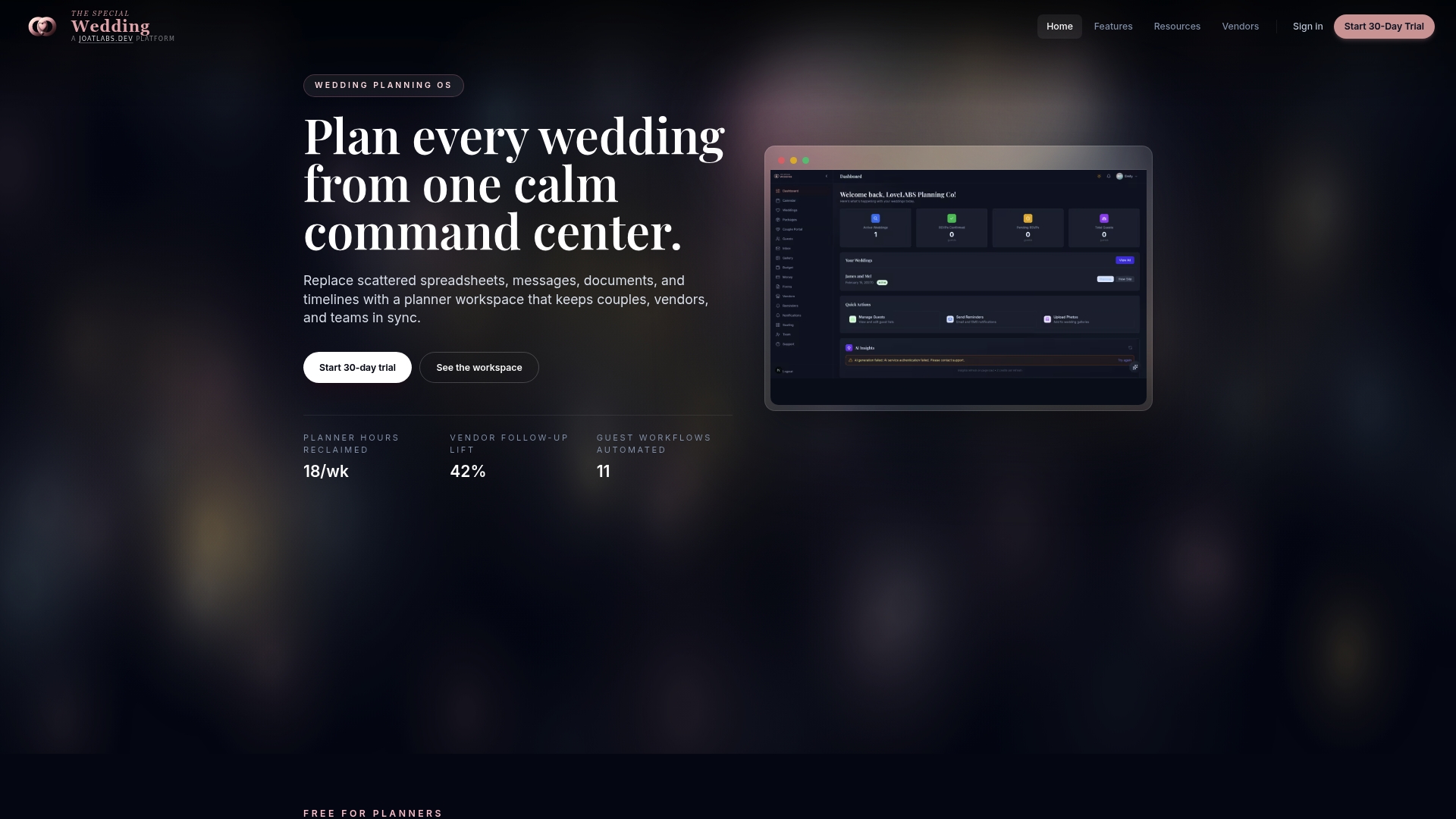
The platform handles client intake, vendor onboarding, and event timelines in one place, so your team always works from the same information. Real-time dashboards show you staffing coverage across all active events, and automated workflows reduce the manual follow-up that slows agencies down. For agencies managing multiple events simultaneously, the vendor directory on Thespecialwedding connects you with vetted service providers who understand professional event standards. Your team spends less time coordinating logistics and more time delivering the client experience your agency is known for.
FAQ
What is the difference between a wedding planner and an event captain?
A wedding planner manages the entire event from vendor contracts through day-of execution, while an event captain focuses on onsite logistics and staff coordination during the event itself. Both roles are necessary for weddings exceeding 100 guests.
How many floaters should a wedding agency schedule?
Schedule 1–2 floaters for any event over 100 guests. Floaters cover service gaps during transitions and act as backup for any role that loses a team member unexpectedly.
What should a wedding staff rota include?
A complete rota includes the event date, venue, each staff member’s role and station, call times, dress code, briefing notes, and compliance verification for required certifications.
When should setup and service crews be different people?
Always. Setup and service require different skills and energy levels. Scheduling separate crews with distinct arrival times prevents fatigue-related errors during guest-facing service.
How do you adapt wedding coordinator duties for cultural weddings?
Assign a specialist coordinator who understands the specific cultural protocols and brief the full team on customs that affect service timing or guest interaction before the event day.
Recommended
Free wedding planner templates
Skip the blank page — these templates ship with the form fields you actually need.
Browse all 9 free templates →