Wedding Event Setup Breakdown Checklist for Planners
Wedding Event Setup Breakdown Checklist for Planners

A wedding event setup breakdown checklist is the operational backbone of every successful wedding, covering every task from the first vendor load-in to the final rental return. Professional coordinators treat this document as a living tool, not a formality. Without it, even experienced planners lose control of timing, vendor sequencing, and post-event cleanup. The industry term for this process is “event production management,” and the checklist is its most practical expression. Platforms like Thespecialwedding and coordination tools built for professional planners have made these checklists more structured and shareable than ever before.
What does a wedding event setup breakdown checklist cover?
A complete wedding event setup breakdown checklist addresses four distinct phases: pre-event planning, day-of setup, ceremony and reception transitions, and post-event breakdown. Each phase has its own timing requirements, vendor responsibilities, and risk points. Skipping any phase creates gaps that show up at the worst possible moment, usually in front of guests or clients.
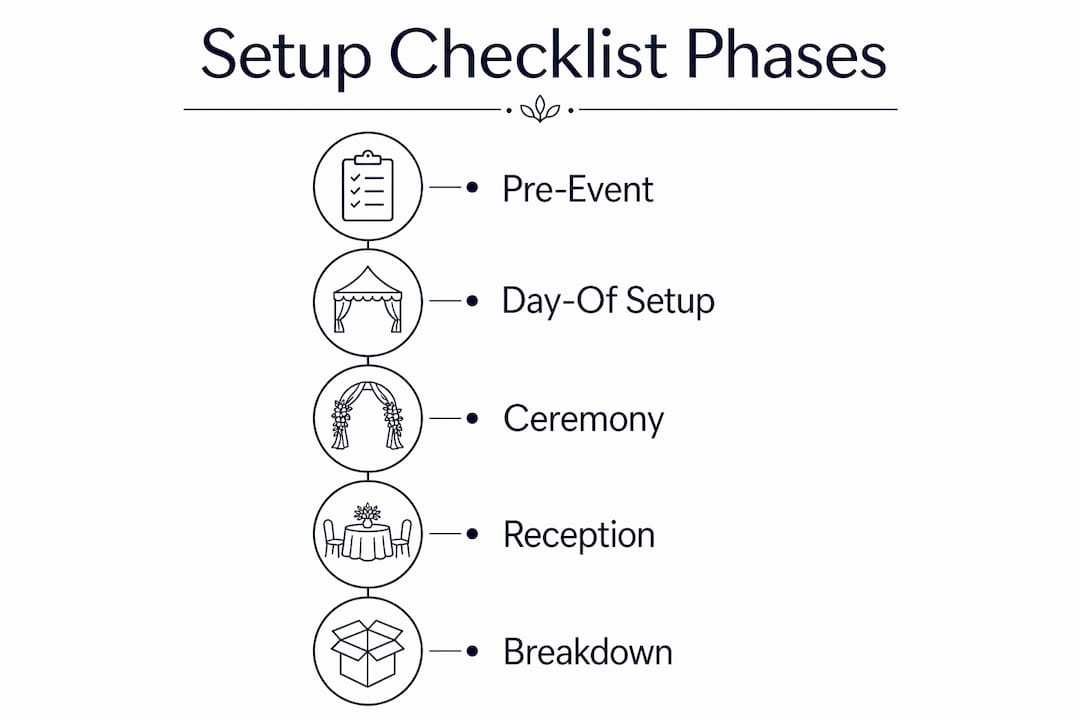
The checklist functions as your single source of truth. It replaces scattered texts, verbal confirmations, and memory with a documented, shareable record every vendor and team member can reference. When you share the event timeline with vendors in advance, you eliminate the most common source of day-of confusion.
How do you plan and execute a wedding setup?
Venue setup typically starts 2–5 hours before the ceremony, with 15-minute buffers recommended between major event segments. That window sounds generous until you account for a florist running 30 minutes late or a lighting crew that needs an extra pass. The buffer is not padding. It is your professional margin.
The most effective approach is to work backward from guest arrival rather than from vendor load-in. Guest arrival is the fixed deadline. Everything else is scheduled to meet it. Here is the sequence that holds up under real event pressure:
- Confirm venue access time. Know exactly when your first vendor can enter. This is often earlier than planners assume, especially at venues with multiple events.
- Install infrastructure first. Tents, staging, and power-dependent rentals go in before linens, florals, or place settings. Dragging a tent pole through a finished tablescape is an avoidable disaster.
- Set up bars, catering stations, and A/V. These require power connections and spatial testing before anything decorative goes around them.
- Place linens, centerpieces, and tabletop details. This is the last layer. Doing it last protects the work and keeps the design intact.
- Run a final walkthrough 45 minutes before guest arrival. Check lighting levels, confirm signage placement, and verify that every vendor has completed their setup zone.
Pro Tip: Build a printed zone map for your setup crew. Assign each vendor a labeled area and a completion time. When everyone knows their zone, you stop playing traffic cop and start managing the event.
The most common timing pitfall is underestimating the room flip. Transitioning a ceremony space into a reception layout requires a dedicated crew and a hard time block. If your wedding ceremony logistics checklist does not include a flip timeline with assigned roles, you will run late into cocktail hour every time.

What should a pre-event walkthrough cover?
A comprehensive pre-event walkthrough should happen approximately one month before the wedding to confirm site logistics, power access, and rain contingency plans. One month gives you enough time to resolve problems before they become crises. Two weeks out is too late to renegotiate access or reroute power.
Your wedding venue checklist for the walkthrough should include every item below:
- Floor plan confirmation. Walk the actual layout with your floor plan in hand. Measure if you need to. Furniture arrangements that look right on paper often fail in the physical space.
- Electrical outlets and power capacity. Identify every outlet location. Confirm the venue’s power load can support your lighting, A/V, and catering equipment simultaneously.
- Load-in and load-out access points. Know which doors vendors use, whether there is a freight elevator, and how many crews can work simultaneously without blocking each other.
- Parking for vendors and guests. Vendor vehicles need a staging area separate from guest parking. Confirm this during the walkthrough, not on event day.
- Noise ordinances and quiet hours. Verify these during the contract phase and reconfirm at the walkthrough. Violating a noise ordinance during load-out can result in fines and damaged venue relationships.
- Rain contingency plan. If your event has any outdoor elements, walk the rain plan physically. Know where tents go, which doors open, and how the guest flow changes.
Rehearsals serve a different but equally critical function. Experts recommend running the processional and recessional 2–3 times so every member of the wedding party moves with confidence. Rehearsals are also your opportunity to clarify cue timing with the officiant, musicians, and A/V team. Every department needs to hear the same instructions at the same time.
How do you coordinate vendor setup and breakdown?
Vendor coordination is where most wedding event setup breakdowns fail. The fix is specificity. Every vendor on your list needs a confirmed arrival time, a load-in location, and a departure window before event day.
Confirming vendor pickup times and cleanup responsibilities at least one week before the event reduces surprise labor charges during breakdown. Venues charge for overtime. Rental companies charge for late returns. Both are avoidable with a one-week confirmation call.
Follow this sequence for vendor coordination:
- Send a vendor-specific timeline one week out. Include arrival time, load-in point, setup zone, and departure window. Do not send a general timeline and expect vendors to extract their own details.
- Confirm load-in restrictions with the venue. Some venues prohibit certain vehicles near entrances or limit the number of crews working simultaneously. Your vendors need this information before they arrive.
- Assign a point of contact for each vendor on event day. That person is responsible for checking vendors in, directing them to their zone, and confirming completion.
- Create a breakdown schedule before the event starts. Know which vendors leave first, which rentals go back together, and who is responsible for each zone during teardown.
- Categorize all items before breakdown begins. Defining trash versus rentals versus personal items before teardown prevents lost rentals and replacement fees. Label bins if necessary.
Pro Tip: Walk the venue with your breakdown crew before guests arrive. Show them every rental item and every personal item. A five-minute briefing at the start of the day prevents a $500 replacement charge at the end of it.
Effective oversight during vendor breakdown protects you against damage claims and maintains the vendor relationships you depend on for future events. The coordinator who stays until the last rental truck leaves is the one vendors call first for the next booking.
How do you handle setup and breakdown challenges?
Every wedding produces at least one problem that was not on the checklist. The planners who handle these well are not the ones with the most experience. They are the ones with the clearest protocols.
Here are the most common challenges and their practical fixes:
- Unexpected venue restrictions. A venue contact changes, and suddenly the access time shifts by an hour. Always have the venue contract in hand with the agreed load-in time highlighted. Escalate to venue management immediately, not after the problem compounds.
- Weather changes and rain plan activation. If any part of your event is outdoors, your rain plan needs to be pre-communicated to every vendor. Professional preparation for rain includes pre-positioned tents, a revised guest flow, and a vendor notification chain you can activate in under 10 minutes.
- Vendor delays. A florist arrives 45 minutes late. Your buffer absorbs 15 minutes of that. The remaining 30 minutes requires a decision: delay the room reveal or simplify the centerpiece installation. Have this conversation with your client before event day so you have pre-approved options.
- Room flip overruns. The ceremony runs long, and your flip crew loses 20 minutes. Assign a dedicated flip captain who starts the moment the last guest exits the ceremony space. Do not wait for a signal from the coordinator.
“Clear communication during a crisis is the difference between a recoverable problem and a ruined event. Your vendors and clients take their cues from you. Stay calm, give direct instructions, and keep moving.”
The event breakdown process deserves the same planning attention as setup. Assign breakdown roles in writing. Confirm them at the pre-event briefing. The coordinator who manages teardown with the same discipline as setup is the one who gets five-star reviews.
Key takeaways
A complete wedding event setup breakdown checklist, built around backward scheduling and clear vendor roles, is the single most effective tool for preventing day-of failures.
| Point | Details |
|---|---|
| Start setup 2–5 hours early | Build in 15-minute buffers between major segments to absorb delays without losing control. |
| Schedule backward from guest arrival | Fix the guest arrival time first, then assign every vendor task to meet that deadline. |
| Walkthrough one month out | Confirm power, access, noise rules, and rain plans before problems become unsolvable. |
| Confirm vendors one week before | Lock in arrival times, load-in points, and breakdown duties to avoid surprise labor charges. |
| Categorize items before teardown | Label trash, rentals, and personal items in advance to prevent lost rentals and damage claims. |
What i’ve learned about checklists that most planners ignore
Most planners treat the setup checklist as a reminder list. The ones who run the smoothest events treat it as a communication contract. Every item on the list is an agreement between you, your vendors, and your venue. When something goes wrong, the checklist tells you exactly where the agreement broke down.
The biggest mistake I see is building a checklist that only the coordinator understands. If your breakdown schedule requires you to explain it on event day, it is not a checklist. It is a draft. The final version should be readable by any vendor or team member without context.
Rehearsals are another area where planners underinvest. Running the processional twice feels like enough. It rarely is. The third run-through is where the wedding party stops looking at their feet and starts moving with confidence. That confidence shows up in photos and in the energy of the room. Assertive management during rehearsal is not about being bossy. It is about giving everyone the repetitions they need to feel ready.
The relationship between a coordinator and a venue is also underrated as a setup tool. Venues that trust you give you earlier access, more flexibility on load-in, and faster responses when something goes wrong. That trust is built over multiple events and protected by how you handle breakdown. Leave the venue better than you found it, every time.
— JOATLABS
Find the right vendors for your next wedding setup
Pulling off a flawless setup and breakdown starts with the right vendor team. Experienced rental companies, decorators, and event production crews make the difference between a smooth day and a stressful one.
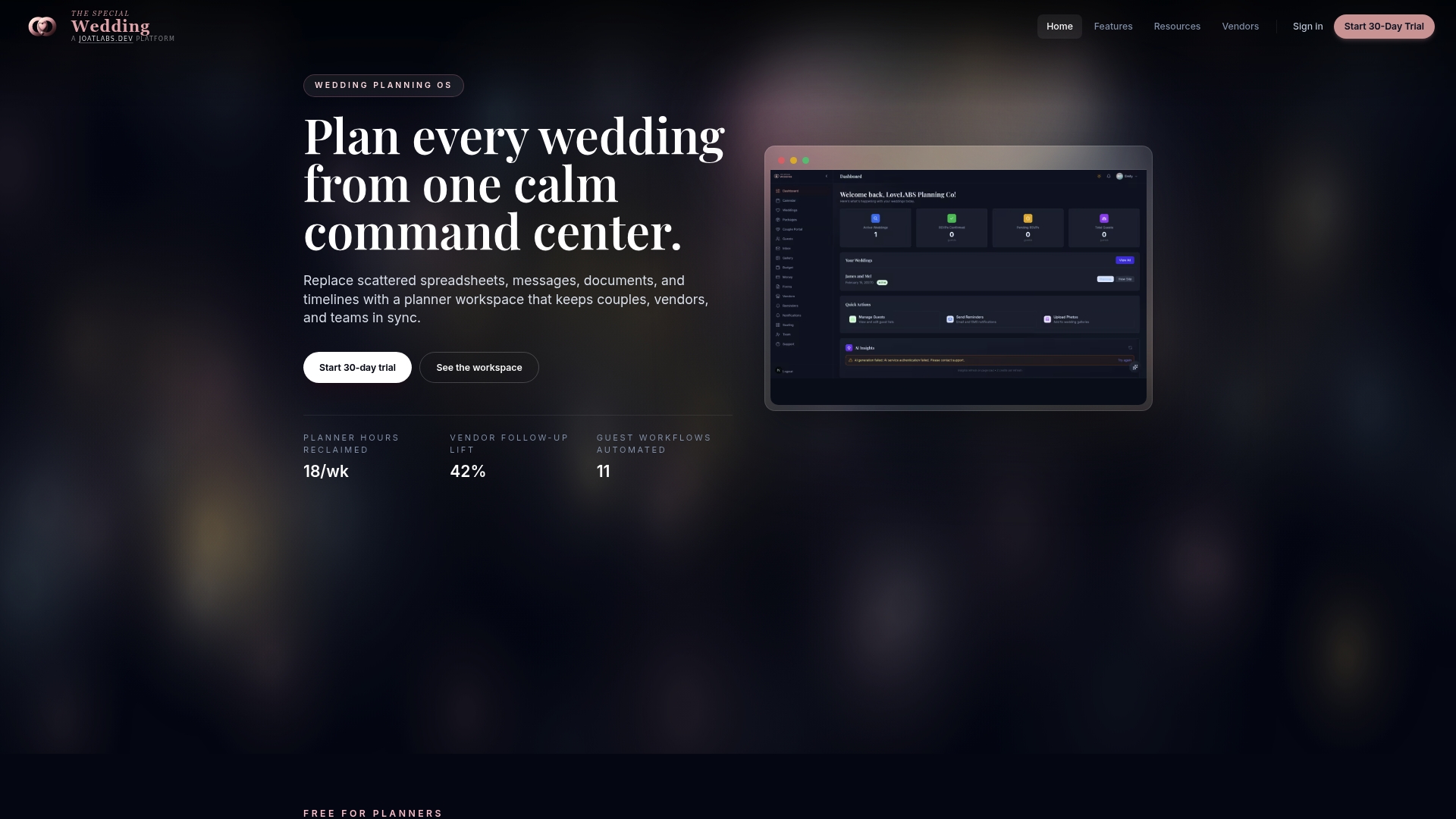
Thespecialwedding makes it straightforward to find vetted vendors who understand wedding production timelines and coordinator expectations. From Castle Event Rentals for tents, furniture, and décor to full-service lighting and DJ teams, the Thespecialwedding vendor directory connects you with professionals who show up prepared, set up on time, and break down without drama. Stop coordinating vendors through scattered messages and start working with a platform built for how professional planners actually operate.
FAQ
What is a wedding event setup breakdown checklist?
A wedding event setup breakdown checklist is a phase-by-phase document covering every task from vendor load-in through post-event teardown. It assigns responsibilities, confirms timing, and prevents costly oversights on event day.
How early should wedding venue setup begin?
Setup typically starts 2–5 hours before the ceremony, with 15-minute buffers built between major segments. The exact start time depends on venue access and the complexity of the décor installation.
When should you do a final venue walkthrough?
A final walkthrough should occur approximately one month before the wedding to confirm access, power, parking, and rain contingency plans. This timeline gives you enough runway to resolve any issues before event day.
How do you avoid extra charges during vendor breakdown?
Confirm vendor pickup times and cleanup responsibilities at least one week before the event. Clearly categorize trash, rentals, and personal items before teardown begins to prevent confusion and replacement fees.
What is the most common wedding setup mistake?
The most common mistake is sequencing delicate décor before infrastructure. Tents, staging, and power-dependent rentals must go in first to protect linens, florals, and tabletop details from damage during installation.
Recommended
- Solo Wedding Planner Organization Tips That Work | The Special Wedding Blog
- Wedding planner workspace explained: boost multi-event ops | The Special Wedding Blog
- Wedding Event Seating Coordination Tips That Work | The Special Wedding Blog
- Wedding planning time management: a pro guide for planners | The Special Wedding Blog
Free wedding planner templates
Skip the blank page — these templates ship with the form fields you actually need.
Browse all 9 free templates →