Wedding Planner Service Tiers: Your 2026 Breakdown
Wedding Planner Service Tiers: Your 2026 Breakdown

Wedding planner service tiers are the four recognized levels of professional planning support: full-service planning, partial planning, month-of coordination, and day-of coordination. Each tier differs by when the planner gets involved, how many decisions they own, and how much you pay. The types of wedding planner service tiers you choose will shape your entire planning experience, from the first vendor call to the final dance. Knowing what each tier actually delivers, not just what it’s called, is the fastest way to avoid overpaying or being left without enough support on your wedding day.
1. What is full-service wedding planning?
Full-service wedding planning is the most comprehensive tier available. A full-service planner steps in 9–15+ months before the wedding and takes responsibility for vendor sourcing, design direction, budget management, logistics, and day-of execution. You retain approval rights and handle payments directly, but the planner drives every decision forward.

The labor commitment is significant. Full-service planners invest roughly 150–250 hours across the engagement. That time covers everything from attending venue tours to managing vendor contracts and building detailed timelines.
What full-service typically includes:
- Vendor sourcing and contract negotiation
- Design concept and aesthetic direction
- Budget tracking and payment scheduling
- Guest management and logistics coordination
- Rehearsal oversight and complete day-of execution
Cost range: $3,000–$10,000+ depending on market and wedding complexity. The Knot reports the 2026 average for full-service planning sits around $3,800, though New York City and Los Angeles markets run 50–100% higher.
Full-service planning is the right fit for destination weddings, multivendor productions, or couples who feel overwhelmed by the sheer volume of decisions. If you have a demanding job, a complex guest list, or a wedding spanning multiple venues, this tier pays for itself in stress reduction alone.
Pro Tip: Count your vendor touchpoints before choosing a tier. If you have more than 10 vendors requiring tastings, approvals, or setup coordination, full-service planning is almost always worth the cost.
2. Understanding partial wedding planning
Partial planning is the flexible middle tier. It suits couples who have already started planning but need professional guidance to fill specific gaps. A partial planner typically enters mid-planning phase and takes on a defined set of tasks rather than owning the full process.
The scope varies more than any other tier. One planner’s partial package might include vendor referrals and logistics refinement. Another’s might add limited design support or budget review. That variability is exactly why contracts matter so much here.
Common partial planning deliverables:
- Vendor referrals and vetting for remaining categories
- Logistics review and timeline refinement
- Limited design consultation
- Contract review and vendor follow-up
Cost range: $1,500–$5,000. The price spread reflects how much of the planning remains when the planner joins and how many hours they commit.
The biggest advantage of partial planning is control. You handle the parts you enjoy and hand off the parts you find stressful. The biggest risk is scope confusion. Because the label “partial planning” means different things to different planners, you need to confirm exact deliverables and start dates in writing before signing anything.
Pro Tip: Ask every partial planner candidate to list exactly what they will and will not do. A written scope of work prevents the most common disputes in this tier.
3. What do month-of and day-of coordination cover?
Month-of coordination is the most misunderstood tier in the industry. The name implies a planner shows up 30 days out, but month-of coordination actually starts 4–8 weeks before the wedding. That window covers vendor confirmations, timeline building, rehearsal coordination, and full day-of execution.
Day-of coordination is an even bigger misnomer. Coordinators need weeks of preparation to execute a wedding day effectively. A true “day-of only” service rarely exists among experienced professionals. What you are actually buying is a coordinator who takes over your pre-built plan and manages its execution.
| Feature | Month-of coordination | Day-of coordination |
|---|---|---|
| Typical start time | 4–8 weeks before wedding | 2–4 weeks before wedding |
| Vendor communication | Full confirmations and follow-ups | Confirmation calls only |
| Timeline building | Yes, built from scratch | Refinement of existing timeline |
| Rehearsal management | Yes | Sometimes included |
| Cost range | $800–$2,500 | $500–$1,500 |
Core tasks for both tiers:
- Vendor confirmation calls and logistics checks
- Master timeline creation or refinement
- Rehearsal dinner coordination
- Day-of vendor management and problem-solving
Both tiers work best when you have already booked your key vendors and have a clear vision. The coordinator’s job is execution, not planning. If your vendor list has gaps or your timeline is unbuilt, month-of coordination will feel underpowered.
Pro Tip: Book your day-of coordinator 3–6 months in advance. The best coordinators fill their calendars early, and waiting until the final weeks leaves you with limited options.
4. Comparing wedding planner service tiers side by side
The clearest way to choose among different wedding planner tiers is to compare them on the factors that matter most: cost, start time, scope, and decision ownership.
| Tier | Typical cost | Start time | Core services | Decision ownership |
|---|---|---|---|---|
| Full-service | $3,000–$10,000+ | 9–15+ months out | Vendor sourcing, design, budget, logistics, execution | Planner leads; couple approves |
| Partial planning | $1,500–$5,000 | Mid-planning phase | Vendor referrals, logistics, limited design | Shared between couple and planner |
| Month-of coordination | $800–$2,500 | 4–8 weeks out | Timeline, vendor confirmations, rehearsal, day-of | Couple owns planning; planner executes |
| Day-of coordination | $500–$1,500 | 2–4 weeks out | Timeline refinement, vendor management, day-of | Couple owns everything; planner manages day |
Regional pricing shifts these numbers significantly. Markets like New York City and Los Angeles run 50–100% higher than national averages. A full-service planner in a mid-size market might charge $4,000. The same scope in Manhattan could reach $15,000 or more.
Labor intensity also explains the price gaps. Full-service planners dedicate 150–250+ hours to a single wedding. Day-of coordinators invest a fraction of that time. The cost difference is not a markup. It reflects real hours worked across months of preparation. For a deeper look at how planners manage these responsibilities, the service package management guide from Thespecialwedding breaks down deliverables by tier clearly.
5. How to choose the right wedding planner tier
Choosing the right tier comes down to four factors: wedding complexity, available time, budget, and how much of the planning you want to own yourself.
Use this framework to decide:
- High complexity or destination wedding. Choose full-service planning. Multivendor logistics, travel coordination, and unfamiliar venues require a planner who is involved from the start.
- Mid-planning and feeling stuck. Choose partial planning. You have made progress but need professional help with vendor gaps, logistics, or design decisions.
- Fully booked vendors, need execution support. Choose month-of coordination. Your planning is done. You need someone to take over communications and run the day.
- Simple wedding with strong venue support. Choose day-of coordination. A venue with an on-site team plus a day-of coordinator covers most execution needs.
- Tight budget, confident planner. Choose day-of coordination and use resources like the wedding planning time management guide from Thespecialwedding to stay organized through the process.
One critical warning: do not confuse a venue coordinator with a hired planner. Venue coordinators work for the venue, not for you. They manage the venue’s logistics and interests. They will not follow up with your florist, manage your photographer’s timeline, or advocate for you when something goes wrong. Every couple needs their own point of contact regardless of what the venue provides.
Pro Tip: When reviewing contracts for partial or month-of packages, check whether the planner builds your timeline or simply confirms an existing one. A contract without timeline creation can leave a significant gap in your day-of execution.
The wedding coordinator’s role in vendor scheduling is another area worth understanding before you sign. Knowing what your coordinator will and will not handle with vendors prevents last-minute surprises.
Pro Tip: If you are considering month-of coordination, audit your planning first. Month-of coordination works best when your vendor list is complete and your decisions are finalized. Gaps in your planning reduce the coordinator’s ability to execute effectively.
Key takeaways
Choosing the right wedding planner tier requires matching your wedding’s complexity, timeline, and budget to the level of planner involvement that actually fits your situation.
| Point | Details |
|---|---|
| Four distinct tiers exist | Full-service, partial, month-of, and day-of coordination each offer different scope and start times. |
| Cost reflects labor, not just presence | Full-service planners invest 150–250 hours; day-of coordinators invest far fewer, which explains the price gap. |
| “Day-of” is a misnomer | Day-of and month-of coordinators both begin work weeks before the wedding, not on the day itself. |
| Contracts must specify deliverables | Vague tier labels lead to scope gaps; always confirm start dates and exact tasks in writing. |
| Venue coordinators are not your planners | They work for the venue, not for you; every couple needs their own hired coordinator or planner. |
My honest take on picking a wedding planner tier
Most couples I have seen struggle with this decision make the same mistake. They pick a tier based on price first and fit second. A day-of coordinator is not a bargain if your planning has gaps. A full-service planner is not an extravagance if your wedding involves 15 vendors across two venues.
The partial planning tier is where I see the most confusion. Couples sign contracts without reading scope carefully, then discover their planner does not build timelines or attend the rehearsal. That is not the planner’s fault. The label “partial” promises nothing specific. Read every line.
The other thing most articles skip: the month-of coordination tier only works if you have done the work. If you arrive at the 6-week mark with three vendors unbooked and no timeline, a coordinator cannot fix that. They can manage what exists. They cannot create what is missing.
My honest recommendation is to book earlier than you think you need to, regardless of tier. Good coordinators and planners at every price point fill their calendars fast. Waiting until 8 weeks out to book a month-of coordinator is a gamble you do not need to take.
— JOATLABS
Finding the right wedding planner on Thespecialwedding
Thespecialwedding makes it straightforward to find vetted wedding planners across every service tier and budget range.
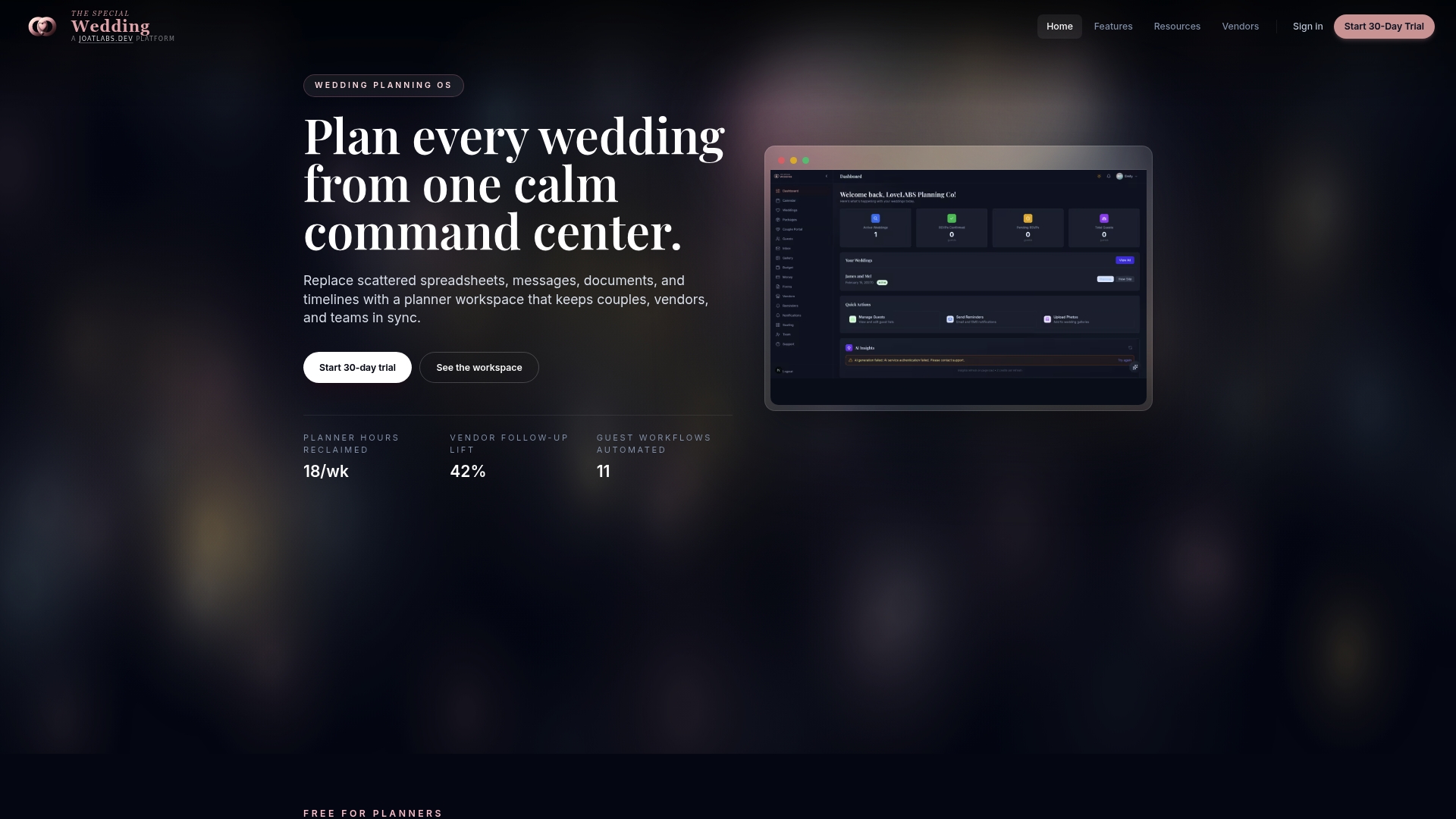
The vendor directory at Thespecialwedding lets you filter by location, service type, and planning tier so you can compare options without sorting through unvetted listings. Whether you need a full-service planner for a complex multiday event or a day-of coordinator for a simple ceremony, the directory connects you with professionals who list their packages and pricing clearly. Local planners like Blue Chalk Events in Oklahoma City are a strong example of what you will find: real planners with defined service tiers and transparent offerings. Start your search with a clear tier in mind, and use the filters to narrow by budget and availability.
FAQ
What are the four main wedding planner service tiers?
The four main tiers are full-service planning, partial planning, month-of coordination, and day-of coordination. Each differs by start time, scope of work, and cost.
How much does a wedding planner cost by tier?
Full-service planning averages around $3,800 in 2026, while day-of coordination averages about $1,600. Partial planning typically falls between $1,500 and $5,000, and month-of coordination runs $800–$2,500.
What is the difference between month-of and day-of coordination?
Month-of coordination starts 4–8 weeks before the wedding and includes timeline building, vendor confirmations, and rehearsal management. Day-of coordination begins closer to the event and focuses on executing an already-built plan.
Do I need a wedding planner if my venue has a coordinator?
Yes. Venue coordinators work for the venue and manage its logistics, not yours. They do not manage outside vendors, build your personal timeline, or advocate for your interests the way a hired planner or coordinator does.
When should I book a wedding coordinator?
Book a day-of or month-of coordinator at least 3–6 months before your wedding. The best coordinators fill their calendars well in advance, and waiting until the final weeks significantly limits your options.
Recommended
Free wedding planner templates
Skip the blank page — these templates ship with the form fields you actually need.
Browse all 9 free templates →