Payment Tracking for Wedding Planners: 2026 Guide
Payment Tracking for Wedding Planners: 2026 Guide

Payment tracking in wedding planning is the process of monitoring all incoming client payments and outgoing vendor expenses to maintain accurate budgets and prevent financial gaps that can derail an event. Known in financial management as cash flow oversight, this practice is the backbone of every successful wedding business. The role of payment tracking for wedding planners extends far beyond logging numbers in a spreadsheet. It connects vendor confirmations, contract compliance, and budget adherence into one operational system. Tools like Plutio, Aisle Planner, and Kaiplan have made this process faster and more reliable for planners managing multiple events at once.
How does payment tracking connect vendor tasks and timelines?
Payment tracking and vendor task management are not separate functions. They are directly linked, and treating them as separate is one of the most common mistakes planners make.
A typical wedding involves 50–100+ milestones across 10–14 vendors. Each milestone carries a dependency. The florist cannot finalize arrangements until the venue layout is confirmed. The DJ cannot schedule setup until the venue confirms power access. When a payment is late or unrecorded, that dependency breaks, and the delay cascades through every task that follows.

Project management software like Plutio integrates financial milestones directly with vendor task dependencies. That means a missed payment does not just show up as an accounting error. It triggers a visible alert in the event timeline, giving you time to fix the problem before it affects the wedding day.
Why wedding planners track vendor tasks alongside payments comes down to risk management. Payments and approvals must be confirmed at least three weeks before the event to avoid last-minute rework. Tracking both in one system makes that confirmation process automatic rather than manual.
Here is what integrated tracking covers for each vendor relationship:
- Contract terms and payment deadlines tied to specific event milestones
- Deposit status and outstanding balances visible per vendor per event
- Approval dependencies that block task progress until payment is confirmed
- Automated alerts when a vendor payment is approaching or overdue
Pro Tip: Set up your vendor dependency map at the start of every engagement. List which vendor tasks require prior payment confirmation, and build those links into your project management software from day one.
What are the financial nuances planners must understand?
The most dangerous financial mistake a wedding planner can make is spending a client deposit before earning it. This is not a budgeting error. It is a bookkeeping distinction that determines whether your business survives a slow quarter.
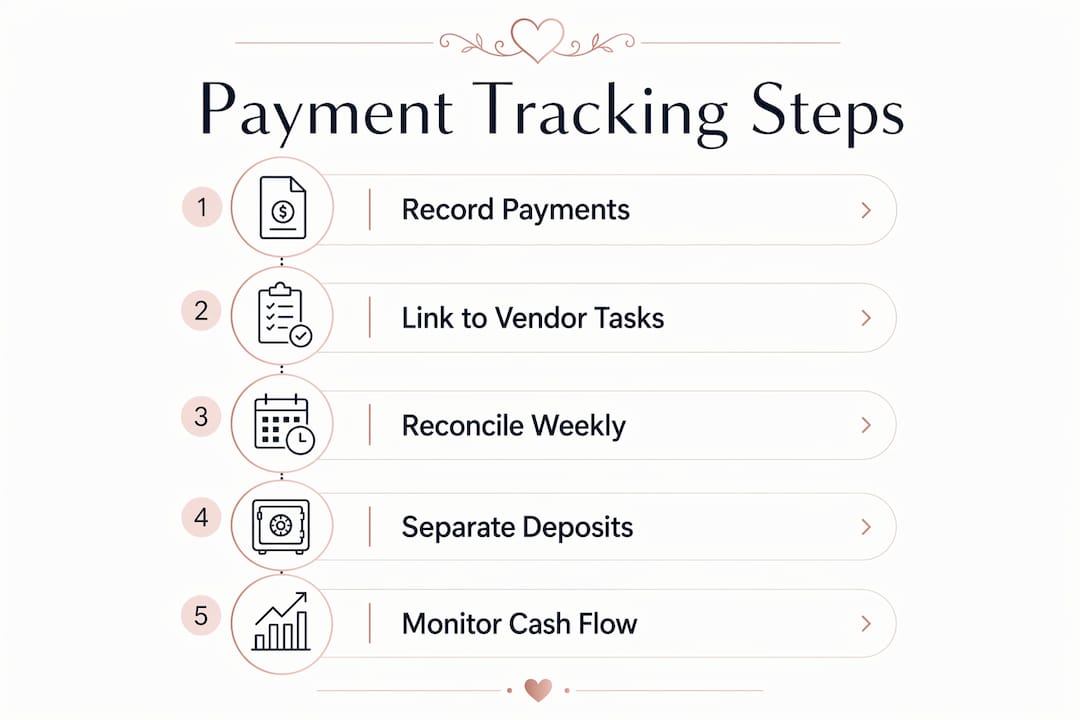
Client deposits are classified as unearned revenue. Mixing deposits with business cash flow causes planners to face shortfalls despite appearing profitable on paper. The money looks available, but it is legally and financially owed back to the client until the service is delivered. Spending it on operating costs or another event’s vendor payments creates a gap that compounds over time.
A standard wedding payment schedule runs through four to five milestones:
- Retainer at booking (typically 20–50% of total fee)
- Six-month payment to confirm vendor bookings
- Three-month payment tied to final vendor contracts
- Final balance due 30 days before the wedding
- Final vendor payments due 2–4 weeks before the event
Each of these milestones requires a separate ledger entry. The retainer goes into a restricted account until services begin. The six-month payment funds vendor deposits. The final balance covers remaining vendor costs and your earned income.
“Positive cash flow does not equal profit. Planners must restrict use of unearned revenue and link invoices precisely to event dates to avoid financial gaps.” — Expert Bookkeeping for Wedding Planning Businesses
Weekly reconciliation is the practice that keeps this system honest. By comparing your bank feed against your ledger every week, you catch discrepancies before they become crises. Real-time bookkeeping for small business owners applies directly here. A planner running three concurrent weddings without weekly reconciliation is operating blind.
Best payment tracking tools for wedding vendors: a comparison
The right wedding planner payment system depends on how many events you manage and how deeply you need financial data integrated with your workflow. Generic invoicing tools like QuickBooks or FreshBooks handle billing, but they do not connect payment status to vendor task progress or event timelines.
Specialized platforms built for wedding planners solve that gap. Here is how the leading options compare:
| Tool | Core Strength | Payment Tracking Features | Best For |
|---|---|---|---|
| Plutio | Project management + invoicing | Milestone schedules, client portals, vendor payment tracking | Planners managing 5+ events |
| Aisle Planner | Wedding-specific workflow | Budget tracking, vendor payments, client communication | Full-service planners |
| Kaiplan | Budget and expense tracking | Automated payment reminders, milestone alerts | Budget-focused coordinators |
| Spreadsheets | Flexibility | Manual only, no automation | Solo planners with 1–2 events |
Plutio’s invoicing module automates milestone payment schedules spanning 6–18 months and tracks vendor payments alongside client billing. That dual visibility is what separates it from generic tools. Aisle Planner focuses on the full wedding workflow, making it strong for planners who want vendor communication and payment tracking in one place. Kaiplan targets budget management specifically, with automated reminders aligned to contract terms that reduce missed deadlines.
Client portals are a feature worth prioritizing. Branded portals that show payment progress per milestone reduce disputes because couples can see exactly what has been paid and what is outstanding. That transparency protects you as much as it serves the client.
For a deeper look at how these systems fit into your daily operations, the types of wedding event management systems available in 2026 covers the full software category landscape.
Pro Tip: Before committing to any platform, test whether it can display outstanding vendor balances per event on a single dashboard. If you have to click into each event separately to check payment status, the tool will slow you down at scale.
How should wedding planners optimize their payment tracking?
The best practices for tracking expenses in weddings come down to five operational habits that separate planners who stay financially stable from those who scramble before every event.
-
Maintain a real-time ledger, not just a budget estimate. A budget tells you what you planned to spend. A ledger tells you what you have actually spent and received. Update your ledger every time a payment is made or received, not at the end of the month.
-
Link every payment milestone to a contract term. When your contract says the six-month payment is due on a specific date, your payment tracking system should trigger a reminder automatically. Manual follow-up is a liability at scale.
-
Separate client deposits from your operating cash. Open a dedicated account for unearned revenue. Transfer funds to your operating account only after the corresponding service milestone is delivered. This single habit eliminates the most common cause of planner cash flow crises.
-
Reconcile vendor balances per event weekly. Do not wait until final payments are due to discover a vendor has not received their deposit. A wedding planning dashboard that shows outstanding vendor balances by event makes this review take minutes instead of hours.
-
Map vendor dependencies to payment status. If your florist’s final delivery depends on a venue layout confirmation, and that confirmation depends on a venue payment, track that chain explicitly. Managing dependencies between vendors is critical to avoiding cascading delays. Your payment system and your task system need to share that information.
Planners managing multiple events simultaneously face an additional challenge: cash flow from one wedding can appear to cover obligations from another. Keeping event finances siloed in your system prevents that cross-contamination. Review multi-event operational workflows to see how other planners structure this separation in practice.
Key takeaways
Effective payment tracking in wedding planning requires separating unearned deposits from earned income, linking financial milestones to vendor task dependencies, and using specialized software to maintain real-time visibility across every event.
| Point | Details |
|---|---|
| Deposits are not income | Treat client retainers as unearned revenue until services are delivered to avoid cash flow gaps. |
| Vendor tasks depend on payments | Late or untracked payments break vendor dependencies and cause cascading timeline delays. |
| Specialized tools outperform spreadsheets | Platforms like Plutio, Aisle Planner, and Kaiplan automate milestone reminders and vendor balance tracking. |
| Weekly reconciliation is non-negotiable | Comparing your bank feed to your ledger weekly catches discrepancies before they become event risks. |
| Siloed event finances protect cash flow | Keep each wedding’s finances separate to prevent one event’s income from masking another’s shortfall. |
The uncomfortable truth about payment tracking failures
Most planners who struggle with cash flow are not bad at math. They are bad at categorization. I have seen planners with six-figure annual revenue unable to pay a photographer’s final invoice because they spent the client’s deposit on another event’s catering bill three months earlier. The money was always there on paper. The problem was that no one had labeled it correctly.
The shift that changes everything is treating your payment tracking system as an event risk tool, not just a financial record. When you see that a vendor’s final payment is due in two weeks and the client’s final balance has not arrived yet, that is not an accounting note. That is an event risk that needs immediate attention.
Distinguishing earned income from deposits in real-world scenarios also has tax implications that most planners discover too late. Depositing unearned revenue into your operating account and spending it inflates your apparent income for that period, which creates tax liability on money you have not yet earned. The fix is not complicated, but it requires discipline from the first booking of the year.
If you manage more than three weddings concurrently, a single dashboard view of all outstanding vendor balances is not a luxury. It is the only way to catch problems before they become phone calls from angry vendors the week before a wedding. The invoice management examples from working planners show exactly how this looks in practice.
— JOATLABS
Manage every payment from one place with Thespecialwedding
Tracking payments across multiple vendors and events should not require jumping between spreadsheets, email threads, and separate invoicing apps. Thespecialwedding gives professional planners a centralized workspace where vendor information, payment schedules, and event timelines live together.
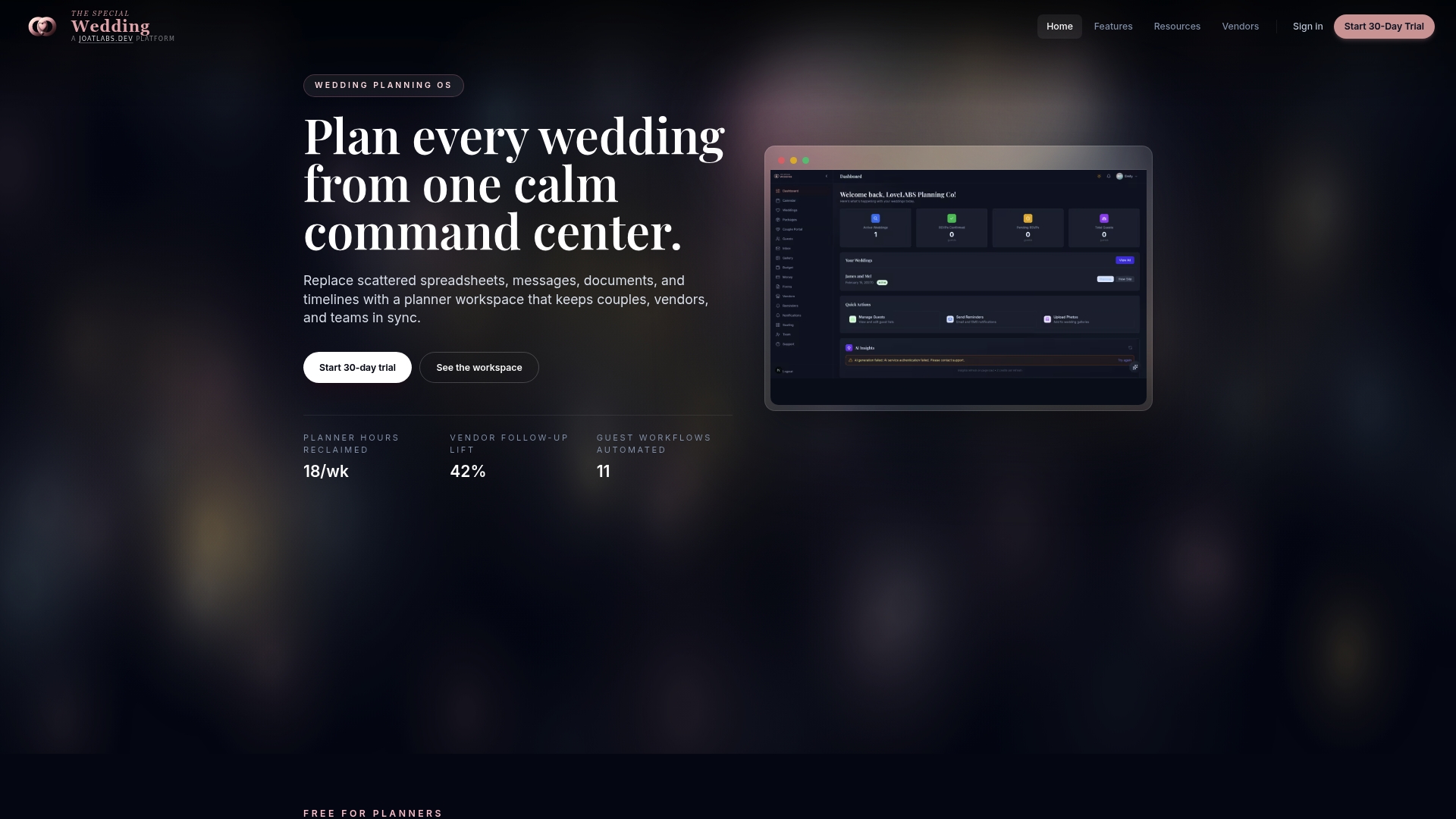
The Thespecialwedding vendor directory connects you to vetted vendors while keeping all payment and communication data in one place. From initial vendor booking to final balance confirmation, you can track every financial milestone without switching tools. Whether you are coordinating a single high-end wedding or running a multi-event agency, Thespecialwedding scales with your workflow and keeps your finances visible at every stage.
FAQ
What is payment tracking in wedding planning?
Payment tracking in wedding planning is the process of recording and monitoring all client payments received and vendor payments made across each event. It covers deposits, milestone payments, and final balances to maintain accurate cash flow and budget control.
Why do wedding planners track vendor tasks alongside payments?
Vendor tasks and payments are directly linked because vendor dependencies mean a late payment can block task progress and cause timeline delays. Tracking both together gives planners early warning when a financial gap is about to become an operational problem.
What is the difference between a deposit and earned income?
A client deposit is unearned revenue until the corresponding service is delivered. Spending deposits before earning them creates cash flow shortfalls and potential tax errors, which is why deposits must be held separately from operating funds.
Which tools are best for wedding planner payment tracking?
Plutio, Aisle Planner, and Kaiplan are the leading specialized options for wedding planners. Each automates milestone payment schedules and provides vendor balance tracking that generic invoicing tools like QuickBooks do not offer natively.
How often should wedding planners reconcile their finances?
Weekly reconciliation is the standard recommended practice. Comparing your bank feed to your ledger every week identifies payment discrepancies and vendor balance gaps before they create event-day risks.
Recommended
- Wedding Lead Management for Planners: 2026 Guide | The Special Wedding Blog
- Wedding RSVP Tracking System: Your 2026 Planning Guide | The Special Wedding Blog
- Wedding planner invoice management examples for pros | The Special Wedding Blog
- Wedding Planner Service Package Management Guide | The Special Wedding Blog
Free wedding planner templates
Skip the blank page — these templates ship with the form fields you actually need.
Browse all 9 free templates →