Wedding Reception Flow Planning: Your Complete Guide
Wedding Reception Flow Planning: Your Complete Guide
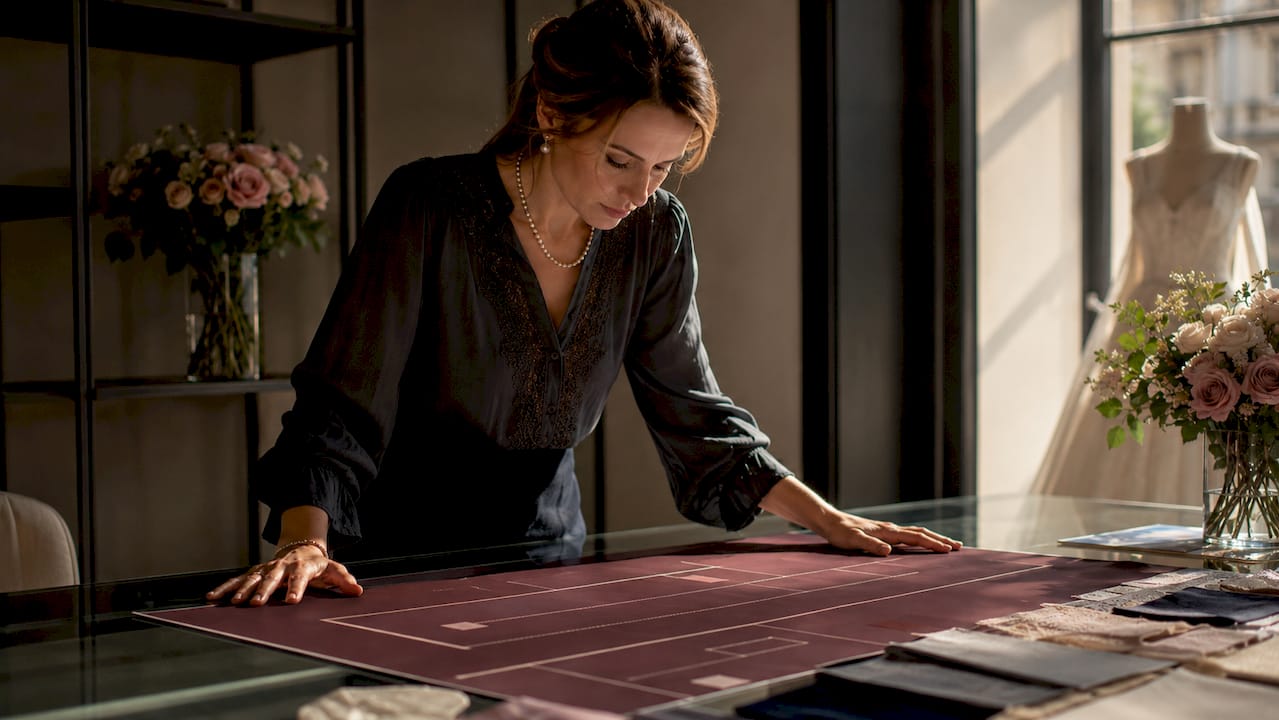
Wedding reception flow planning is the deliberate sequencing and pacing of every event block in your reception to keep guests engaged, energized, and moving from one moment to the next without dead air. Most couples think of their reception as a checklist. The professionals who run 500-plus weddings think of it as experience architecture. The difference between a reception guests rave about and one they quietly endure almost always comes down to how the timeline was designed, not how much money was spent.
What is wedding reception flow planning, and why does it matter?
Wedding reception flow planning is the practice of designing smooth transitions between event blocks so guests never feel stuck waiting or rushed through key moments. Poor flow creates dead air between events and opens the dance floor too late, draining the energy in the room before dancing even starts. Good flow maintains momentum by placing the right activity at the right time, matching the emotional rhythm of the evening.
The industry term for this practice is event flow management, and it applies to every reception regardless of size or budget. A backyard wedding with 40 guests needs flow planning just as much as a 200-person ballroom event. The variables change, but the principle stays the same: every transition is a decision, and every decision either adds or removes energy from the room.
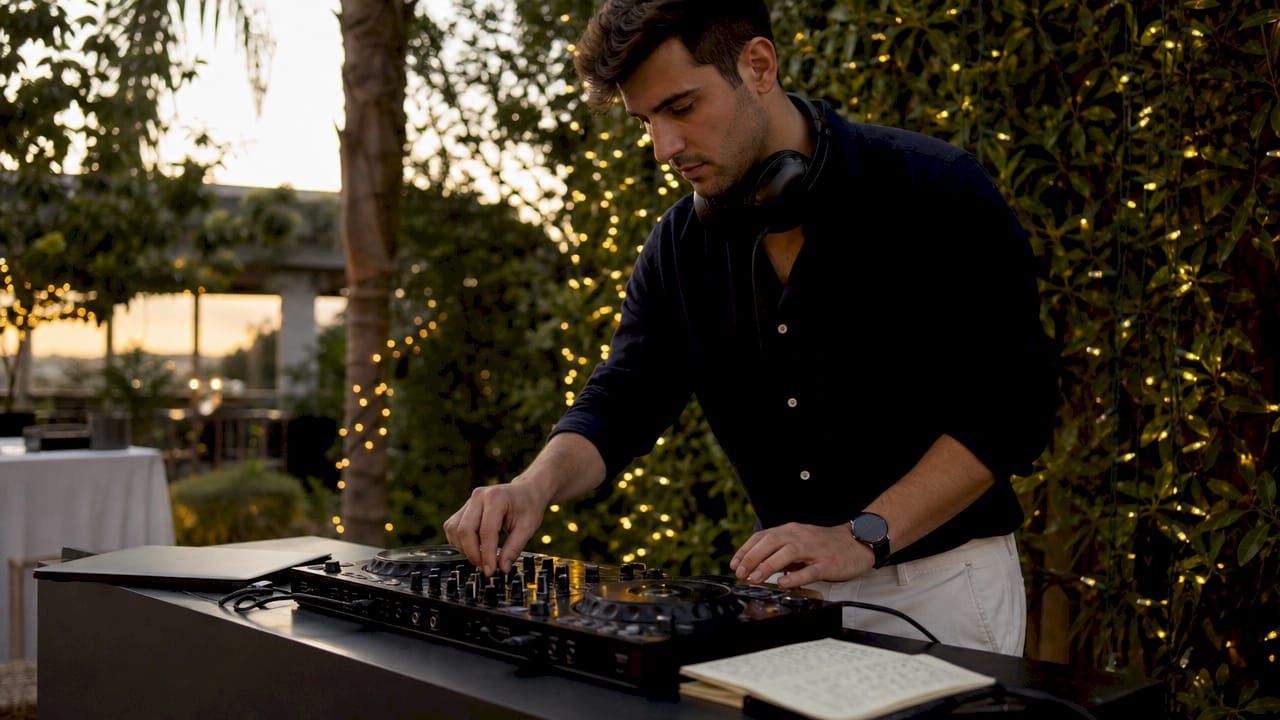
Professional DJs and MCs do far more than play music and make announcements. They act as directors of reception flow, coordinating with caterers and planners to protect key moments like the first dance and cake cutting. When couples understand this, they stop treating vendors as separate contractors and start treating them as a coordinated team.
What are the key components of wedding reception flow planning?
A reception is not one continuous event. It is a series of distinct blocks, each with its own energy level and purpose. Understanding those blocks is the foundation of good flow.
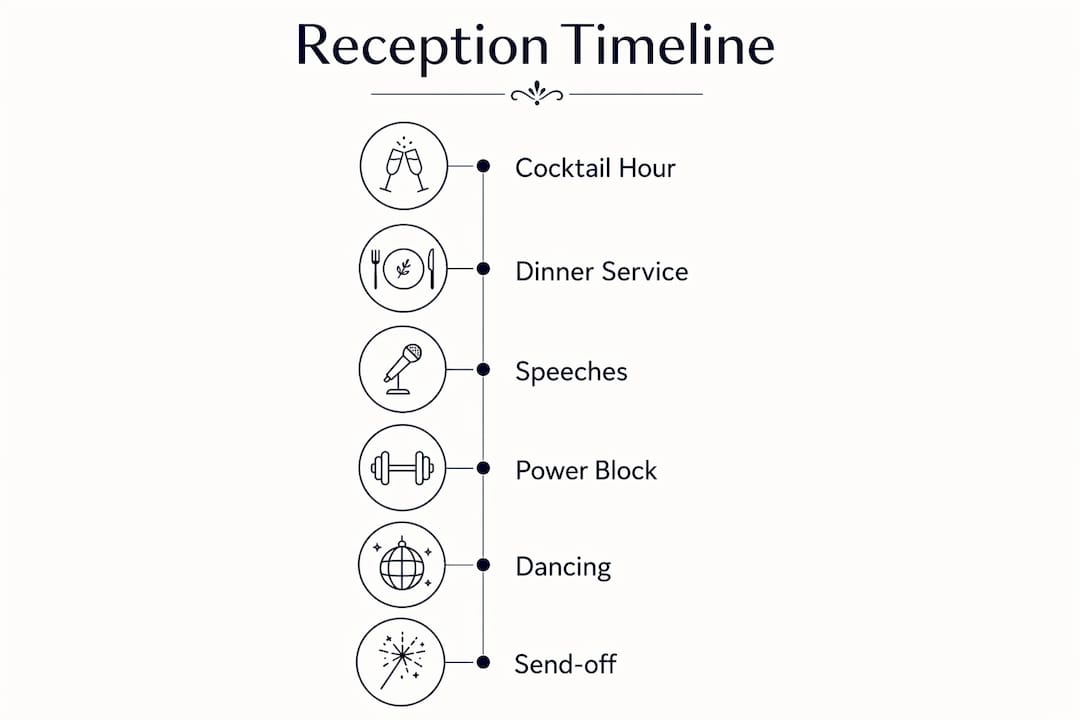
The main blocks in a standard reception run in this order:
- Cocktail hour: Guests arrive, mingle, and transition from ceremony mode to celebration mode. This block typically runs 60 minutes and gives the couple time for portraits.
- Grand entrance and dinner: The couple enters, guests are seated, and food service begins. A standard reception runs 5–6 hours total, with dinner taking 60–90 minutes of that time.
- Speeches and toasts: Placed strategically within or between dinner courses, not saved until the end.
- First dance, parent dances, and cake cutting: Formalities that anchor the emotional center of the evening.
- Open dancing: The final and longest block, typically running 2–3 hours.
The order of these blocks directly affects guest energy. Placing all formalities after dinner kills the room before dancing starts. Spreading them across the evening keeps guests attentive and the energy building.
The service style also matters. A plated dinner with multiple courses gives you natural pause points for speeches. A buffet moves faster but requires tighter coordination with the DJ to avoid long gaps when guests are in line. Placing toasts between courses can save 15–20 minutes of dead time and keeps the room engaged throughout dinner.
Pro Tip: Build a 10-minute buffer into your cocktail hour. Ceremonies almost always run long, and that buffer protects your entire dinner timeline from cascading delays.
How do professionals architect an effective wedding reception timeline?
Expert planners and DJs do not build timelines from the ceremony end forward. They start from the send-off and work backward. Planning backward from the end time anchors the entire schedule and prevents the common mistake of rushing the final hour or running out of dance time.
Here is the framework professionals use:
- Set your hard end time. Lock in the venue’s last-call and vendor end times first. Everything else builds from there.
- Block out open dancing. Reserve at least 90 minutes, ideally 2 hours, working backward from the end.
- Create a Power Block for formalities. Group your first dance, parent dances, cake cutting, and bouquet toss into a single 20–30 minute block before open dancing begins. This protects the dance floor energy by clearing all formalities at once.
- Schedule dinner and speeches. Place dinner before the Power Block and weave toasts between courses.
- Add buffers after high-friction moments. 5–10 minute buffers after the grand entrance and after dinner absorb real-world delays without disrupting the overall schedule.
- Assign a cue caller. One person, whether your coordinator, DJ, or MC, holds the master timeline and signals every vendor when to move. A dedicated cue caller reduces cascading delays and keeps transitions clean.
Guest count shapes every timing decision in this framework. A 150-person plated dinner takes significantly longer to serve than a 60-person buffet. Lock in your final guest count at least two weeks before the wedding so your caterer and coordinator can build accurate timing into the plan.
Pro Tip: Share a day-of coordination timeline with every vendor at least one week before the wedding. When everyone works from the same document, transitions happen without you having to manage them.
Common pitfalls in wedding reception flow planning and how to avoid them
The most common mistake couples make is treating the timeline as a simple to-do list. Scheduling events in strict chronological order without considering guest energy patterns is the fastest way to lose a room. Here are the pitfalls that derail reception flow most often:
- Saving all speeches for after dinner. Postponing all toasts until after dinner makes guests restless and kills the energy right before dancing. Spread speeches across dinner courses instead.
- No limits on speaker count or length. Open-ended speeches are the single biggest cause of timeline collapse. Set a firm limit of three speakers and a two-minute maximum per toast.
- Underestimating catering time. Caterers need accurate headcounts and clear service cues. Without them, dinner service runs long and compresses every block that follows.
- Skipping vendor coordination. Your DJ, caterer, and photographer all need to know the timeline. A run sheet shared with vendors before the event prevents the most common communication breakdowns.
- Opening the dance floor too late. Guests who wait more than 90 minutes after dinner for dancing often leave. The Power Block framework solves this by clearing formalities quickly and opening the floor while energy is still high.
- No point person on the day. Without someone empowered to call transitions, vendors wait for each other and gaps appear. Assign this role explicitly, whether to your coordinator or your DJ.
Practical tips for couples to plan and communicate their reception flow
A reception timeline is a living document, not a rigid script. The goal is a flexible structure that gives vendors clear cues while leaving room for real moments to breathe.
Use templates as starting points, not final answers. A reception timeline guide gives you a proven structure, but your venue, guest count, and priorities will require adjustments. Treat the template as a framework and customize from there.
Vendor collaboration is where most couples lose time. Your DJ, caterer, and photographer each hold a piece of the timing puzzle. Sharing your timeline with vendors before the event aligns everyone on cues and prevents the most common day-of surprises. Schedule a brief call with each key vendor in the week before the wedding to confirm timing.
The table below compares two common approaches to reception timeline management:
| Approach | Best for | Key trade-off |
|---|---|---|
| Minute-by-minute schedule | Large weddings with complex logistics | Less flexibility; requires strict vendor discipline |
| Event block structure | Most weddings, 50–200 guests | More flexibility; relies on a strong cue caller |
| Template-only planning | Budget-conscious couples | Easy to start; often misses venue-specific timing |
| Planner-managed timeline | Couples who want hands-off execution | Higher cost; highest reliability |
The event block approach works best for most couples. Using event blocks instead of minute-by-minute management gives you structure without rigidity, and it gives your vendors room to handle small delays without derailing the whole evening.
Empower one person to own the timeline on the day. This is your point person, whether a professional coordinator, your DJ, or a trusted friend with a printed run sheet. That person makes calls, signals vendors, and keeps the evening moving. Without this role filled explicitly, everyone assumes someone else is watching the clock.
Key takeaways
Effective wedding reception flow planning requires sequencing event blocks around guest energy, not just chronological order, with a dedicated cue caller and vendor-aligned timeline.
| Point | Details |
|---|---|
| Plan backward from send-off | Start with your end time and build the timeline in reverse to prevent rushing the final hour. |
| Group formalities into a Power Block | Bundle dances, cake cutting, and toasts into one 20–30 minute block before open dancing. |
| Add buffers after high-friction moments | Place 5–10 minute buffers after the grand entrance and dinner to absorb real-world delays. |
| Lock in guest count early | Confirm your final headcount at least two weeks out so caterers and coordinators can plan accurately. |
| Assign a dedicated cue caller | One person must hold the master timeline and signal every vendor to keep transitions clean. |
Why flow planning is really about emotional design
Most couples I work with come to reception planning focused on logistics: what time dinner starts, how long speeches run, when the DJ plays the first song. Those details matter. But the couples who walk away from their reception feeling like it was everything they hoped for are the ones who thought about how they wanted their guests to feel at each moment, not just what was happening on the schedule.
The Power Block concept is a perfect example. On paper, it looks like a scheduling trick. In practice, it is an emotional decision. You are choosing to give your guests a concentrated burst of meaningful moments, then releasing them into dancing while the energy is at its peak. That is not logistics. That is design.
The other thing I have seen consistently is that flexibility within a well-planned structure produces better results than a rigid minute-by-minute schedule. When your DJ has a clear block structure and knows who the cue caller is, they can absorb a 10-minute delay without anyone at the reception noticing. When every minute is scripted and something runs long, the stress cascades to every vendor in the room and eventually to you.
My honest advice: spend less time perfecting the exact minute each event starts and more time deciding which moments matter most to you. Build the timeline around those moments. Let the cue caller protect them. That is what makes a reception memorable.
— JOATLABS
Trusted vendors who protect your reception’s momentum
Building a great reception flow starts with the right team. Your DJ, MC, and caterer are not just service providers. They are the people who execute your timeline in real time, and their experience with pacing and transitions directly affects how your evening feels.
Thespecialwedding’s vendor directory connects you with experienced DJs, MCs, caterers, and coordinators who understand reception flow management. From Oklahoma City-based professionals like M&M DJ Company and Genesis Master of Events to caterers like Capers and Company, every vendor listed has the experience to keep your reception moving. Find the right team for your event and build a timeline they can actually execute.
FAQ
What is wedding reception flow planning?
Wedding reception flow planning is the strategic sequencing of event blocks, including cocktail hour, dinner, speeches, and dancing, to maintain guest energy and prevent dead time throughout the evening.
How long should a wedding reception last?
A standard reception runs 5–6 hours, including a 60-minute cocktail hour, 60–90 minutes of dinner, and 2–3 hours of open dancing. A 4-hour reception works for budget-conscious couples, while 7 hours allows more time for photos and guest interaction.
What is a Power Block in a reception timeline?
A Power Block is a concentrated 20–30 minute segment that groups all major formalities, including first dances, parent dances, and cake cutting, immediately before open dancing to protect dance floor energy.
Who should manage the reception timeline on the day?
A dedicated cue caller, typically your wedding coordinator, DJ, or MC, should hold the master timeline and signal every vendor. This single point of responsibility prevents cascading delays and keeps transitions clean.
When should speeches happen during the reception?
Speeches placed between dinner courses save 15–20 minutes of dead time and keep guests engaged. Saving all toasts until after dinner makes guests restless and reduces energy right before dancing begins.
Recommended
- Wedding Event Seating Coordination Tips That Work | The Special Wedding Blog
- Wedding planning time management: a pro guide for planners | The Special Wedding Blog
- Wedding RSVP Tracking System: Your 2026 Planning Guide | The Special Wedding Blog
- Wedding Lead Management for Planners: 2026 Guide | The Special Wedding Blog
Free wedding planner templates
Skip the blank page — these templates ship with the form fields you actually need.
Browse all 9 free templates →